

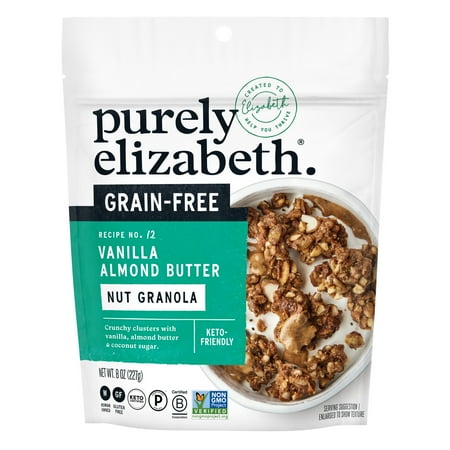

Vanilla Granola
Summary
This vanilla granola contains beneficial ingredients like whole grain oats, almonds, and flax seeds, which provide fiber and healthy fats. However, it is heavily processed, containing refined sugars and canola oil, which are less desirable due to their high glycemic index and potential inflammatory effects. The presence of natural flavors and the overall processing level further impact its healthiness, limiting its score despite some positive nutritional aspects.
At a glance
Key ingredients 16
Whole grain oatsVery Good
Whole grain oats are a rich source of dietary fiber and essential nutrients. They are minimally processed, retaining their natural nutritional profile. Oats can help lower cholesterol levels and support heart health.
Benefits
Rich in beta-glucan, a type of soluble fiber that can improve heart health and aid in digestion.
Brown sugarBad
Brown sugar is a refined sugar that can contribute to increased blood sugar levels. It is processed and lacks significant nutritional benefits. Excessive consumption may lead to health issues like obesity and diabetes.
Risks
High sugar content can lead to weight gain and increased risk of metabolic disorders.
Benefits
Provides a sweet flavor that enhances the taste of foods.
AlmondsGood
Almonds are a nutrient-dense nut rich in healthy fats, protein, and vitamins. They are minimally processed and provide a good source of vitamin E and magnesium. Almonds can support heart health and provide satiety.
Risks
Potential allergen for individuals with nut allergies.
Benefits
Rich in monounsaturated fats and antioxidants, supporting heart health and reducing inflammation.
Brown rice syrupBad
Brown rice syrup is a sweetener derived from brown rice, often used as an alternative to refined sugars. It is highly processed and has a high glycemic index. Consumption can lead to rapid spikes in blood sugar levels.
Risks
May contribute to elevated blood sugar levels and potential weight gain.
Benefits
Provides a mild sweetness and is often used in natural food products.
Crisp riceNeutral
Crisp rice is made from puffed rice grains, often used for texture in foods. It is processed but generally low in calories and nutrients. It adds crunch without significant nutritional impact.
Benefits
Adds texture and volume to food products without adding significant calories.
Rice flourNeutral
Rice flour is a gluten-free flour alternative made from finely milled rice. It is processed but provides a suitable option for those with gluten sensitivities. It is often used in gluten-free baking.
Benefits
Provides a gluten-free alternative for baking and cooking.
Cane sugarBad
Cane sugar is a refined sugar that can contribute to increased blood sugar levels. It is processed and lacks significant nutritional benefits. Excessive consumption may lead to health issues like obesity and diabetes.
Risks
High sugar content can lead to weight gain and increased risk of metabolic disorders.
Benefits
Provides a sweet flavor that enhances the taste of foods.
SaltNeutral
Salt is a common seasoning used to enhance flavor in foods. It is minimally processed but should be consumed in moderation. Excessive intake can lead to health issues such as hypertension.
Risks
Excessive consumption can lead to high blood pressure and cardiovascular issues.
Benefits
Enhances flavor and is essential for various bodily functions in moderation.
Canola oilVery Bad
Canola oil is a seed oil high in omega-6 fatty acids, which can promote inflammation. It is heavily processed and often refined using chemical solvents. Regular consumption may contribute to an imbalance in omega-3 and omega-6 fatty acids.
Risks
High omega-6 content may promote inflammation when consumed in excess.
Whole oat flourGood
Whole oat flour is made from finely ground whole oats, retaining their nutritional benefits. It is minimally processed and provides a good source of fiber and nutrients. It can support heart health and improve digestion.
Benefits
Rich in fiber and nutrients, supporting heart health and digestion.
Flax seedsVery Good
Flax seeds are a rich source of omega-3 fatty acids and dietary fiber. They are minimally processed and provide lignans, which have antioxidant properties. Flax seeds can support heart health and improve digestion.
Risks
Potential allergen for some individuals; may cause digestive issues if consumed in large amounts.
Benefits
Rich in omega-3 fatty acids and fiber, supporting heart health and reducing inflammation.
Baking sodaNeutral
Baking soda is a leavening agent used to help baked goods rise. It is chemically processed but generally safe in small quantities. It is essential for achieving the desired texture in baked products.
Risks
Excessive consumption can lead to alkalosis and electrolyte imbalances.
Sea saltGood
Unrefined sea salt — a minimally processed, natural source of sodium and essential trace minerals, and a legitimate whole-food seasoning. Treated as a positive ingredient.
Risks
Excessive consumption can lead to high blood pressure and cardiovascular issues.
Benefits
Contains trace minerals that can be beneficial in small amounts.
Vanilla extractGood
Vanilla extract is a natural flavoring derived from vanilla beans. It is minimally processed and adds a rich, aromatic flavor to foods. It contains small amounts of antioxidants.
Benefits
Adds flavor and contains small amounts of antioxidants.
Natural flavorsBad
Natural flavors are a catch-all term for flavoring agents derived from natural sources. They are processed and can contain a variety of chemical compounds. Lack of transparency in their composition can be concerning for some consumers.
Risks
Potential for undisclosed allergens and chemical additives.
Benefits
Enhances flavor without adding calories.
Rosemary extractGood
Rosemary extract is a natural preservative with antioxidant properties. It is minimally processed and helps maintain freshness in foods. It can extend shelf life without synthetic additives.
Benefits
Contains antioxidants that help preserve food and may provide health benefits.
Processing
Ultra-Processed Foods
Get the full breakdown in the Scout app
Scan any product to see lab results, healthy alternatives, and your personalized analysis.
Download on theApp Store