
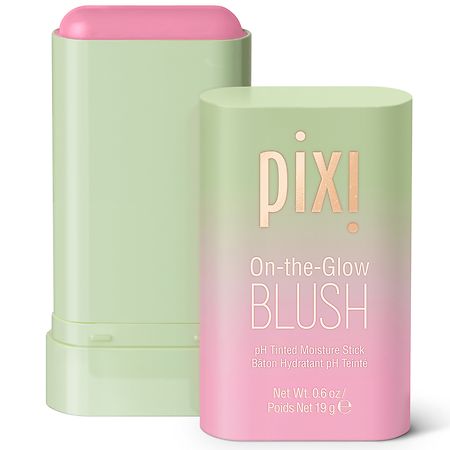


Pixi by Petra On-the-Glow Blush - Cheektone - 0.6oz: Semi-Sheer Medium Coverage, Face Stick
Analysis updated August 2026 · How Scout scores
At a glance
Summary
This blush product contains several beneficial ingredients such as castor seed oil, glycerin, and aloe vera extract, which provide moisturizing and soothing properties. However, the presence of phenoxyethanol, a preservative that can cause skin irritation, slightly detracts from its overall safety profile. The product is moderately processed, which also influences its rating.
Key ingredients 30
Ricinus Communis (Castor) Seed OilVery Good
Castor Seed Oil is a natural oil known for its emollient and moisturizing properties. It helps to soothe and hydrate the skin. It is well-tolerated by most skin types and is considered safe for use in cosmetics.
Risks
There is a very low risk of skin irritation, primarily in individuals with allergies to castor oil.
Benefits
It provides excellent moisturizing properties and helps to maintain skin hydration.
Aloe Barbadensis Leaf ExtractVery Good
Aloe Vera Extract is known for its soothing and hydrating properties. It helps to calm irritated skin and provides moisture. It is well-tolerated by most skin types and is considered safe for use in cosmetics.
Risks
There is a very low risk of skin irritation, primarily in individuals with allergies to aloe vera.
Benefits
It provides soothing and hydrating benefits, helping to calm and moisturize the skin.
Camellia Sinensis Leaf ExtractVery Good
Green Tea Extract is rich in antioxidants and is used for its anti-inflammatory properties. It helps to protect the skin from environmental stressors and supports skin health. It is well-tolerated by most skin types.
Risks
There is a very low risk of skin irritation, primarily in individuals with allergies to green tea.
Benefits
It provides antioxidant and anti-inflammatory benefits, helping to protect and soothe the skin.
Caprylic/Capric TriglycerideGood
Caprylic/Capric Triglyceride is derived from coconut oil and glycerin, used as an emollient and skin-repairing ingredient. It helps to replenish the skin's surface and resist moisture loss. It is well-tolerated by most skin types.
Risks
There are minimal risks, with rare cases of skin irritation reported.
Benefits
It provides excellent skin-conditioning properties and helps to maintain skin hydration.
Tocopheryl AcetateGood
Tocopheryl Acetate is a form of Vitamin E, used for its antioxidant properties. It helps to protect the skin from environmental stressors and supports skin health. It is well-tolerated by most skin types.
Risks
There is a low risk of skin irritation, particularly for sensitive skin types.
Benefits
It provides antioxidant benefits and helps to maintain skin health.
GlycerinGood
Glycerin is a humectant that attracts moisture to the skin, helping to keep it hydrated. It is widely used in cosmetics for its moisturizing properties. It is well-tolerated by most skin types and is considered safe for use.
Risks
There are minimal risks associated with glycerin, with rare cases of skin irritation reported.
Benefits
It provides excellent moisturizing properties and helps to maintain skin hydration.
Ascorbic AcidGood
Ascorbic Acid, also known as Vitamin C, is a powerful antioxidant used in cosmetics. It helps to protect the skin from environmental damage and supports collagen production. It is well-tolerated by most skin types.
Risks
There is a low risk of skin irritation, particularly for sensitive skin types.
Benefits
It provides antioxidant benefits and supports skin health and collagen production.
Hydrogenated PolyisobuteneNeutral
Hydrogenated Polyisobutene is a synthetic polymer used as a skin conditioning agent. It provides a smooth application and enhances the texture of the product. It is generally considered safe for use in cosmetics.
Risks
There are minimal risks associated with this ingredient, primarily related to potential skin irritation in sensitive individuals.
Benefits
It helps in improving the texture and spreadability of the product, making it easier to apply.
Diisostearyl MalateNeutral
Diisostearyl Malate is an ester used as an emollient and texture enhancer in cosmetics. It provides a smooth, silky feel and helps in moisture retention. It is considered safe for use in personal care products.
Risks
There is a low risk of skin irritation, especially for those with sensitive skin.
Benefits
It enhances the texture and feel of the product, contributing to a smooth application.
Synthetic WaxNeutral
Synthetic Wax is used to provide structure and stability to cosmetic products. It helps in maintaining the form and consistency of the product. It is generally considered safe for use in cosmetics.
Risks
There is a low risk of skin irritation, particularly for sensitive skin types.
Benefits
It contributes to the product's stability and helps in achieving the desired texture.
Bis-Diglyceryl Polyacyladipate-2Neutral
Bis-Diglyceryl Polyacyladipate-2 is an emollient that provides a smooth, non-greasy feel to the skin. It is used to enhance the texture and application of cosmetic products. It is considered safe for use in personal care items.
Risks
There is a minimal risk of skin irritation, especially for those with sensitive skin.
Benefits
It improves the texture and feel of the product, making it more pleasant to use.
Candelilla Cera/Euphorbia Cerifera (Candelilla) Wax/Cire de CandelillaNeutral
Candelilla Wax is a plant-derived wax used as a thickening agent and emollient. It helps to stabilize formulations and improve texture. It is considered safe for use in cosmetics.
Risks
There is a minimal risk of skin irritation, especially for those with sensitive skin.
Benefits
It provides structure and stability to the product, enhancing its texture and application.
Hydrogenated Castor OilNeutral
Hydrogenated Castor Oil is used as an emollient and thickening agent in cosmetics. It helps to improve the texture and stability of formulations. It is generally considered safe for use in personal care products.
Risks
There is a minimal risk of skin irritation, especially for those with sensitive skin.
Benefits
It enhances the texture and stability of the product, contributing to a smooth application.
Citric AcidNeutral
Citric Acid is used to adjust the pH of cosmetic products. It helps to maintain the stability and efficacy of formulations. It is generally considered safe for use in personal care items.
Risks
There is a low risk of skin irritation, particularly for sensitive skin types.
Benefits
It helps to maintain the stability and efficacy of the product.
Citrus Limon (Lemon) Fruit ExtractNeutral
Lemon Fruit Extract is used for its astringent and antioxidant properties. It helps to tone the skin and protect it from environmental damage. It is generally considered safe for use in cosmetics.
Risks
There is a low risk of skin irritation, particularly for sensitive skin types.
Benefits
It provides astringent and antioxidant benefits, helping to tone and protect the skin.
Fragaria Chiloensis (Strawberry) Fruit ExtractNeutral
Strawberry Fruit Extract is used for its antioxidant properties and pleasant fragrance. It helps to protect the skin from environmental stressors. It is generally considered safe for use in cosmetics.
Risks
There is a low risk of skin irritation, particularly for sensitive skin types.
Benefits
It provides antioxidant benefits and a pleasant fragrance to the product.
Hamamelis Virginiana (Witch Hazel) ExtractNeutral
Witch Hazel Extract is used for its astringent and anti-inflammatory properties. It helps to tone the skin and reduce inflammation. It is generally considered safe for use in cosmetics.
Risks
There is a low risk of skin irritation, particularly for sensitive skin types.
Benefits
It provides astringent and anti-inflammatory benefits, helping to tone and soothe the skin.
Panax Ginseng Root ExtractNeutral
Ginseng Root Extract is used for its antioxidant and anti-aging properties. It helps to protect the skin from environmental stressors and supports skin health. It is generally considered safe for use in cosmetics.
Risks
There is a low risk of skin irritation, particularly for sensitive skin types.
Benefits
It provides antioxidant and anti-aging benefits, helping to protect and support skin health.
Pyrus Malus (Apple) Fruit ExtractNeutral
Apple Fruit Extract is used for its antioxidant properties and pleasant fragrance. It helps to protect the skin from environmental stressors. It is generally considered safe for use in cosmetics.
Risks
There is a low risk of skin irritation, particularly for sensitive skin types.
Benefits
It provides antioxidant benefits and a pleasant fragrance to the product.
Rubus Idaeus (Raspberry) Fruit ExtractNeutral
Raspberry Fruit Extract is used for its antioxidant properties and pleasant fragrance. It helps to protect the skin from environmental stressors. It is generally considered safe for use in cosmetics.
Risks
There is a low risk of skin irritation, particularly for sensitive skin types.
Benefits
It provides antioxidant benefits and a pleasant fragrance to the product.
Vaccinium Angustifolium (Blueberry) Fruit ExtractNeutral
Blueberry Fruit Extract is used for its antioxidant properties and pleasant fragrance. It helps to protect the skin from environmental stressors. It is generally considered safe for use in cosmetics.
Risks
There is a low risk of skin irritation, particularly for sensitive skin types.
Benefits
It provides antioxidant benefits and a pleasant fragrance to the product.
Vitis Vinifera (Grape) Fruit ExtractNeutral
Grape Fruit Extract is used for its antioxidant properties and pleasant fragrance. It helps to protect the skin from environmental stressors. It is generally considered safe for use in cosmetics.
Risks
There is a low risk of skin irritation, particularly for sensitive skin types.
Benefits
It provides antioxidant benefits and a pleasant fragrance to the product.
Polyglyceryl-2 TriisostearateNeutral
Polyglyceryl-2 Triisostearate is an emulsifier used to stabilize formulations and improve texture. It helps to blend ingredients and maintain product consistency. It is generally considered safe for use in cosmetics.
Risks
There is a low risk of skin irritation, particularly for sensitive skin types.
Benefits
It helps to stabilize formulations and improve the texture of the product.
1, 2-HexanediolNeutral
1, 2-Hexanediol is used as a solvent and preservative in cosmetics. It helps to maintain the stability and efficacy of formulations. It is generally considered safe for use in personal care products.
Risks
There is a low risk of skin irritation, particularly for sensitive skin types.
Benefits
It helps to maintain the stability and efficacy of the product.
Titanium Dioxide (CI 77891)Neutral
Titanium Dioxide is used as a pigment and UV filter in cosmetics. It provides opacity and sun protection to the product. It is generally considered safe for use in personal care items.
Risks
There is a low risk of skin irritation, particularly for sensitive skin types.
Benefits
It provides pigmentation and sun protection benefits to the product.
Iron Oxides (CI 77492, CI 77499)Neutral
Iron Oxides are used as pigments in cosmetics to provide color. They are stable and non-toxic, making them suitable for use in a variety of products. They are generally considered safe for use in personal care items.
Risks
There is a low risk of skin irritation, particularly for sensitive skin types.
Benefits
They provide stable and non-toxic pigmentation to the product.
Red 7 (CI 15850)Neutral
Red 7 is a synthetic pigment used to provide color in cosmetics. It is stable and widely used in various products. It is generally considered safe for use in personal care items.
Risks
There is a low risk of skin irritation, particularly for sensitive skin types.
Benefits
It provides stable and vibrant pigmentation to the product.
Red 27 (CI 45410)Neutral
Red 27 is a synthetic pigment used to provide color in cosmetics. It is stable and widely used in various products. It is generally considered safe for use in personal care items.
Risks
There is a low risk of skin irritation, particularly for sensitive skin types.
Benefits
It provides stable and vibrant pigmentation to the product.
Synthetic BeeswaxBad
Processed additive flagged under Scout's ingredient doctrine.
Risks
There is a low risk of skin irritation, particularly for sensitive skin types.
Benefits
It provides structure to the product and enhances its application properties.
PhenoxyethanolBad
Phenoxyethanol is a preservative used to prevent microbial growth in cosmetics. It is effective in maintaining product safety but can cause skin irritation in some individuals. It is considered safe in low concentrations but has raised concerns over potential toxicity.
Risks
There is a risk of skin irritation and allergic reactions, particularly for sensitive skin types.
Benefits
It helps to preserve the product and prevent microbial contamination.
Get the full breakdown in the Scout appTake Scout shopping
Scan any product to see lab results, healthy alternatives, and your personalized analysis.
Download on theApp Store GET IT ONGoogle PlayAmazon pricing & content
Amazon price as of . Product prices and availability are accurate as of the date/time indicated and are subject to change. Any price and availability information displayed on Amazon.com at the time of purchase will apply to the purchase of this product.
CERTAIN CONTENT THAT APPEARS ON THIS SITE COMES FROM AMAZON. THIS CONTENT IS PROVIDED “AS IS” AND IS SUBJECT TO CHANGE OR REMOVAL AT ANY TIME.