
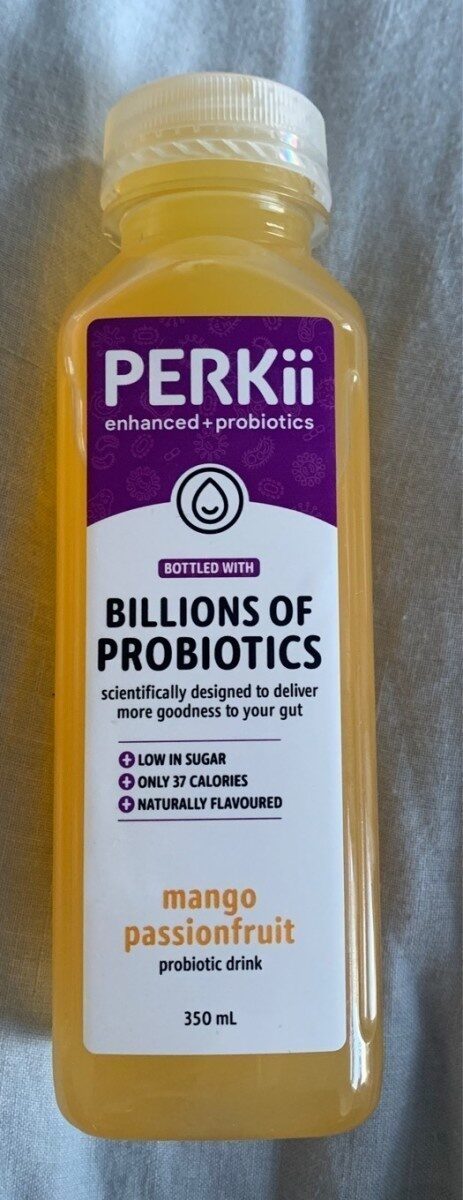

PERKii mango passionfruit probiotic drink
Analysis updated August 2026 · How Scout scores
At a glance
Summary
This probiotic drink contains Lactobacillus casei, a beneficial probiotic that supports gut health. However, it includes potassium sorbate, a synthetic preservative, and natural flavors, which can be vague and lack transparency. The presence of these additives, along with a moderate level of processing, affects the overall score.
Key ingredients 10
apple juiceGood
Apple juice provides natural sweetness and some vitamins, contributing to a pleasant flavor.
See more about apple juice →Lactobacillus caseiGood
Lactobacillus casei is a probiotic that supports digestive health and maintains gut balance.
See more about Lactobacillus casei →Calcium AlginateGood
Used as glazing agent. Calcium alginate is a natural thickening agent derived from algae, used to improve texture without harmful effects.
960Good
Used as natural sweetener. The natural sweetener provides sweetness without added sugars, making the drink lower in calories.
WaterNeutral
Water is the base of the formulation — inert.
See more about Water →natural flavoursNeutral
Natural flavours enhance the taste of the drink without adding artificial chemicals, maintaining a natural profile.
See more about natural flavours →160aNeutral
Part of natural colours. These natural colours are derived from plant sources, used to give the drink an appealing appearance.
163iiNeutral
Part of natural colours. These natural colours are derived from plant sources, used to give the drink an appealing appearance.
Citric AcidNeutral
Used as acidity regulator. Citric acid helps balance the pH and preserves the freshness of the beverage, supporting quality.
See more about Citric Acid →Potassium SorbateBad
Used as preservative. Potassium sorbate is a common preservative that extends shelf life while maintaining safety.
See more about Potassium Sorbate →Processing
Ultra-Processed Foods
Get the full breakdown in the Scout appTake Scout shopping
Scan any product to see lab results, healthy alternatives, and your personalized analysis.
Download on theApp Store GET IT ONGoogle Play