


At a glance
Summary
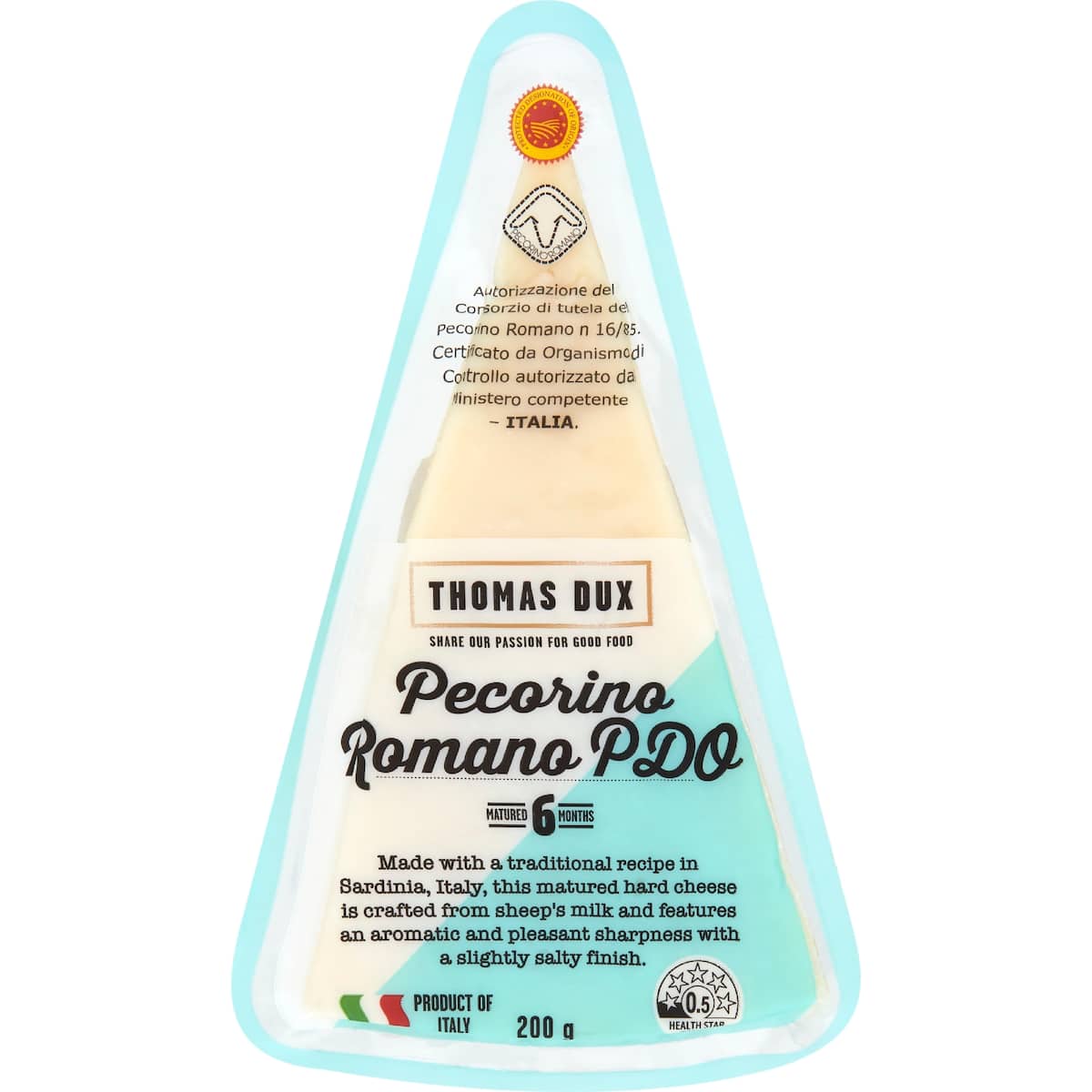
Pecorino Romano PDO is a traditional cheese made with simple ingredients: sheep's milk, salt, starter culture, and lamb rennet. The use of high-quality sheep's milk provides essential nutrients and protein, while the minimal ingredient list reflects a clean label. Although it is processed, the absence of artificial additives and the traditional cheesemaking process contribute positively to its score.
Key ingredients 4
Sheep's MilkGood
Sheep's milk is a rich source of high-quality protein and essential nutrients. It contains higher levels of calcium and vitamins compared to cow's milk. The milk is typically less processed, retaining more of its natural benefits.
Risks
Potential allergen for individuals with dairy sensitivities or lactose intolerance.
Benefits
Rich in protein, calcium, and vitamins, supporting bone health and muscle function.
SaltNeutral
Salt is used as a preservative and flavor enhancer in cheese production. It helps in the fermentation process and extends shelf life. However, excessive consumption of salt can lead to health issues.
Risks
High sodium intake can contribute to hypertension and cardiovascular diseases.
Benefits
Essential for the fermentation process and enhances flavor.
Starter CultureNeutral
Starter cultures are used to initiate the fermentation process in cheese making. They help develop flavor and texture in the cheese. These cultures are generally considered safe and beneficial for fermentation.
Benefits
Contributes to the development of flavor and texture in cheese.
Lamb RennetBad
Lamb rennet is an enzyme used to coagulate milk in cheese production. It is derived from the stomach lining of young lambs, raising ethical concerns for some consumers. Alternatives like microbial or vegetarian rennet are available.
Risks
Ethical concerns due to animal sourcing and potential allergenicity.
Benefits
Effective in coagulating milk, essential for traditional cheese making.
Processing
Processed Foods
Get the full breakdown in the Scout appTake Scout shopping
Scan any product to see lab results, healthy alternatives, and your personalized analysis.
Download on theApp Store GET IT ONGoogle Play