
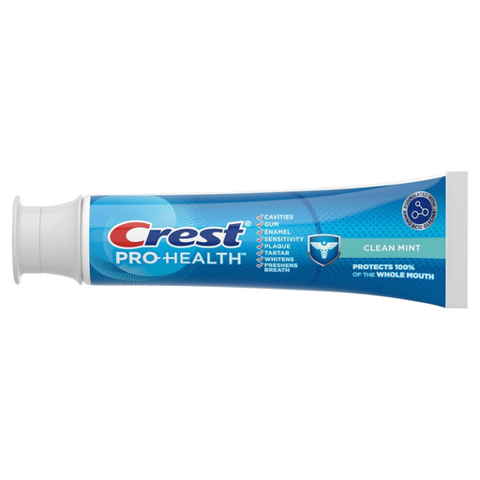

Crest Pro-Health Clean Mint Toothpaste
At a glance
Summary
Crest Pro-Health Clean Mint scores 20/100. Nearly identical problematic profile to Colgate Total: stannous fluoride, SLS, titanium dioxide, trisodium phosphate, hexametaphosphate, PEGs, carrageenan, and saccharin. The 'glycine' marketing addition doesn't offset the systemic issues. Owned by Procter & Gamble.
Key ingredients 19
Stannous Fluoride 0.454%Very Bad
Active anticavity/antigingivitis/antisensitivity. Fluoride is a developmental neurotoxicant per The Lancet (2014); chronic ingestion linked to fluorosis, lowered IQ (NTP 2024), and thyroid suppression.
See more about Stannous Fluoride 0.454% →Sodium Lauryl SulfateVery Bad
Harsh anionic surfactant. Documented trigger for recurrent aphthous (canker) ulcers (Herlofson & Barkvoll 1996); strips protective oral mucin; common contact irritant.
See more about Sodium Lauryl Sulfate →Titanium DioxideVery Bad
EU food-additive ban (2022) over genotoxicity concerns from nanoparticles; IARC Group 2B.
See more about Titanium Dioxide →Trisodium PhosphateBad
Strongly alkaline pH adjuster (also used as an industrial degreaser); can disrupt enamel pH balance and irritate soft tissue with repeated exposure.
See more about Trisodium Phosphate →Flavor (undisclosed)Bad
Proprietary flavor blend; can hide dozens of synthetic compounds and phthalate carriers under FDA trade-secret rules.
See more about Flavor (undisclosed) →Sodium HexametaphosphateBad
Tartar-control phosphate associated with enamel erosion and gum irritation; high systemic phosphate intake linked to kidney stress.
See more about Sodium Hexametaphosphate →CarrageenanBad
Seaweed-derived stabilizer; documented gut inflammation and IBD trigger (Tobacman 2001, Borthakur et al. 2007). No reason for it to be in a topical oral product.
See more about Carrageenan →Sodium SaccharinBad
Synthetic sweetener; gut microbiome disruption (Suez et al. 2014); historical NTP carcinogen listing.
See more about Sodium Saccharin →Polyethylene GlycolBad
PEG thickener/solvent; commonly contaminated with 1,4-dioxane and ethylene oxide as ethoxylation byproducts.
See more about Polyethylene Glycol →WaterNeutral
Solvent base.
See more about Water →SorbitolNeutral
Sugar alcohol humectant; non-cariogenic.
See more about Sorbitol →Hydrated SilicaNeutral
Gentle abrasive.
See more about Hydrated Silica →Sodium GluconateNeutral
Chelator/stabilizer; inert at typical concentrations.
See more about Sodium Gluconate →Cocamidopropyl BetaineNeutral
Coconut-derived surfactant — milder than sulfates, though an occasional allergen.
See more about Cocamidopropyl Betaine →Stannous ChlorideNeutral
Stabilizer for the stannous fluoride active.
See more about Stannous Chloride →Xanthan GumNeutral
Plant-derived thickener.
See more about Xanthan Gum →GlycerinGood
Humectant that draws moisture to the skin — a beneficial base ingredient.
See more about Glycerin →GlycineGood
Beneficial ingredient — whole-food or functional value in this product class.
See more about Glycine →MicaGood
Mineral pigment — the clean alternative to synthetic dyes.
See more about Mica →Get the full breakdown in the Scout appTake Scout shopping
Scan any product to see lab results, healthy alternatives, and your personalized analysis.
Download on theApp Store GET IT ONGoogle PlayAmazon pricing & content
Amazon price as of . Product prices and availability are accurate as of the date/time indicated and are subject to change. Any price and availability information displayed on Amazon.com at the time of purchase will apply to the purchase of this product.
CERTAIN CONTENT THAT APPEARS ON THIS SITE COMES FROM AMAZON. THIS CONTENT IS PROVIDED “AS IS” AND IS SUBJECT TO CHANGE OR REMOVAL AT ANY TIME.