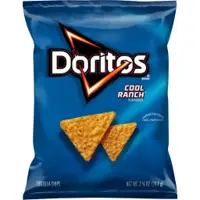
Doritos Nacho Cheese
Swap it for
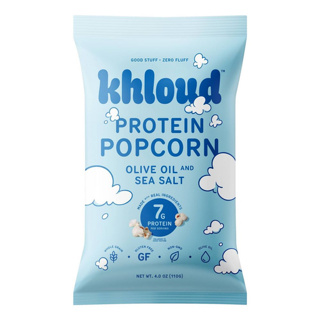
 Khloud Protein Popcorn Khloud · 1 oz · 18 pack View on Amazon · $49.50 See all Chips & Salty Snacks, ranked
At a glance
Summary
Doritos Nacho Cheese scores 1/100. A NOVA 4 ultra-processed corn chip with one of the worst additive profiles in the salty snack category. The base is corn, vegetable oil (corn, canola, and/or sunflower — a triple seed oil blend), with a seasoning system built on maltodextrin, MSG, three artificial dyes (Red 40, Yellow 6, Yellow 5), artificial flavors, and multiple flavor enhancers (disodium inosinate, disodium guanylate stacked with MSG). The dye load is particularly egregious — all three are petroleum-derived and banned or warning-labeled in Europe. Contains dextrose (another refined sugar), buttermilk, and romano/cheddar cheese, but the real flavors are overwhelmed by the synthetic additive cocktail. Owned by Frito-Lay/PepsiCo. All regular Doritos flavor and size variants (Nacho Cheese, Cool Ranch, Flamas, Spicy Nacho, Spicy Sweet Chili, Dinamita and the rest) are standardized to 1/100: a NOVA 4 ultra-processed corn chip fried in industrial seed oils (corn, canola, and/or sunflower), with MSG, artificial colors in most flavors, and glyphosate residue detected in the corn base by independent testing. Only the clean-label Simply NKD line scores higher.
Contaminants 8
Source: Consumer Reports, Contaminants in Kids' Snacks (August 2026) — three samples from 2–3 lots bought at retail, ISO 17025-accredited lab
Acrylamide 53 ppb (1.47 mcg per 28 g serving) High
One serving carries about 7.3 times California's Prop 65 no-significant-risk level for acrylamide (0.2 mcg per day), the threshold Consumer Reports applied at a serving a day. Acrylamide forms whenever starchy food is fried, baked or roasted. At 53 ppb it was among the lower readings of the nine chips and crackers CR tested (Lay's Classic measured 263 ppb); only Honey Maid graham crackers and Pirate's Booty were lower.
Consumer Reports' August 2026 kids' snacks test (acrylamide by LC-MS/MS, J. Agric. Food Chem. 54:7001 (2006)) on three Doritos Nacho Cheese samples from two to three lots: 53 ppb, which is 1.47 mcg in the 28 g (about 11 chips) serving. CR's reference values: OEHHA NSRL 0.2 mcg/day, MADL 140 mcg/day, EPA reference dose 2 mcg/kg body weight/day.
Glycidyl esters 102 ppb (2.85 mcg per 28 g serving) High
Glycidyl esters form when vegetable oils are refined at high heat and turn into glycidol in the gut — a probable human carcinogen with no safe intake set by EFSA. One serving is about 5.3 times California's no-significant-risk level for glycidol (0.54 mcg per day), the reference CR applied. At 102 ppb it was the second highest glycidyl ester level of the nine chips and crackers CR tested, after Takis Fuego (122 ppb). Its refined vegetable oils (corn, canola and/or sunflower, per the label) are the source.
Consumer Reports' August 2026 kids' snacks test (glycidyl esters by GC-MS/MS, AOAC 2018.03) on three Doritos Nacho Cheese samples from two to three lots: 102 ppb, which is 2.85 mcg per 28 g serving. CR's reference value: OEHHA NSRL for glycidol 0.54 mcg/day. The EU caps GE in retail vegetable oils at 1,000 µg/kg as glycidol; the U.S. has no limit.
3-MCPD 43 ppb (1.20 mcg per 28 g serving) Safe
3-MCPD is a by-product of refining vegetable oil at high heat. EFSA's tolerable daily intake is 2 mcg per kg of body weight — about 46 mcg a day for a 23 kg child — so one serving is about 3% of that. Takis Fuego had the highest 3-MCPD of the chips and crackers CR tested (160 ppb).
Consumer Reports' August 2026 kids' snacks test (3-MCPD by GC-MS/MS, AOAC 2018.03) on three Doritos Nacho Cheese samples from two to three lots: 43 ppb, which is 1.20 mcg per 28 g serving. Reference: EFSA tolerable daily intake 2 mcg/kg body weight/day (2018).
Lead 4.03 ppb (0.11 mcg per 28 g serving) Low
Detected — one serving is about 22% of California's Prop 65 maximum allowable dose for lead (0.5 mcg per day). No level of lead is considered beneficial, and children are the most sensitive group.
Consumer Reports' August 2026 kids' snacks test (lead by ICP-QQQ-MS, AOAC 2015.01) on three Doritos Nacho Cheese samples from two to three lots: 4.03 ppb, which is 0.11 mcg per 28 g serving, against the OEHHA MADL of 0.5 mcg/day.
Cadmium 2.72 ppb (0.08 mcg per 28 g serving) Safe
One serving is about 2% of California's Prop 65 maximum allowable dose for cadmium (4.1 mcg per day).
Consumer Reports' August 2026 kids' snacks test (cadmium by ICP-QQQ-MS, AOAC 2015.01) on three Doritos Nacho Cheese samples from two to three lots: 2.72 ppb, which is 0.08 mcg per 28 g serving, against the OEHHA MADL of 4.1 mcg/day.
Arsenic Not detected Not detected
Not detected — below the laboratory's method detection limit in every sample.
Consumer Reports' August 2026 kids' snacks test (total arsenic by ICP-QQQ-MS, AOAC 2015.01) on three Doritos Nacho Cheese samples from two to three lots: not detected in any sample.
Mercury Not detected Not detected
Not detected — below the laboratory's method detection limit in every sample.
Consumer Reports' August 2026 kids' snacks test (mercury by ICP-QQQ-MS, AOAC 2015.01) on three Doritos Nacho Cheese samples from two to three lots: not detected in any sample.
DEHP (phthalate) Not detected Not detected
Not detected — no phthalates were found in any sample. DEHP is a plasticiser that migrates from processing equipment and packaging.
Consumer Reports' August 2026 kids' snacks test (phthalates by GC-MS/MS, GB 5009.271-2016 mod.) on three Doritos Nacho Cheese samples from two to three lots: DEHP not detected; total phthalates 0 ng per serving.
Key ingredients 10
Vegetable OilVery Bad
Sources: Corn, Canola, and/or Sunflower Oil. Triple seed oil blend — all high in omega-6 fatty acids promoting systemic inflammation. Highly refined, chemically extracted oils.
See more about Vegetable Oil →Red 40Very Bad
Petroleum-derived artificial dye linked to hyperactivity in children and potential carcinogenicity. Banned in several European countries.
See more about Red 40 →Yellow 6Very Bad
Petroleum-derived artificial dye (Sunset Yellow) linked to allergic reactions, hyperactivity, and potential carcinogenicity.
See more about Yellow 6 →Yellow 5Very Bad
Petroleum-derived artificial dye (Tartrazine) — one of the most controversial food dyes still permitted in the US.
See more about Yellow 5 →MaltodextrinBad
Highly refined starch filler with a glycemic impact above table sugar.
See more about Maltodextrin →Monosodium Glutamate (MSG)Bad
Excitotoxic flavor enhancer that overstimulates taste receptors. Stacked with disodium inosinate and disodium guanylate for amplified effect.
See more about Monosodium Glutamate (MSG) →Disodium Inosinate and Disodium GuanylateBad
Flavor enhancers that amplify MSG's excitotoxic effect. Triple glutamate enhancer stack is a hallmark of ultra-processed food.
See more about Disodium Inosinate and Disodium Guanylate →Natural and Artificial FlavorsBad
Zero transparency. Artificial flavors are synthetic compounds with no nutritional value.
See more about Natural and Artificial Flavors →DextroseBad
Refined corn sugar added for flavor enhancement. Another processed sugar source stacked on top of maltodextrin.
See more about Dextrose →Corn (Whole)Neutral
Whole corn base — better than enriched corn meal, but still a refined starchy snack substrate.
See more about Corn (Whole) →Processing
Ultra-Processed Foods
Get the full breakdown in the Scout appTake Scout shopping
Scan any product to see lab results, healthy alternatives, and your personalized analysis.
Are you Doritos? Fix an error Get the badge Get tested
Amazon pricing & content
Amazon price for Khloud Protein Popcorn as of . Product prices and availability are accurate as of the date/time indicated and are subject to change. Any price and availability information displayed on Amazon.com at the time of purchase will apply to the purchase of this product.
CERTAIN CONTENT THAT APPEARS ON THIS SITE COMES FROM AMAZON. THIS CONTENT IS PROVIDED “AS IS” AND IS SUBJECT TO CHANGE OR REMOVAL AT ANY TIME.