
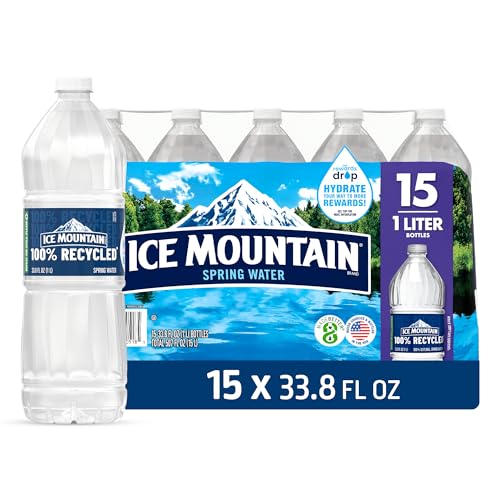



Ice Mountain Spring Water Plastic Bottle
At a glance
Summary
Ice Mountain Spring Water (Nestlé Waters) scores 20/100. The latest lab flagged 12 contaminants including bromate ~5x the health guideline, nitrate ~14x, chromium ~8x, plus radium and gross-beta radiation. Plastic-bottle packaging adds a likely microplastic risk. One of the lowest-scoring entries in the rankings.
Contaminants 6
Source: Independent third-party laboratory testing
Bromate 0.5 µg/L Moderate
Detected at a moderate level. Bromate detected at 0.5 µg/L, above EWG's strict health guideline of 0.1 µg/L; below the EPA legal limit of 10 µg/L.
Independent third-party laboratory testing.
Barium 5 µg/L Trace
Detected at a trace level. Barium detected at trace level (5 µg/L), well below typical safety concerns.
Independent third-party laboratory testing.
Uranium 1 µg/L Moderate
Detected at a moderate level. Uranium detected at 1 µg/L, above EWG's strict health guideline of 0.43 µg/L; below the EPA legal limit of 30 µg/L.
Independent third-party laboratory testing.
Nitrate 8.68 mg/L Moderate
Detected at a moderate level. Nitrate (as NO3) detected at 8.68 mg/L, more than 10× EWG's strict health guideline of 0.62 mg/L; below the EPA legal limit of 44 mg/L. (Inferred from "Elevated nitrate can form carcinogenic nitrosamines and pose…")
Independent third-party laboratory testing.
Chromium Detected Moderate
Detected at a moderate level. Chromium (especially Cr-VI) is a known carcinogen; exceeding the health guideline is a serious safety concern. Reported value: ~8x guideline.
Independent third-party laboratory testing.
Fluoride 0.29 mg/L Trace
Detected at a trace level. Fluoride detected at 0.29 mg/L, below EWG's strict health guideline of 0.7 mg/L.
Independent third-party laboratory testing.
Key ingredients 10
Gross BetaVery Bad
Gross beta radiation reflects beta-emitting radionuclides like strontium-90 and cesium-137; flagged because it indicates radioactive contamination. Reported value: 0.7 pCi/L.
See more about Gross Beta →Radium 226/228Bad
Radium detected at 0.054 pCi/L, above EWG's strict health guideline of 0.05 pCi/L; below the EPA legal limit of 5 pCi/L.
See more about Radium 226/228 →Gross AlphaBad
Gross alpha radiation reflects total alpha-emitting radionuclides such as uranium and thorium; flagged because it indicates radioactive contamination. Reported value: 0.1 pCi/L.
See more about Gross Alpha →ChloramineBad
Chloramine is a disinfectant byproduct; chronic ingestion has been linked to gastrointestinal and respiratory irritation. Reported value: 0.001 mg/L.
See more about Chloramine →ChlorineBad
Residual chlorine is a disinfectant byproduct; not desirable in finished drinking water and can affect taste. Reported value: 0.005 mg/L.
See more about Chlorine →NickelBad
Nickel can cause allergic contact dermatitis, respiratory sensitization, and has carcinogenic potential on inhalation. Reported value: 0.0012 mg/L.
See more about Nickel →BromideBad
Bromide itself is mostly a precursor; elevated levels increase risk of bromate formation during disinfection. Reported value: 0.0195 mg/L.
See more about Bromide →ChlorideGood
Chloride supports electrolyte balance, acid-base homeostasis, and proper nerve and muscle function. Reported value: 9.3 mg/L.
See more about Chloride →SodiumGood
Sodium is an essential electrolyte for nerve transmission and fluid balance. Naturally occurring in mineral water at moderate levels. Reported value: 7.4 mg/L.
See more about Sodium →SulfateGood
Sulfate is naturally occurring and contributes to taste; moderate amounts are well tolerated. Reported value: 16.7 mg/L.
See more about Sulfate →Processing
Unprocessed or Minimally Processed Foods
Get the full breakdown in the Scout appTake Scout shopping
Scan any product to see lab results, healthy alternatives, and your personalized analysis.
Download on theApp Store GET IT ONGoogle PlayAmazon pricing & content
Amazon price as of . Product prices and availability are accurate as of the date/time indicated and are subject to change. Any price and availability information displayed on Amazon.com at the time of purchase will apply to the purchase of this product.
CERTAIN CONTENT THAT APPEARS ON THIS SITE COMES FROM AMAZON. THIS CONTENT IS PROVIDED “AS IS” AND IS SUBJECT TO CHANGE OR REMOVAL AT ANY TIME.