Snyder's of Hanover Mini Pretzels
Swap it for
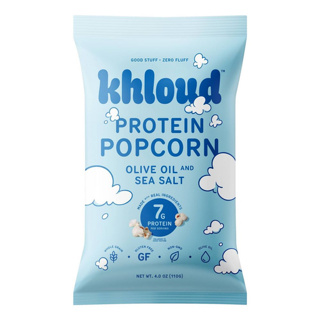
 Khloud Protein Popcorn Khloud · 1 oz · 18 pack View on Amazon · $49.50 See all Chips & Salty Snacks, ranked
At a glance
Summary
This product is primarily made from refined flour and contains canola oil, a seed oil that is highly processed and can promote inflammation. The presence of dextrose, a simple sugar, adds to the health concerns by contributing to rapid blood sugar spikes. As an ultra-processed snack with these ingredients, it falls into a lower health category despite its relatively low sugar content.
Contaminants 8
Source: Consumer Reports, Contaminants in Kids' Snacks (August 2026) — three samples from 2–3 lots bought at retail, ISO 17025-accredited lab
Acrylamide 160 ppb (4.48 mcg per 28 g serving) High
One serving carries about 22 times California's Prop 65 no-significant-risk level for acrylamide (0.2 mcg per day), the threshold Consumer Reports applied at a serving a day. Acrylamide forms whenever starchy food is fried, baked or roasted. At 160 ppb it was the second highest of the nine chips and crackers CR tested, after Lay's Classic (263 ppb). Pretzels brown hard in the oven, which is where acrylamide forms.
Consumer Reports' August 2026 kids' snacks test (acrylamide by LC-MS/MS, J. Agric. Food Chem. 54:7001 (2006)) on three Snyder's Mini Pretzels samples from two to three lots: 160 ppb, which is 4.48 mcg in the 28 g (about 19 pretzels) serving. CR's reference values: OEHHA NSRL 0.2 mcg/day, MADL 140 mcg/day, EPA reference dose 2 mcg/kg body weight/day.
Glycidyl esters Not detected Not detected
Not detected — below the laboratory's method detection limit in every sample. Glycidyl esters come from vegetable oils refined at high heat.
Consumer Reports' August 2026 kids' snacks test (glycidyl esters by GC-MS/MS, AOAC 2018.03) on three Snyder's Mini Pretzels samples from two to three lots: not detected in any sample.
3-MCPD Not detected Not detected
Not detected — below the laboratory's method detection limit in every sample. 3-MCPD is a by-product of refining vegetable oil at high heat.
Consumer Reports' August 2026 kids' snacks test (3-MCPD by GC-MS/MS, AOAC 2018.03) on three Snyder's Mini Pretzels samples from two to three lots: not detected in any sample.
Lead 4.96 ppb (0.14 mcg per 28 g serving) Low
Detected — one serving is about 28% of California's Prop 65 maximum allowable dose for lead (0.5 mcg per day). No level of lead is considered beneficial, and children are the most sensitive group.
Consumer Reports' August 2026 kids' snacks test (lead by ICP-QQQ-MS, AOAC 2015.01) on three Snyder's Mini Pretzels samples from two to three lots: 4.96 ppb, which is 0.14 mcg per 28 g serving, against the OEHHA MADL of 0.5 mcg/day.
Cadmium 25.3 ppb (0.71 mcg per 28 g serving) Low
One serving is about 17% of California's Prop 65 maximum allowable dose for cadmium (4.1 mcg per day).
Consumer Reports' August 2026 kids' snacks test (cadmium by ICP-QQQ-MS, AOAC 2015.01) on three Snyder's Mini Pretzels samples from two to three lots: 25.3 ppb, which is 0.71 mcg per 28 g serving, against the OEHHA MADL of 4.1 mcg/day.
Arsenic 5.00 ppb total (0.1 mcg per 28 g serving) Safe
CR ran its inorganic-arsenic follow-up only on the four products with the highest total arsenic, and this was not one of them. Even counted entirely as inorganic, one serving is about 1% of California's no-significant-risk level for inorganic arsenic (10 mcg per day).
Consumer Reports' August 2026 kids' snacks test (total arsenic by ICP-QQQ-MS, AOAC 2015.01) on three Snyder's Mini Pretzels samples from two to three lots: 5.00 ppb, which is 0.1 mcg per 28 g serving; inorganic arsenic was tested only on the four products with the highest totals.
Mercury Not detected Not detected
Not detected — below the laboratory's method detection limit in every sample.
Consumer Reports' August 2026 kids' snacks test (mercury by ICP-QQQ-MS, AOAC 2015.01) on three Snyder's Mini Pretzels samples from two to three lots: not detected in any sample.
DEHP (phthalate) Not detected Not detected
Not detected — no phthalates were found in any sample. DEHP is a plasticiser that migrates from processing equipment and packaging.
Consumer Reports' August 2026 kids' snacks test (phthalates by GC-MS/MS, GB 5009.271-2016 mod.) on three Snyder's Mini Pretzels samples from two to three lots: DEHP not detected; total phthalates 0 ng per serving.
Key ingredients 8
Canola oilVery Bad
Canola oil is highly processed and often contains trans fats or unhealthy omega-6 fatty acids, which are linked to inflammation.
See more about Canola oil →Enriched flour (wheat flour, niacin, reduced iron, thiamine mononitrate, riboflavin, folic acid)Bad
This ingredient is heavily processed and refined, which reduces its nutritional value and can contribute to less healthy eating habits.
See more about Enriched flour (wheat flour, niacin, reduced iron, thiamine mononitrate, riboflavin, folic acid) →DextroseBad
Dextrose is a form of sugar that can contribute to excessive calorie intake and blood sugar spikes.
See more about Dextrose →WaterNeutral
Water is a neutral ingredient essential for dough formation, with no significant health impact.
See more about Water →SaltNeutral
Salt is used for flavor and preservation, but should be consumed in moderation to avoid health issues.
See more about Salt →MaltNeutral
Malt adds sweetness and flavor but is a simple carbohydrate with limited nutritional benefits.
See more about Malt →YeastNeutral
Yeast is a natural leavening agent that helps dough rise, with no significant health concerns.
See more about Yeast →SodaNeutral
Soda acts as a leavening agent in baking, with no major health impact in small quantities.
See more about Soda →Processing
Ultra-Processed Foods
Get the full breakdown in the Scout appTake Scout shopping
Scan any product to see lab results, healthy alternatives, and your personalized analysis.
Are you Snyder's of Hanover? Fix an error Get the badge Get tested
Amazon pricing & content
Amazon price for Khloud Protein Popcorn as of . Product prices and availability are accurate as of the date/time indicated and are subject to change. Any price and availability information displayed on Amazon.com at the time of purchase will apply to the purchase of this product.
CERTAIN CONTENT THAT APPEARS ON THIS SITE COMES FROM AMAZON. THIS CONTENT IS PROVIDED “AS IS” AND IS SUBJECT TO CHANGE OR REMOVAL AT ANY TIME.