
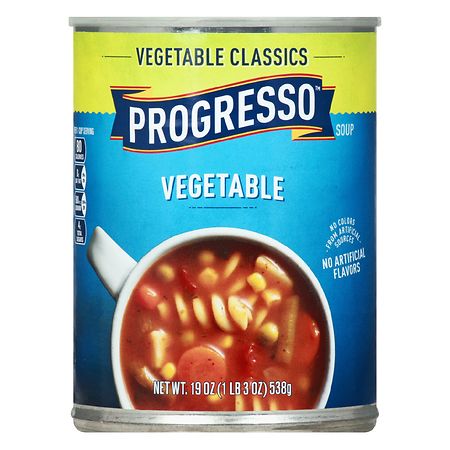


Progresso Vegetable Classics Vegetable Soup
Summary
This vegetable soup contains several beneficial ingredients like carrots, celery, and green beans, which are minimally processed and contribute to its nutritional value. However, the presence of hydrolyzed corn protein and natural flavors, along with its high processing level, detracts from its overall healthiness. The soup's ultra-processed nature limits its score despite having some whole food components.
At a glance
Key ingredients 14
WaterNeutral
Water is a neutral ingredient used as a base for soups. It provides no calories or nutrients but is essential for hydration. In this product, it serves as a medium for other ingredients.
Benefits
Essential for hydration and acts as a solvent for nutrients in the soup.
Tomato PureeGood
Tomato puree is a concentrated source of tomatoes, providing vitamins and antioxidants. It is minimally processed, retaining much of the nutritional value of fresh tomatoes. The puree enhances flavor and nutritional content.
Benefits
Rich in lycopene, an antioxidant linked to reduced risk of heart disease and cancer.
CarrotsVery Good
Carrots are a nutrient-dense vegetable rich in beta-carotene, fiber, and vitamins. They are minimally processed, retaining their nutritional integrity. Carrots contribute to the soup's flavor and nutritional profile.
Benefits
High in beta-carotene, which is converted to vitamin A, supporting vision and immune function.
CeleryGood
Celery is a low-calorie vegetable that provides fiber and essential nutrients. It is minimally processed, maintaining its nutritional benefits. Celery adds flavor and texture to the soup.
Benefits
Contains antioxidants and anti-inflammatory compounds that may support overall health.
CornNeutral
Corn is a starchy vegetable that provides carbohydrates and some fiber. It is a common ingredient in soups for texture and sweetness. The processing level is moderate, retaining some nutrients.
Benefits
Provides carbohydrates for energy and some fiber for digestive health.
Green BeansGood
Green beans are a low-calorie vegetable rich in vitamins and minerals. They are minimally processed, preserving their nutritional content. Green beans add texture and nutrients to the soup.
Benefits
Rich in vitamins A, C, and K, supporting immune function and bone health.
PotatoesNeutral
Potatoes are a starchy vegetable providing carbohydrates and some vitamins. They are a staple in many soups for texture and satiety. Processing is minimal, retaining most nutrients.
Benefits
Provides carbohydrates for energy and some vitamin C and potassium.
PastaNeutral
Pasta is made from wheat flour and provides carbohydrates. It is a common ingredient in soups for texture and satiety. The processing involves drying, which preserves shelf life.
Risks
Contains gluten, which may be a concern for individuals with celiac disease or gluten sensitivity.
Benefits
Provides carbohydrates for energy and some protein.
Hydrolyzed Corn ProteinBad
Hydrolyzed corn protein is a processed ingredient used as a flavor enhancer. It may contain free glutamates, similar to MSG, which can be a concern for some individuals. The processing involves breaking down proteins, which can affect nutritional quality.
Risks
May cause reactions in sensitive individuals due to free glutamates.
Benefits
Enhances flavor in processed foods.
SaltNeutral
Salt is used as a seasoning and preservative in foods. It enhances flavor but should be consumed in moderation due to potential health risks. The processing is minimal, involving extraction and purification.
Risks
Excessive intake may lead to high blood pressure and cardiovascular issues.
Benefits
Essential for maintaining fluid balance and nerve function.
Modified Food StarchNeutral
Modified food starch is used as a thickening agent in soups. It is derived from starches like corn or potatoes and undergoes chemical modification. The processing alters its properties for improved texture and stability.
Benefits
Improves texture and stability of processed foods.
Potassium ChlorideNeutral
Potassium chloride is used as a salt substitute to reduce sodium content. It provides potassium, an essential mineral, but can have a bitter taste. The processing involves extraction and purification.
Risks
Excessive intake may affect kidney function in susceptible individuals.
Benefits
Helps maintain electrolyte balance and supports heart health.
Natural FlavorBad
Natural flavor is a catch-all term for flavoring agents derived from natural sources. The lack of specificity can be concerning for those with allergies or sensitivities. Processing methods vary, and the exact composition is often undisclosed.
Risks
May contain allergens or substances that some individuals prefer to avoid.
Benefits
Enhances flavor without adding calories.
Citric AcidNeutral
Citric acid is a natural preservative and flavor enhancer. It is commonly used in foods to add acidity and preserve freshness. The processing involves fermentation of sugars.
Benefits
Acts as a preservative and enhances flavor.
Processing
Ultra-Processed Foods
Get the full breakdown in the Scout app
Scan any product to see lab results, healthy alternatives, and your personalized analysis.
Download on theApp Store