
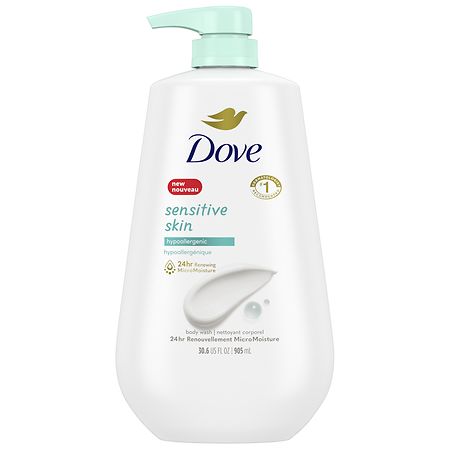
Dove Body Wash With Pump For 24hr Lotion-Soft Skin Sensitive Skin Moisturizing Skin Cleanser Gentle Hypoallergenic Formula With No Sulfates No Parabens 30.6 fl oz
Analysis updated August 2026 · How Scout scores
At a glance
Summary
This body wash avoids harsh sulfates and parabens, which is beneficial for sensitive skin. However, it contains fragrance, which can be a source of allergens and irritants, leading to potential skin sensitivity. The presence of beneficial ingredients like glycerin and soybean oil helps to moisturize and condition the skin, balancing the formulation.
Key ingredients 22
glycine soja (soybean) oilGood
Glycine soja oil is a natural oil rich in essential fatty acids and antioxidants. It is used for its moisturizing and skin-conditioning properties. It is beneficial for maintaining skin health.
Risks
Potential allergen for individuals with soy allergies.
Benefits
It provides nourishment and helps protect the skin from environmental damage.
glycerinGood
Glycerin is a humectant that attracts moisture to the skin. It is widely used in skincare for its hydrating properties. It helps to maintain the skin's moisture balance.
Risks
There are no significant risks associated with glycerin.
Benefits
It provides long-lasting hydration and improves skin smoothness.
water (eau)Neutral
Water is a common solvent used in cosmetic formulations. It helps dissolve other ingredients and provides a base for the product. It is generally considered safe and non-irritating.
Risks
There are no significant risks associated with water in cosmetic products.
Benefits
Water hydrates the skin and helps in the even distribution of other ingredients.
sodium lauroyl isethionateNeutral
Sodium lauroyl isethionate is a mild surfactant used for its cleansing properties. It is less irritating than traditional sulfates. It is often used in formulations for sensitive skin.
Risks
In rare cases, it may cause mild irritation to very sensitive skin.
Benefits
It provides a gentle cleansing action without stripping the skin's natural oils.
sodium methyl lauroyl taurateNeutral
Sodium methyl lauroyl taurate is a mild surfactant that helps in cleansing and foaming. It is considered gentle on the skin. It is often used in products designed for sensitive skin.
Risks
May cause mild irritation if used in high concentrations.
Benefits
It helps maintain the skin's moisture barrier while providing effective cleansing.
cocamidopropyl betaineNeutral
Cocamidopropyl betaine is a surfactant derived from coconut oil. It is used to enhance foam and improve the texture of the product. It is generally considered mild and non-irritating.
Risks
Some individuals may experience allergic reactions or irritation.
Benefits
It helps to create a rich lather and improves the cleansing efficacy of the product.
lauric acidNeutral
Lauric acid is a fatty acid used for its cleansing and emulsifying properties. It is derived from coconut oil and is generally considered safe. It helps in stabilizing the formulation.
Risks
May cause mild irritation in sensitive individuals.
Benefits
It has antimicrobial properties and helps in maintaining the product's consistency.
sodium hydroxypropyl starch phosphateNeutral
Sodium hydroxypropyl starch phosphate is a modified starch used as a thickening agent. It helps improve the texture and stability of the product. It is generally considered safe for use in cosmetics.
Risks
There are no significant risks associated with this ingredient.
Benefits
It enhances the product's viscosity and provides a smooth application.
sodium chlorideNeutral
Sodium chloride, or table salt, is used as a thickening agent in cosmetic formulations. It helps to adjust the viscosity of the product. It is generally considered safe and non-irritating.
Risks
Excessive use may lead to dryness in some individuals.
Benefits
It helps to stabilize the product and improve its texture.
stearic acidNeutral
Stearic acid is a fatty acid used as an emulsifier and thickener. It helps to stabilize formulations and improve texture. It is generally considered safe for use in cosmetics.
Risks
May cause mild irritation in sensitive individuals.
Benefits
It helps to maintain the consistency and stability of the product.
palmitic acidNeutral
Palmitic acid is a fatty acid used for its emollient and thickening properties. It helps to improve the texture and stability of the product. It is generally considered safe for use in cosmetics.
Risks
May cause mild irritation in sensitive individuals.
Benefits
It provides a smooth application and helps to lock in moisture.
hydrogenated vegetable glyceridesNeutral
Hydrogenated vegetable glycerides are used as emollients and thickeners. They help to improve the texture and moisturizing properties of the product. They are generally considered safe for use in cosmetics.
Risks
There are no significant risks associated with this ingredient.
Benefits
They help to soften and smooth the skin.
glyceryl stearateNeutral
Glyceryl stearate is an emulsifier that helps to blend oil and water components. It improves the texture and stability of the product. It is generally considered safe for use in cosmetics.
Risks
May cause mild irritation in sensitive individuals.
Benefits
It helps to maintain the consistency and enhances the moisturizing properties of the product.
hydroxystearic acidNeutral
Hydroxystearic acid is used as a thickening agent and emulsifier. It helps to stabilize formulations and improve texture. It is generally considered safe for use in cosmetics.
Risks
There are no significant risks associated with this ingredient.
Benefits
It enhances the product's viscosity and provides a smooth application.
guar hydroxypropyltrimonium chlorideNeutral
Guar hydroxypropyltrimonium chloride is a conditioning agent derived from guar gum. It helps to improve the texture and manageability of hair and skin. It is generally considered safe for use in cosmetics.
Risks
There are no significant risks associated with this ingredient.
Benefits
It provides conditioning benefits and enhances the feel of the product.
citric acidNeutral
Citric acid is used to adjust the pH of cosmetic formulations. It is derived from citrus fruits and is generally considered safe. It helps to maintain the stability of the product.
Risks
May cause mild irritation in sensitive individuals.
Benefits
It helps to balance the pH and improve the product's effectiveness.
capryloyl glycineNeutral
Capryloyl glycine is used for its antimicrobial and skin-conditioning properties. It helps to maintain the skin's natural balance. It is generally considered safe for use in cosmetics.
Risks
There are no significant risks associated with this ingredient.
Benefits
It helps to protect the skin from microbial contamination.
undecylenoyl glycineNeutral
Undecylenoyl glycine is used for its antimicrobial properties. It helps to maintain the skin's natural balance and prevent microbial growth. It is generally considered safe for use in cosmetics.
Risks
There are no significant risks associated with this ingredient.
Benefits
It helps to protect the skin from microbial contamination.
sodium gluconateNeutral
Sodium gluconate is used as a chelating agent to improve the stability of formulations. It helps to prevent the degradation of the product. It is generally considered safe for use in cosmetics.
Risks
There are no significant risks associated with this ingredient.
Benefits
It enhances the stability and shelf life of the product.
sodium benzoateBad
Synthetic preservative that can form benzene in the presence of vitamin C.
Risks
May cause irritation in sensitive individuals or when used in high concentrations.
Benefits
It helps to extend the shelf life of the product by preventing spoilage.
hydrogenated soybean oilVery Bad
Heavily flagged ingredient class under Scout's doctrine.
Risks
May cause allergic reactions in individuals with soy allergies.
Benefits
It helps to lock in moisture and improve skin texture.
fragrance (parfum)Very Bad
Fragrance is used to impart a pleasant scent to the product. However, it can be a source of allergens and irritants. It is often criticized for its potential to cause skin sensitivity.
Risks
May cause allergic reactions or irritation, especially in sensitive individuals.
Benefits
Provides a pleasant sensory experience during use.
Get the full breakdown in the Scout appTake Scout shopping
Scan any product to see lab results, healthy alternatives, and your personalized analysis.
Download on theApp Store GET IT ONGoogle PlayAmazon pricing & content
Amazon price as of . Product prices and availability are accurate as of the date/time indicated and are subject to change. Any price and availability information displayed on Amazon.com at the time of purchase will apply to the purchase of this product.
CERTAIN CONTENT THAT APPEARS ON THIS SITE COMES FROM AMAZON. THIS CONTENT IS PROVIDED “AS IS” AND IS SUBJECT TO CHANGE OR REMOVAL AT ANY TIME.