
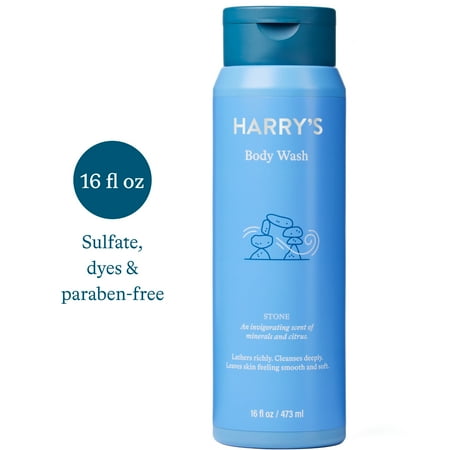
Harry s Men s Cleansing Body Wash Stone Scent 16 fl oz
Analysis updated August 2026 · How Scout scores
At a glance
Summary
This body wash contains beneficial ingredients like decyl glucoside and glycerin, which are gentle and moisturizing. However, the presence of fragrance and phenoxyethanol raises concerns due to potential skin irritation and allergic reactions. The product's processing level and inclusion of PEG compounds also contribute to a moderate score, reflecting a balance between beneficial and concerning elements.
Key ingredients 27
Decyl GlucosideGood
Decyl Glucoside is a mild, non-ionic surfactant derived from glucose and coconut oil. It is known for being gentle on the skin and is suitable for sensitive skin types. It effectively cleanses without stripping the skin's natural oils.
Risks
Minimal risk of irritation, generally considered safe.
Benefits
Gentle cleansing suitable for sensitive skin.
GlycerinGood
Glycerin is a humectant that attracts moisture to the skin, helping to keep it hydrated. It is widely used in cosmetics for its moisturizing properties. It is generally safe and beneficial for all skin types.
Risks
Minimal risk, generally considered safe.
Benefits
Provides excellent moisturizing properties.
Ascorbyl PalmitateGood
Beneficial ingredient — whole-food or functional value in this product class.
Risks
Minimal risk, generally considered safe.
Benefits
Provides antioxidant protection for the skin.
Water/Aqua/EauNeutral
Water is a universal solvent used as a base in many cosmetic formulations. It helps dissolve other ingredients and provides a medium for them to function. It does not have any direct benefits or risks in this context.
Benefits
Acts as a solvent and carrier for other ingredients.
Cocamidopropyl BetaineNeutral
Cocamidopropyl Betaine is a mild surfactant derived from coconut oil. It is used to create foam and improve the texture of the product. It is generally considered safe but can cause irritation in sensitive individuals.
Risks
Potential skin irritation for sensitive individuals.
Benefits
Provides mild cleansing and foaming properties.
Lauric AcidNeutral
Lauric Acid is a fatty acid that can be used as an emulsifier or surfactant. It helps in cleansing and stabilizing formulations. It is generally safe but can be comedogenic for some skin types.
Risks
May cause acne in individuals with sensitive or acne-prone skin.
Benefits
Helps in cleansing and stabilizing formulations.
Disodium CocoamphodiacetateNeutral
Disodium Cocoamphodiacetate is a mild surfactant used to enhance the foaming properties of a product. It is derived from coconut oil and is generally considered safe for use in cosmetics. It is unlikely to cause irritation.
Risks
Low risk of skin irritation.
Benefits
Enhances foaming and cleansing properties.
Sodium ChlorideNeutral
Sodium Chloride, or table salt, is used to thicken the consistency of cosmetic products. It is generally safe and non-irritating in the concentrations used in body washes. It does not provide direct skin benefits.
Risks
Excessive use can lead to dryness.
Benefits
Helps in thickening the product.
Potassium HydroxideNeutral
Potassium Hydroxide is used to adjust the pH of cosmetic formulations. It is a strong base and must be used in controlled amounts to avoid irritation. It is effective in maintaining the stability of the product.
Risks
Can cause irritation if used in high concentrations.
Benefits
Helps in pH adjustment and product stability.
Polysorbate 20Neutral
Polysorbate 20 is an emulsifier used to mix oil and water-based ingredients. It is generally considered safe and non-irritating. It helps in stabilizing formulations and improving texture.
Risks
Low risk of skin irritation.
Benefits
Improves texture and stability of formulations.
Coco-GlucosideNeutral
Coco-Glucoside is a mild, non-ionic surfactant derived from coconut oil and glucose. It is used for its gentle cleansing properties and is suitable for sensitive skin. It is generally considered safe and non-irritating.
Risks
Low risk of irritation, generally safe.
Benefits
Provides gentle cleansing suitable for sensitive skin.
Glyceryl OleateNeutral
Glyceryl Oleate is an emulsifier and emollient derived from natural oils. It helps to stabilize formulations and provides a smooth texture. It is generally safe and non-irritating.
Risks
Low risk of skin irritation.
Benefits
Improves texture and stability of formulations.
ChlorphenesinNeutral
Chlorphenesin is a preservative used to prevent microbial growth in cosmetic products. It is effective in low concentrations and is generally considered safe. However, it can cause irritation in sensitive individuals.
Risks
Potential skin irritation for sensitive individuals.
Benefits
Prevents microbial growth, extending product shelf life.
Guar Hydroxypropyltrimonium ChlorideNeutral
Guar Hydroxypropyltrimonium Chloride is a conditioning agent derived from guar gum. It helps to improve the texture and manageability of hair and skin. It is generally considered safe and non-irritating.
Risks
Low risk of irritation, generally safe.
Benefits
Improves texture and conditioning properties.
Citric AcidNeutral
Citric Acid is used to adjust the pH of cosmetic formulations. It is derived from citrus fruits and is generally considered safe. It can also provide mild exfoliation benefits.
Risks
Can cause irritation if used in high concentrations.
Benefits
Helps in pH adjustment and provides mild exfoliation.
Benzoic AcidNeutral
Benzoic Acid is a preservative used to prevent microbial growth in cosmetic products. It is effective in low concentrations and is generally considered safe. However, it can cause irritation in sensitive individuals.
Risks
Potential skin irritation for sensitive individuals.
Benefits
Prevents microbial growth, extending product shelf life.
Dehydroacetic AcidNeutral
Dehydroacetic Acid is a preservative used to prevent microbial growth in cosmetic products. It is effective in low concentrations and is generally considered safe. It is unlikely to cause irritation.
Risks
Low risk of skin irritation.
Benefits
Prevents microbial growth, extending product shelf life.
TocopherolNeutral
Tocopherol, or Vitamin E, is an antioxidant that helps protect the skin from damage caused by free radicals. It is widely used in cosmetics for its skin conditioning properties. It is generally considered safe and beneficial.
Risks
Minimal risk, generally considered safe.
Benefits
Provides antioxidant protection and skin conditioning.
Hydrogenated Palm Glycerides CitrateNeutral
Hydrogenated Palm Glycerides Citrate is an emulsifier and emollient used to stabilize formulations and improve texture. It is derived from palm oil and is generally considered safe. It does not have significant direct benefits or risks.
Risks
Low risk of irritation, generally safe.
Benefits
Improves texture and stability of formulations.
PEG-120 Methyl Glucose DioleateNeutral
PEG-120 Methyl Glucose Dioleate is an emulsifier and thickening agent used to stabilize formulations. It is derived from glucose and is generally considered safe. It does not have significant direct benefits or risks.
Risks
Low risk of irritation, generally safe.
Benefits
Improves texture and stability of formulations.
MentholNeutral
Menthol is used for its cooling and soothing properties in cosmetic products. It provides a refreshing sensation on the skin. However, it can cause irritation in sensitive individuals.
Risks
Potential skin irritation for sensitive individuals.
Benefits
Provides a cooling and soothing sensation.
Benzyl SalicylateNeutral
Benzyl Salicylate is a fragrance ingredient and UV light absorber used in cosmetics. It helps to stabilize the fragrance and protect the product from UV degradation. It can cause allergic reactions in sensitive individuals.
Risks
Potential allergic reactions in sensitive individuals.
Benefits
Stabilizes fragrance and protects from UV degradation.
PhenoxyethanolBad
Phenoxyethanol is a preservative used to prevent microbial growth in cosmetic products. While effective, it can cause irritation and allergic reactions in some individuals. It is a common alternative to parabens but still has safety concerns.
Risks
Potential skin irritation and allergic reactions.
Benefits
Prevents microbial growth, extending product shelf life.
LecithinBad
Processed additive flagged under Scout's ingredient doctrine.
Risks
Low risk of skin irritation.
Benefits
Improves texture and provides skin conditioning.
LimoneneBad
Processed additive flagged under Scout's ingredient doctrine.
Risks
Potential skin irritation and allergic reactions.
Benefits
Provides a pleasant citrus scent.
LinaloolBad
Processed additive flagged under Scout's ingredient doctrine.
Risks
Potential skin irritation and allergic reactions.
Benefits
Provides a pleasant floral scent.
Fragrance/ParfumVery Bad
Fragrance is used to impart a pleasant scent to the product. However, it can be a mixture of various chemicals, some of which may cause allergic reactions or skin irritation. The exact composition is often undisclosed, leading to potential safety concerns.
Risks
Potential skin irritation and allergic reactions.
Benefits
Provides a pleasant scent to the product.
Get the full breakdown in the Scout appTake Scout shopping
Scan any product to see lab results, healthy alternatives, and your personalized analysis.
Download on theApp Store GET IT ONGoogle PlayAmazon pricing & content
Amazon price as of . Product prices and availability are accurate as of the date/time indicated and are subject to change. Any price and availability information displayed on Amazon.com at the time of purchase will apply to the purchase of this product.
CERTAIN CONTENT THAT APPEARS ON THIS SITE COMES FROM AMAZON. THIS CONTENT IS PROVIDED “AS IS” AND IS SUBJECT TO CHANGE OR REMOVAL AT ANY TIME.