
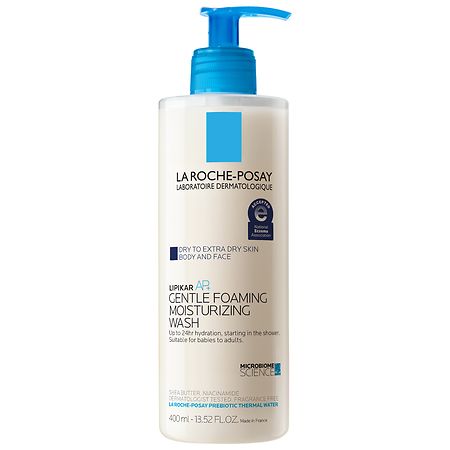


La Roche Posay Lipikar AP+ Face Wash - 13.52 fl oz: Moisturizing, Paraben-Free, For Sensitive, Very Dry Skin
La Roche-PosayAnalysis updated August 2026 · How Scout scores
At a glance
Summary
This face wash contains beneficial ingredients like glycerin, niacinamide, and shea butter, which provide moisturizing and skin-soothing benefits. However, the presence of sodium laureth sulfate and cocamide MEA, which have contamination risks and can strip natural oils, negatively impacts its safety profile. Additionally, the inclusion of PEG compounds and acrylates copolymer suggests a moderate level of processing, which further influences the overall rating.
Key ingredients 23
Butyrospermum Parkii Butter / Shea ButterVery Good
Shea Butter is a natural fat extracted from the nuts of the shea tree. It is highly moisturizing and helps to nourish and protect the skin. It is rich in vitamins and fatty acids, making it beneficial for dry and sensitive skin.
Risks
There are minimal risks associated with shea butter, though it may cause allergic reactions in individuals with nut allergies.
Benefits
Shea Butter provides deep hydration and helps to improve skin elasticity and smoothness.
GlycerinGood
Glycerin is a humectant that attracts moisture to the skin, helping to keep it hydrated. It is widely used in skincare products for its moisturizing properties. It is considered safe and beneficial for most skin types.
Risks
There are minimal risks associated with glycerin, though it may cause irritation in very rare cases.
Benefits
Glycerin helps to maintain skin hydration and improve skin barrier function.
NiacinamideGood
Niacinamide is a form of Vitamin B3 that offers multiple skin benefits, including improving skin barrier function and reducing inflammation. It is well-tolerated by most skin types and is a popular ingredient in skincare. It is known for its ability to improve the appearance of enlarged pores and uneven skin tone.
Risks
There are minimal risks associated with niacinamide, though it may cause mild irritation in very sensitive skin.
Benefits
Niacinamide helps to improve skin texture, reduce redness, and enhance overall skin health.
Aqua / Water / EauNeutral
Water is a common solvent used in cosmetic formulations. It acts as a base for the product, helping to dissolve other ingredients. It does not have any direct benefits or risks associated with its use.
Risks
There are no significant risks associated with water in cosmetic products.
Benefits
Water helps to hydrate the skin by providing moisture.
Coco-BetaineNeutral
Coco-Betaine is a mild surfactant derived from coconut oil. It is used to enhance the foaming properties of cleansing products. It is generally considered safe and non-irritating.
Risks
In rare cases, it may cause mild irritation or allergic reactions.
Benefits
Coco-Betaine helps to cleanse the skin gently without stripping natural oils.
Polysorbate 20Neutral
Polysorbate 20 is an emulsifier that helps to mix oil and water-based ingredients. It is commonly used in cosmetics to stabilize formulations. It is generally regarded as safe for use in skincare products.
Risks
It may cause mild irritation in sensitive individuals.
Benefits
Polysorbate 20 helps to improve the texture and consistency of cosmetic products.
PEG-200 Glyceryl StearateNeutral
PEG-200 Glyceryl Stearate is an emulsifying agent that helps to blend ingredients in formulations. It is used to improve the texture and spreadability of products. It is generally considered safe but may be contaminated with ethylene oxide or 1,4-dioxane.
Risks
Potential contamination with harmful substances during manufacturing is a concern.
Benefits
It enhances the stability and application of cosmetic products.
PEG-7 Glyceryl CocoateNeutral
PEG-7 Glyceryl Cocoate is an emollient and surfactant derived from coconut oil. It helps to moisturize and cleanse the skin. It is generally considered safe but may have contamination risks similar to other PEG compounds.
Risks
There is a potential risk of contamination with ethylene oxide or 1,4-dioxane.
Benefits
It provides moisturizing benefits and improves the texture of formulations.
MannoseNeutral
Mannose is a sugar molecule that can help to hydrate the skin. It is used in skincare products for its moisturizing properties. It is generally considered safe and non-irritating.
Risks
There are no significant risks associated with mannose in cosmetic products.
Benefits
Mannose helps to improve skin hydration and maintain moisture levels.
Sodium HydroxideNeutral
Sodium Hydroxide is used to adjust the pH of cosmetic formulations. It is a strong base that can be irritating in high concentrations but is safe in the small amounts used in cosmetics. It helps to maintain the stability and efficacy of the product.
Risks
In high concentrations, it can cause skin irritation or burns.
Benefits
It ensures the product maintains an appropriate pH level for skin compatibility.
Trisodium Ethylenediamine DisuccinateNeutral
Trisodium Ethylenediamine Disuccinate is a chelating agent that helps to stabilize formulations by binding metal ions. It is used to improve the efficacy and shelf life of cosmetic products. It is considered safe for use in skincare.
Risks
There are no significant risks associated with this ingredient in cosmetic formulations.
Benefits
It enhances the stability and performance of the product.
Vitreoscilla FermentNeutral
Vitreoscilla Ferment is a bacterial ferment used in skincare for its potential soothing and skin-conditioning properties. It is considered safe and beneficial for sensitive skin. It may help to improve skin barrier function and reduce irritation.
Risks
There are minimal risks associated with this ingredient, though individual reactions may vary.
Benefits
It may help to soothe and condition the skin, particularly for sensitive skin types.
Glycol DistearateNeutral
Glycol Distearate is used as an opacifying agent and emollient in cosmetic formulations. It helps to improve the texture and appearance of products. It is generally considered safe for use in skincare.
Risks
There are no significant risks associated with glycol distearate in cosmetic products.
Benefits
It enhances the texture and visual appeal of formulations.
Citric AcidNeutral
Citric Acid is used to adjust the pH of cosmetic formulations and as a mild exfoliant. It helps to maintain the stability and efficacy of the product. It is generally considered safe for use in skincare.
Risks
In high concentrations, it may cause skin irritation or sensitivity.
Benefits
It helps to maintain the product's pH balance and can provide mild exfoliation.
PEG-55 Propylene Glycol OleateNeutral
PEG-55 Propylene Glycol Oleate is an emulsifier and surfactant used to improve the texture and spreadability of products. It is generally considered safe but may have contamination risks similar to other PEG compounds. It helps to stabilize formulations and enhance product performance.
Risks
There is a potential risk of contamination with ethylene oxide or 1,4-dioxane.
Benefits
It enhances the texture and application of cosmetic products.
Pentylene GlycolNeutral
Pentylene Glycol is a humectant and solvent used to improve skin hydration and product stability. It is considered safe for use in cosmetics and is well-tolerated by most skin types. It helps to enhance the moisturizing properties of formulations.
Risks
There are no significant risks associated with pentylene glycol in cosmetic products.
Benefits
It helps to improve skin hydration and enhance product stability.
Polyquaternium-11Neutral
Polyquaternium-11 is a film-forming agent used to improve the texture and feel of cosmetic products. It helps to provide a smooth and conditioned feel to the skin. It is generally considered safe for use in skincare formulations.
Risks
There are no significant risks associated with polyquaternium-11 in cosmetic products.
Benefits
It enhances the texture and feel of formulations, providing a smooth finish.
Sodium ChlorideNeutral
Sodium Chloride is used as a thickening agent and to adjust the viscosity of cosmetic formulations. It is commonly used in skincare products and is considered safe. It helps to improve the texture and consistency of products.
Risks
There are no significant risks associated with sodium chloride in cosmetic products.
Benefits
It enhances the texture and consistency of formulations.
Sodium Laureth SulfateBad
Sodium Laureth Sulfate is a surfactant used for its cleansing properties. It is milder than Sodium Lauryl Sulfate but can still strip natural oils from the skin. There is a risk of contamination with 1,4-dioxane, a potential carcinogen, during its production.
Risks
It may cause skin irritation and dryness, especially in sensitive skin types.
Benefits
It effectively removes dirt and oil from the skin, providing a clean feel.
Acrylates CopolymerBad
Processed additive flagged under Scout's ingredient doctrine.
Risks
There are no significant risks associated with acrylates copolymer in cosmetic products.
Benefits
It provides texture and stability to formulations, enhancing product performance.
Cocamide MEABad
Cocamide MEA is a surfactant and foam booster derived from coconut oil. It is used to enhance the texture and foaming properties of cleansing products. It has been associated with contamination risks from nitrosamines, which are potential carcinogens.
Risks
There is a risk of contamination with nitrosamines, which are harmful substances.
Benefits
It improves the foaming and cleansing properties of formulations.
Propylene GlycolBad
Processed additive flagged under Scout's ingredient doctrine.
Risks
In rare cases, it may cause skin irritation or allergic reactions.
Benefits
It helps to improve skin hydration and enhance product stability.
Sodium BenzoateBad
Synthetic preservative that can form benzene in the presence of vitamin C.
Risks
In rare cases, it may cause skin irritation or allergic reactions.
Benefits
It helps to preserve the product and prevent microbial contamination.
Get the full breakdown in the Scout appTake Scout shopping
Scan any product to see lab results, healthy alternatives, and your personalized analysis.
Download on theApp Store GET IT ONGoogle PlayAmazon pricing & content
Amazon price as of . Product prices and availability are accurate as of the date/time indicated and are subject to change. Any price and availability information displayed on Amazon.com at the time of purchase will apply to the purchase of this product.
CERTAIN CONTENT THAT APPEARS ON THIS SITE COMES FROM AMAZON. THIS CONTENT IS PROVIDED “AS IS” AND IS SUBJECT TO CHANGE OR REMOVAL AT ANY TIME.