
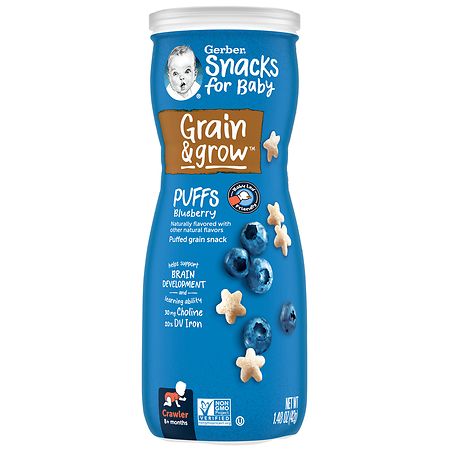


Gerber Non-GMO Baby Food Blueberry Puffs Baby Snack - 1.48oz: Age 8+ Months, 2nd Stage, Kosher, Sodium Free
GerberAnalysis updated August 2026 · How Scout scores
At a glance
Summary
This product is ultra-processed and contains refined ingredients such as rice flour and cane sugar, which contribute to its high processing level. While it includes some whole grain ingredients like whole wheat flour and oat flour, the presence of added sugars and natural flavors detracts from its nutritional quality. The use of sunflower lecithin as an emulsifier further indicates processing, limiting its healthfulness.
Key ingredients 14
Whole Wheat FlourGood
Whole wheat flour is a source of dietary fiber and essential nutrients. It retains the bran and germ, providing more vitamins and minerals than refined flour. It supports digestive health and provides sustained energy.
Risks
Contains gluten, which may cause issues for those with celiac disease or gluten sensitivity.
Benefits
Rich in fiber, vitamins, and minerals, supporting overall health and digestion.
Whole Grain Oat FlourGood
Whole grain oat flour is a nutritious ingredient rich in fiber and essential nutrients. It supports heart health and provides sustained energy. It is minimally processed, retaining most of its natural nutrients.
Risks
May contain gluten if not certified gluten-free, posing a risk for those with celiac disease.
Benefits
Rich in beta-glucans, which can help lower cholesterol levels and support heart health.
Mixed TocopherolsGood
Beneficial ingredient — whole-food or functional value in this product class.
Benefits
Helps maintain product freshness by preventing oxidation.
Rice FlourNeutral
Rice flour is a common gluten-free alternative used in many processed foods. It is a refined carbohydrate with limited nutritional value. It provides texture and bulk to the product but lacks significant health benefits.
Risks
May contribute to high glycemic index, affecting blood sugar levels.
Benefits
Provides a gluten-free option for those with gluten sensitivities.
Wheat StarchNeutral
Wheat starch is used as a thickening agent in processed foods. It is a refined carbohydrate with minimal nutritional value. It provides texture but does not contribute significantly to nutritional content.
Risks
Contains gluten, which can be problematic for those with gluten intolerance.
Dried Apple PureeNeutral
Dried apple puree is a natural fruit ingredient that provides some vitamins and fiber. It adds natural sweetness and flavor to the product. However, the drying process may reduce some of its nutritional content.
Risks
May contain added sugars or preservatives if not purely dried apple.
Benefits
Provides natural sweetness and some dietary fiber.
Iron (Electrolytic)Neutral
Electrolytic iron is added to fortify foods with essential minerals. It helps prevent iron deficiency anemia. However, its bioavailability can be lower compared to heme iron from animal sources.
Risks
Excessive intake can lead to iron overload and related health issues.
Benefits
Essential for oxygen transport and energy production in the body.
Vitamin E (Alpha Tocopheryl Acetate)Neutral
Vitamin E is an antioxidant that helps protect cells from oxidative damage. It is added to fortify foods and support overall health. However, synthetic forms may not be as effective as natural sources.
Risks
High doses can interfere with blood clotting and cause other health issues.
Benefits
Supports immune function and skin health.
Niacinamide (A B Vitamin)Neutral
Niacinamide is a form of vitamin B3 used to fortify foods. It supports energy metabolism and skin health. While beneficial, it is more effective when consumed as part of a balanced diet.
Risks
Excessive intake can cause liver damage and other health issues.
Benefits
Supports energy production and skin health.
Vitamin B6 (Pyridoxine Hydrochloride)Neutral
Vitamin B6 is essential for protein metabolism and cognitive development. It is added to fortify foods and support overall health. Synthetic forms may not be as bioavailable as natural sources.
Risks
High doses can lead to nerve damage and other health issues.
Benefits
Supports brain health and energy metabolism.
Vitamin B1 (Thiamine Hydrochloride)Neutral
Vitamin B1 is crucial for energy metabolism and nerve function. It is added to fortify foods and prevent deficiencies. While beneficial, it is best obtained from a varied diet.
Benefits
Supports energy production and nervous system health.
Cane SugarBad
Cane sugar is a refined sugar that contributes to sweetness but offers no nutritional benefits. Excessive consumption can lead to health issues such as obesity and dental problems. It is a source of empty calories with no essential nutrients.
Risks
High intake may lead to weight gain, insulin resistance, and increased risk of chronic diseases.
Natural Blueberry Vanilla FlavorBad
Natural flavors are often used to enhance taste but can be highly processed. They may contain a variety of chemical compounds not disclosed on labels. The term 'natural' can be misleading as it does not guarantee minimal processing.
Risks
Potential for undisclosed additives and allergens.
Sunflower LecithinBad
Sunflower lecithin is an emulsifier used to improve texture and consistency in processed foods. It is a refined product that may contain residues from processing. While it is less concerning than seed oils, it is still a processed additive.
Risks
May contain residues from processing and potential allergens.
Benefits
Improves texture and consistency in food products.
Processing
Ultra-Processed Foods
Get the full breakdown in the Scout appTake Scout shopping
Scan any product to see lab results, healthy alternatives, and your personalized analysis.
Download on theApp Store GET IT ONGoogle PlayAmazon pricing & content
CERTAIN CONTENT THAT APPEARS ON THIS SITE COMES FROM AMAZON. THIS CONTENT IS PROVIDED “AS IS” AND IS SUBJECT TO CHANGE OR REMOVAL AT ANY TIME.