
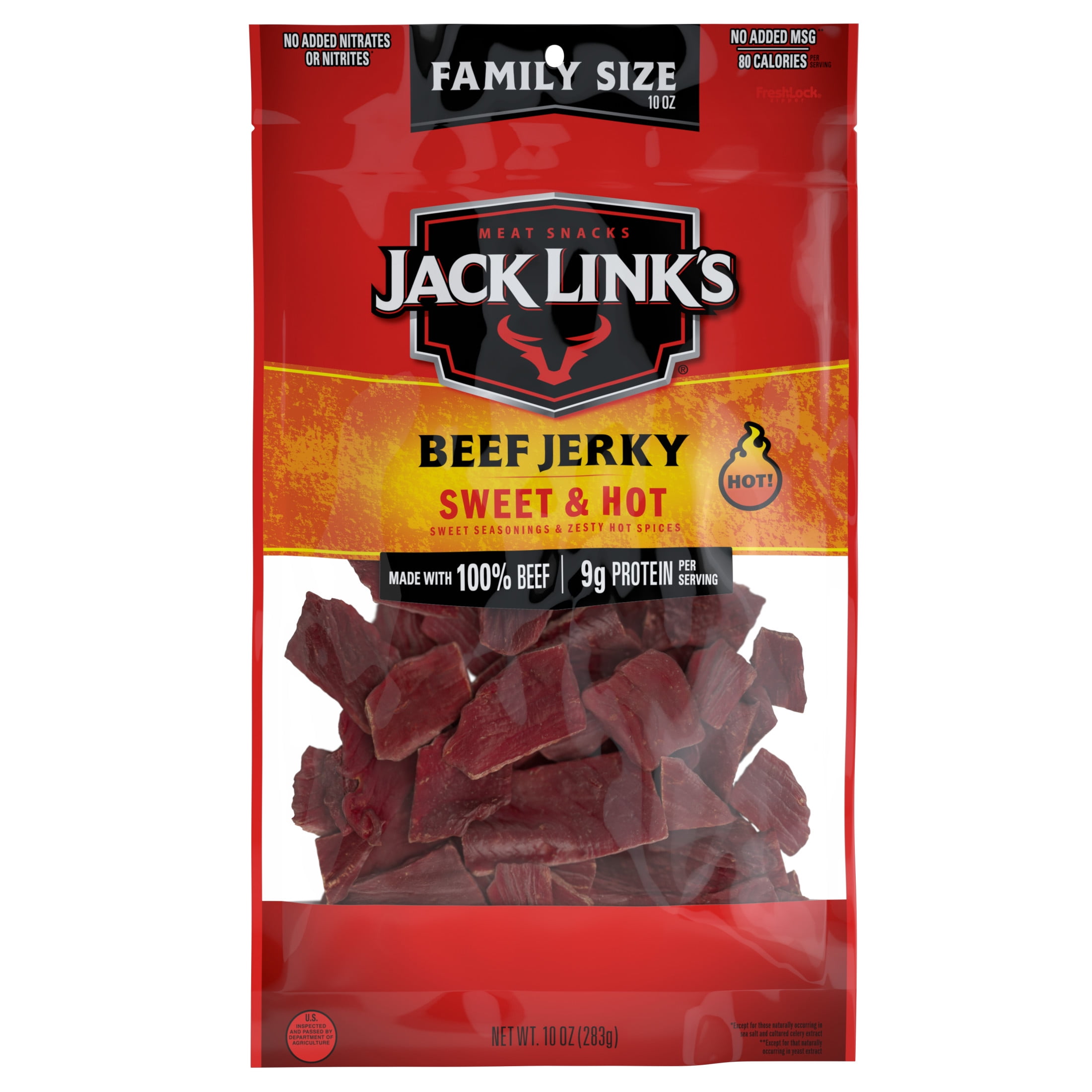


Jack Link's Sweet & Hot Beef Jerky
Analysis updated July 2026 · How Scout scores
At a glance
Summary
This beef jerky contains high-quality protein from beef and uses sea salt, which is a minimally processed ingredient. However, it is heavily processed with a high sugar content from both sugar and brown sugar, which can contribute to health issues if consumed in excess. The presence of non-specific 'flavors' and cultured celery extract, which can act as a source of nitrates, further detracts from its health profile.
Key ingredients 11
BeefGood
Beef is a high-quality source of protein, providing essential amino acids necessary for muscle repair and growth. It is rich in vitamins and minerals such as iron and B vitamins, which support energy metabolism and red blood cell production. Grass-fed beef would be preferable for higher omega-3 content, but no specific quality indicators are provided.
Risks
Excessive consumption of red meat has been linked to increased risk of certain health issues, such as heart disease and colorectal cancer.
Benefits
Provides a rich source of protein and essential nutrients like iron and B vitamins, supporting overall health and muscle maintenance.
Sea SaltGood
Sea salt is a minimally processed source of sodium and trace minerals. It is often preferred over refined table salt due to its mineral content. It enhances flavor and is essential for maintaining fluid balance and nerve function.
Risks
Excessive sodium intake can lead to high blood pressure and increased risk of cardiovascular diseases.
Benefits
Provides essential sodium and trace minerals, supporting fluid balance and nerve function.
WaterNeutral
Water is used as a solvent and to maintain moisture in food products. It does not contribute any calories or nutrients. Its presence is essential for texture and processing but has no direct health impact.
See more about Water →Beef StockNeutral
Beef stock is made by simmering beef bones and meat, providing flavor and some nutrients. It is used to enhance the taste of the product. While it adds depth of flavor, it does not significantly contribute to the nutritional profile.
Benefits
Enhances flavor and may provide small amounts of nutrients like collagen.
Citric AcidNeutral
Citric acid is a natural preservative and flavoring agent found in citrus fruits. It is used to enhance flavor and preserve freshness. While generally recognized as safe, it does not provide significant nutritional benefits.
Benefits
Helps preserve freshness and enhance flavor.
Pineapple PowderNeutral
Pineapple powder is used for flavoring and may provide some natural sugars and enzymes. It adds a sweet and tangy flavor to the product. While it contains some nutrients, the amount used is likely minimal.
Benefits
May provide a small amount of natural sugars and enzymes.
SugarBad
Sugar is a refined carbohydrate that provides quick energy but lacks essential nutrients. Excessive intake can lead to weight gain, insulin resistance, and increased risk of chronic diseases. It is often used to enhance flavor but contributes to high sugar content in the product.
Risks
High sugar consumption is associated with increased risk of obesity, type 2 diabetes, and dental cavities.
Brown SugarBad
Brown sugar is similar to white sugar but contains molasses, providing a slightly different flavor profile. It is still a refined sugar with minimal nutritional value. Its use contributes to the overall sugar content of the product, which can be detrimental to health if consumed in excess.
Risks
Excessive consumption can lead to similar health issues as white sugar, including weight gain and increased risk of metabolic disorders.
FlavorsBad
The term 'flavors' is non-specific and can include a variety of artificial or natural additives. Lack of transparency makes it difficult to assess the health impact. Such additives can sometimes cause allergic reactions or sensitivities in some individuals.
Risks
Potential for allergic reactions or sensitivities due to unknown components.
Yeast ExtractBad
Concentrated glutamate source — MSG-adjacent flavor enhancer.
Risks
May cause reactions in individuals sensitive to glutamates, similar to MSG.
Benefits
Enhances flavor without adding significant calories or nutrients.
Cultured Celery ExtractBad
Cultured celery extract is used as a natural preservative and source of nitrates. It functions similarly to sodium nitrite in curing meats, which can form nitrosamines, compounds linked to cancer risk. Despite being labeled as 'natural,' it carries similar health concerns as synthetic nitrites.
Risks
Potential formation of nitrosamines, which are linked to increased cancer risk.
Benefits
Acts as a preservative, extending shelf life and preventing spoilage.
Processing
Processed Foods
Get the full breakdown in the Scout appTake Scout shopping
Scan any product to see lab results, healthy alternatives, and your personalized analysis.
Download on theApp Store GET IT ONGoogle PlayAmazon pricing & content
Amazon price as of . Product prices and availability are accurate as of the date/time indicated and are subject to change. Any price and availability information displayed on Amazon.com at the time of purchase will apply to the purchase of this product.
CERTAIN CONTENT THAT APPEARS ON THIS SITE COMES FROM AMAZON. THIS CONTENT IS PROVIDED “AS IS” AND IS SUBJECT TO CHANGE OR REMOVAL AT ANY TIME.