
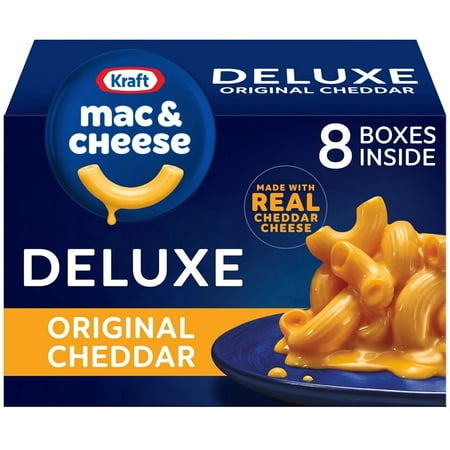


Kraft Deluxe Original Cheddar Macaroni and Cheese Dinner 14 Ounce (Pack of 8)
Analysis updated May 2026 · How Scout scores
At a glance
Summary
This macaroni and cheese product contains beneficial ingredients like whey, cheddar cheese, and milk, which provide essential nutrients such as protein and calcium. However, the presence of canola oil, a heavily processed seed oil high in omega-6 fatty acids, negatively impacts the healthiness of the product. Additionally, the product is moderately processed, which limits its overall score despite the presence of some whole food ingredients.
Key ingredients 9
Cheddar CheeseGood
Cheddar cheese is a source of calcium and protein, contributing to bone health. It is made from milk and contains beneficial fats. The aging process enhances its flavor and nutritional profile.
Risks
High in saturated fats and sodium, which may impact heart health if consumed in excess.
Benefits
Provides calcium and protein, supporting bone health and muscle function. Contains beneficial fats and vitamins like A and B12.
MilkGood
Milk is a rich source of calcium, vitamin D, and protein, essential for bone health. It is a whole food with minimal processing. Milk supports overall growth and development.
Risks
Lactose intolerance can cause digestive issues for some individuals.
Benefits
Rich in calcium and vitamin D, supporting bone health. Provides high-quality protein and essential nutrients.
Cheese CultureGood
Beneficial ingredient — whole-food or functional value in this product class.
Benefits
Contributes to the development of cheese flavor and texture. Supports the fermentation process in cheese production.
Milk Protein ConcentrateGood
Beneficial ingredient — whole-food or functional value in this product class.
Risks
May cause digestive issues for those with lactose intolerance or milk allergies.
Benefits
Provides a concentrated source of high-quality protein and essential amino acids.
WheyNeutral
Liquid whey as a minor dairy ingredient — benign.
Risks
Some individuals may experience lactose intolerance or allergies related to whey.
Benefits
Rich in essential amino acids and supports muscle repair and growth. Easily digestible and beneficial for protein synthesis.
SaltNeutral
Salt is used as a seasoning and preservative in food products. It enhances flavor and helps in preserving the cheese. While necessary in small amounts, excessive consumption can lead to health issues.
Risks
Excessive salt intake can lead to high blood pressure and cardiovascular issues.
Benefits
Enhances flavor and acts as a preservative in food products.
EnzymesNeutral
Enzymes are used in cheese production to aid in coagulation and flavor development. They are naturally occurring proteins that facilitate biochemical reactions. Enzymes are crucial for the texture and taste of cheese.
Benefits
Essential for cheese production, aiding in coagulation and flavor development.
Sodium PhosphateBad
Processed additive flagged under Scout's ingredient doctrine.
Risks
Excessive intake may affect kidney function and calcium balance.
Benefits
Helps maintain texture and moisture in processed cheese products.
Canola OilVery Bad
Canola oil is a seed oil high in omega-6 fatty acids, which can promote inflammation. It is heavily processed and often refined using chemical solvents. The high omega-6 content can disrupt the omega-3 to omega-6 balance in the diet.
Risks
High omega-6 content may promote inflammation when consumed in excess.
Processing
Processed Foods
Get the full breakdown in the Scout appTake Scout shopping
Scan any product to see lab results, healthy alternatives, and your personalized analysis.
Download on theApp Store GET IT ONGoogle PlayAmazon pricing & content
Amazon price as of . Product prices and availability are accurate as of the date/time indicated and are subject to change. Any price and availability information displayed on Amazon.com at the time of purchase will apply to the purchase of this product.
CERTAIN CONTENT THAT APPEARS ON THIS SITE COMES FROM AMAZON. THIS CONTENT IS PROVIDED “AS IS” AND IS SUBJECT TO CHANGE OR REMOVAL AT ANY TIME.