
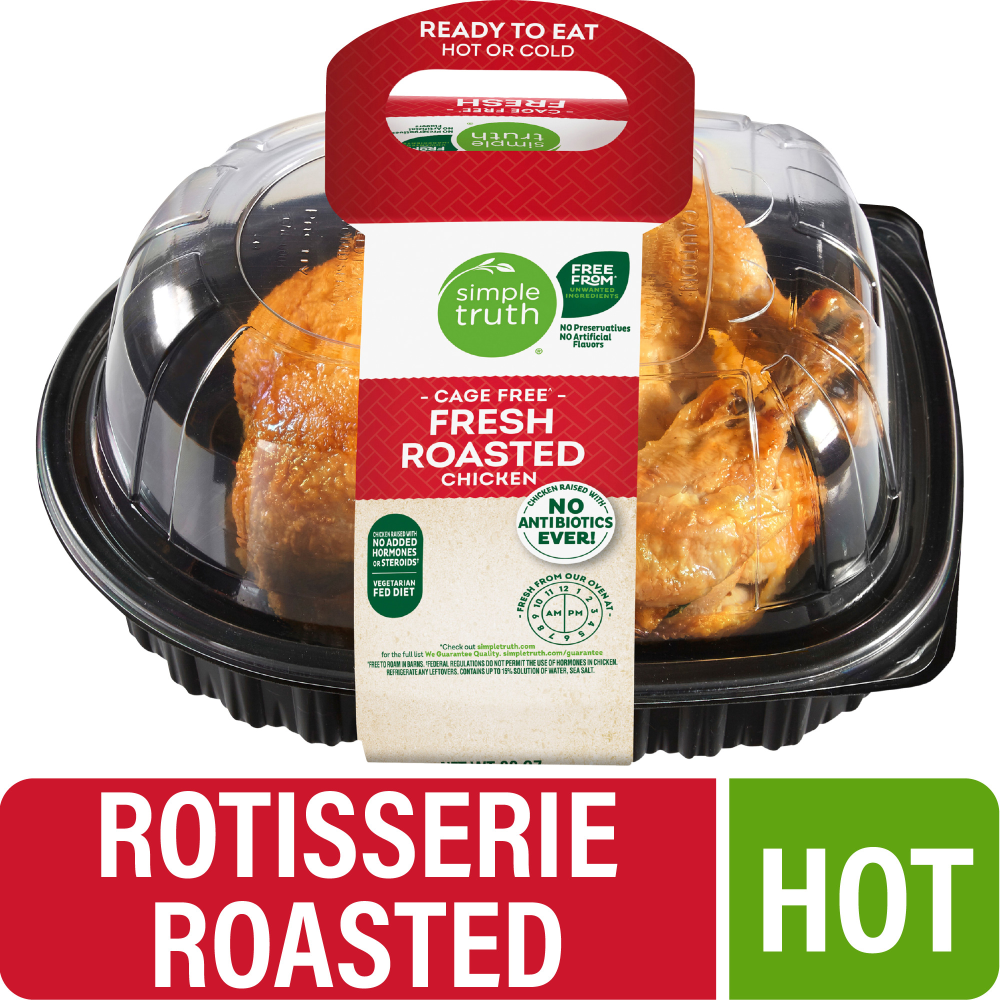
WHOLE ROASTED CHICKEN

Signature Select
60 Fair
View on Amazon

Summary

This whole roasted chicken is heavily processed, containing multiple additives such as sodium tripolyphosphate, carrageenan, and sodium acid pyrophosphate, which are used for preservation and texture but can have negative health impacts. The inclusion of palm oil and natural flavors further detracts from its healthiness due to potential health and environmental concerns. Despite being a source of high-quality protein, the level of processing and presence of these additives limit its overall health score.

At a glance

Beneficial ingredients 2
Harmful ingredients 5
Owned by Albertsons Companies, Inc.
Category Meat And Seafood

Key ingredients 18

Whole Chicken
Good

Whole chicken is a source of high-quality animal protein. It provides essential amino acids necessary for muscle repair and growth. The chicken is a complete protein source, offering a rich nutrient profile.

Benefits

Rich in protein and essential nutrients like B vitamins and minerals such as phosphorus and selenium.

Water
Neutral

Water is used as a solvent and carrier in food processing. It helps in maintaining moisture and texture in the product. It is a neutral ingredient with no direct nutritional impact.

See more about Water →
Salt
Neutral

Salt is used for seasoning and preserving food. It enhances flavor and acts as a preservative. Excessive consumption can lead to health issues such as hypertension.

Risks

High sodium intake may contribute to increased blood pressure and cardiovascular issues.

Benefits

Enhances flavor and acts as a preservative in food.

See more about Salt →
Sodium Tripolyphosphate
Bad

Sodium tripolyphosphate is used as a preservative and moisture-retaining agent. It is a synthetic additive that can affect the natural texture of meat. Overconsumption may lead to imbalances in phosphate levels.

Risks

May cause digestive issues and imbalances in phosphate levels if consumed in large quantities.

Benefits

Helps retain moisture and improve texture in processed foods.

See more about Sodium Tripolyphosphate →
Brown Sugar
Neutral

Brown sugar is used for flavor enhancement and caramelization. It is a refined sugar with minimal nutritional benefits. It can contribute to calorie intake without providing essential nutrients.

Risks

Excessive consumption can lead to weight gain and increased risk of metabolic disorders.

Benefits

Adds sweetness and flavor complexity to foods.

See more about Brown Sugar →
Rice Starch
Neutral

Rice starch is used as a thickening agent and stabilizer. It is derived from rice and is generally considered safe. It provides no significant nutritional benefits.

Benefits

Acts as a thickening agent and stabilizer in food products.

See more about Rice Starch →
Dextrose
Neutral

Dextrose is a simple sugar used as a sweetener and preservative. It is quickly absorbed by the body, providing a rapid source of energy. However, it can contribute to increased blood sugar levels.

Risks

May lead to spikes in blood sugar levels if consumed in excess.

Benefits

Provides a quick source of energy.

See more about Dextrose →
Carrageenan
Bad

Carrageenan is used as a thickener and stabilizer in processed foods. It is derived from red seaweed but is highly processed. Some studies suggest it may cause digestive issues and inflammation.

Risks

Potential to cause digestive issues and inflammation in sensitive individuals.

Benefits

Helps improve texture and stability in food products.

See more about Carrageenan →
Sodium Acid Pyrophosphate
Bad

Sodium acid pyrophosphate is used as a leavening agent and preservative. It is a synthetic additive that can affect the natural pH balance of foods. Overconsumption may lead to imbalances in phosphate levels.

Risks

May cause digestive issues and imbalances in phosphate levels if consumed in large quantities.

Benefits

Acts as a leavening agent and helps maintain color in processed foods.

See more about Sodium Acid Pyrophosphate →
Garlic Powder
Good

Garlic powder is used for flavor enhancement and has potential health benefits. It contains compounds that may support cardiovascular health. It is a natural ingredient with antioxidant properties.

Benefits

May support cardiovascular health and has antioxidant properties.

See more about Garlic Powder →
Spice Extractives
Neutral

Spice extractives are used to enhance flavor and aroma in foods. They are derived from natural spices but are processed for consistency. They provide no significant nutritional benefits.

Benefits

Enhances flavor and aroma in food products.

Xanthan Gum
Neutral

Xanthan gum is used as a thickening and stabilizing agent. It is a polysaccharide produced through fermentation. It is generally considered safe but can cause digestive issues in sensitive individuals.

Risks

May cause digestive issues such as bloating and gas in sensitive individuals.

Benefits

Improves texture and stability in food products.

See more about Xanthan Gum →
Vinegar
Neutral

Vinegar is used for flavor enhancement and preservation. It is a natural product derived from fermentation. It provides no significant nutritional benefits but can enhance the flavor profile of foods.

Benefits

Enhances flavor and acts as a natural preservative.

See more about Vinegar →
Rosemary Garlic Seasoning
Neutral

Rosemary garlic seasoning is used for flavor enhancement. It combines natural spices and herbs to improve taste. It provides no significant nutritional benefits but enhances the sensory profile of foods.

Benefits

Enhances flavor with natural spices and herbs.

Romano Cheese
Neutral

Romano cheese is used for flavor and texture enhancement. It is a dairy product that provides calcium and protein. However, it is high in saturated fat and sodium.

Risks

High in saturated fat and sodium, which may contribute to cardiovascular issues if consumed in excess.

Benefits

Provides calcium and protein, contributing to bone health and muscle maintenance.

Palm Oil
Bad

Palm oil is used as a cooking and flavoring fat. It is high in saturated fats, which can impact heart health negatively. Its production is also associated with environmental concerns.

Risks

High in saturated fats, which may contribute to cardiovascular issues.

Benefits

Provides a stable cooking fat with a high smoke point.

See more about Palm Oil →
Sesame Oil
Neutral

Sesame oil is used for flavor enhancement and cooking. It contains healthy fats and antioxidants. However, it is calorie-dense and should be consumed in moderation.

Risks

Calorie-dense and may contribute to weight gain if consumed in excess.

Benefits

Contains healthy fats and antioxidants that may support heart health.

See more about Sesame Oil →
Natural Flavor
Bad

Natural flavor is used to enhance taste and aroma in foods. It is a catch-all term that can include a variety of processed ingredients. The lack of transparency can be concerning for consumers with allergies or sensitivities.

Risks

Potential allergen risk due to lack of transparency in ingredient sourcing.

Benefits

Enhances taste and aroma in food products.

See more about Natural Flavor →

Processing

Group 4 · Ultra-processed

Ultra-Processed Foods

Get the full breakdown in the Scout app

Scan any product to see lab results, healthy alternatives, and your personalized analysis.

Download on theApp Store