
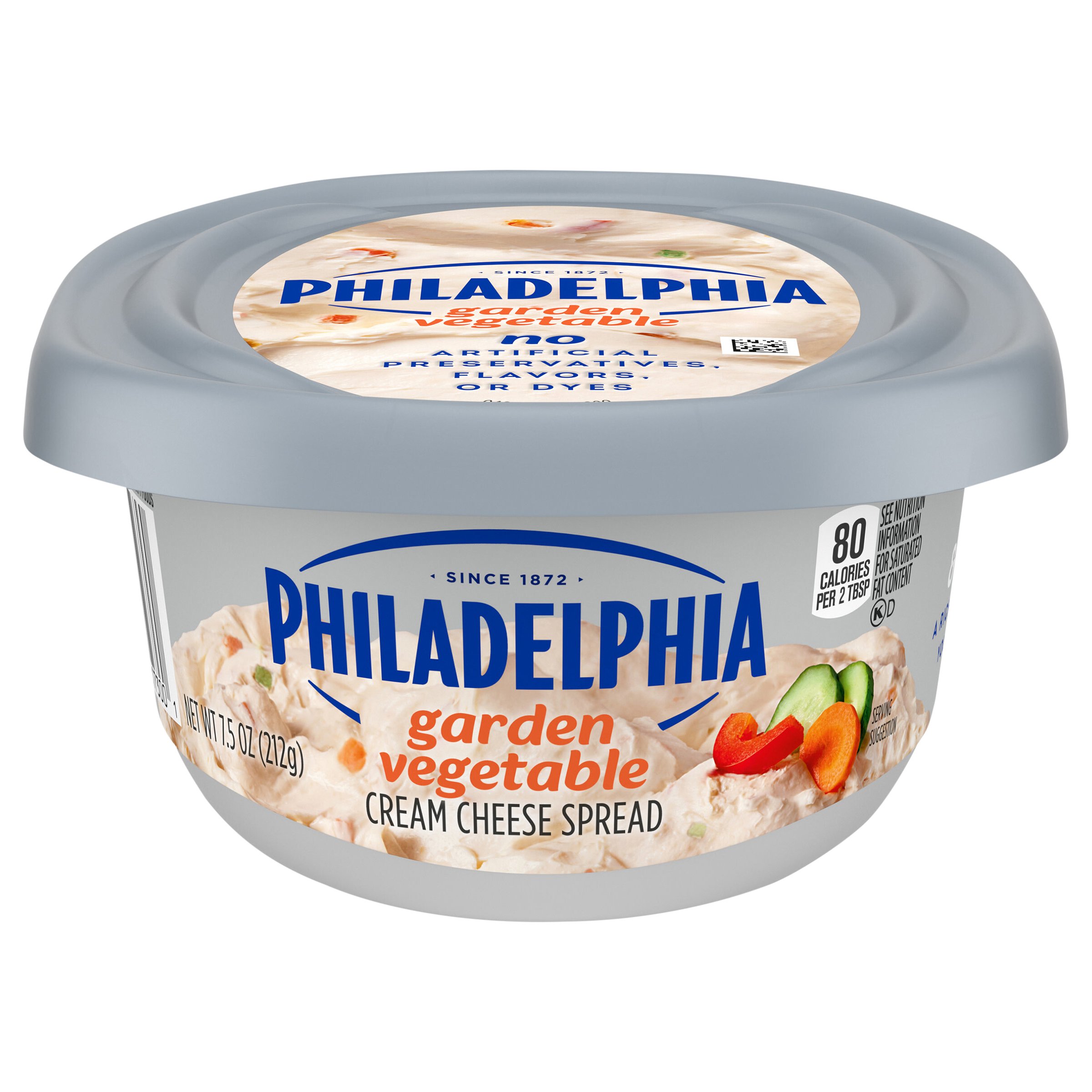




Philadelphia Cream Cheese Spread Garden Vegetable
PhiladelphiaAnalysis updated May 2026 · How Scout scores
At a glance
Summary
This garden vegetable cream cheese spread is heavily processed, containing multiple additives such as carob bean gum, xanthan gum, and guar gum, which can cause digestive issues. While it includes beneficial ingredients like pasteurized milk and whey protein concentrate, the presence of 'natural flavor' and the overall high level of processing limit its healthiness. The product's ultra-processed nature and reliance on additives prevent it from achieving a higher score despite some nutritional benefits.
Key ingredients 14
Pasteurized milk and creamGood
Pasteurized milk and cream are primary sources of protein and calcium. They provide essential nutrients and contribute to the creamy texture of the spread. The pasteurization process ensures safety by eliminating harmful bacteria.
Benefits
Rich in calcium and protein, supporting bone health and muscle function.
Whey protein concentrateGood
Whey protein concentrate is a high-quality protein source with a complete amino acid profile. It supports muscle growth and repair. Derived from milk, it is minimally processed compared to other protein supplements.
Risks
May cause digestive issues in lactose-intolerant individuals.
Benefits
Excellent source of protein that aids in muscle recovery and growth.
WheyNeutral
Whey is a byproduct of cheese production and a source of protein. It is less concentrated than whey protein concentrate. Provides some nutritional benefits but is not as impactful as concentrated forms.
Risks
May cause digestive discomfort in those with lactose intolerance.
Benefits
Contains protein and some vitamins and minerals.
OnionsNeutral
Onions add flavor and some nutritional value to the spread. They contain antioxidants and vitamins. However, their quantity in the product is likely minimal.
Benefits
Provides antioxidants and vitamins, contributing to overall health.
SaltNeutral
Salt is used for flavor enhancement and preservation. It is a common ingredient in processed foods. While necessary in small amounts, excessive consumption can lead to health issues.
Risks
High sodium intake can contribute to hypertension and cardiovascular diseases.
Benefits
Essential for maintaining fluid balance and nerve function.
CarrotsNeutral
Carrots provide a slight sweetness and color to the spread. They are a source of beta-carotene and fiber. However, their impact is limited due to the small quantity used.
Benefits
Contains beta-carotene, which is converted to vitamin A in the body.
Green bell peppersNeutral
Green bell peppers add flavor and some vitamins to the spread. They are low in calories and provide vitamin C. Their contribution is minimal due to the small amount present.
Benefits
Source of vitamin C and antioxidants.
CucumbersNeutral
Cucumbers add a refreshing taste and some hydration to the spread. They are low in calories and mostly composed of water. Their nutritional impact is minimal.
Benefits
Provides hydration and a small amount of vitamins.
Red bell peppersNeutral
Red bell peppers contribute color and flavor to the spread. They are rich in vitamin C and antioxidants. However, their presence in the product is likely minimal.
Benefits
Rich in vitamin C and antioxidants, supporting immune health.
Xanthan gumNeutral
Fermentation-derived thickener, well tolerated at food-use levels.
Risks
May cause digestive issues such as bloating and gas.
Guar gumNeutral
Standard formulation ingredient — neither beneficial nor harmful at typical use.
Risks
May cause digestive discomfort and bloating.
Lactic acidNeutral
Lactic acid is used to add acidity and flavor to foods. It is naturally occurring and can be produced through fermentation. It is generally recognized as safe in food applications.
Benefits
Contributes to flavor and preservation.
Carob bean gumBad
Carob bean gum is used as a thickening agent in processed foods. It is derived from the seeds of the carob tree. While generally safe, excessive consumption can cause digestive issues.
Risks
May cause digestive discomfort and bloating in sensitive individuals.
Natural flavorBad
Natural flavor is a catch-all term for flavoring agents derived from natural sources. The specific composition is often undisclosed, leading to potential concerns about transparency. It is used to enhance taste but lacks nutritional value.
Risks
Lack of transparency can be concerning for those with allergies or sensitivities.
Processing
Ultra-Processed Foods
Get the full breakdown in the Scout appTake Scout shopping
Scan any product to see lab results, healthy alternatives, and your personalized analysis.
Download on theApp Store GET IT ONGoogle PlayAmazon pricing & content
Amazon price as of . Product prices and availability are accurate as of the date/time indicated and are subject to change. Any price and availability information displayed on Amazon.com at the time of purchase will apply to the purchase of this product.
CERTAIN CONTENT THAT APPEARS ON THIS SITE COMES FROM AMAZON. THIS CONTENT IS PROVIDED “AS IS” AND IS SUBJECT TO CHANGE OR REMOVAL AT ANY TIME.