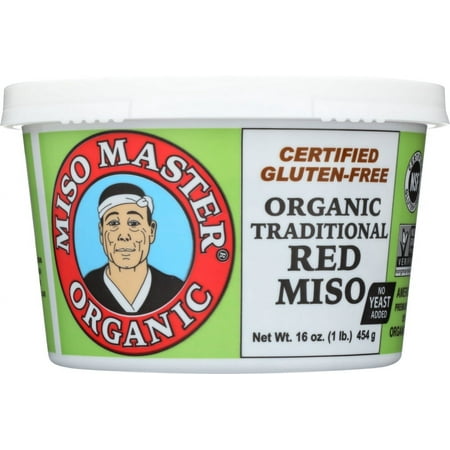
ORGANIC TRADITIONAL RED MISO
At a glance
Summary
This organic traditional red miso is made from high-quality ingredients like organic whole soybeans and handmade rice koji, which contribute to its nutritional value and fermentation benefits. The use of sun-dried sea salt and natural well water further enhances its purity and mineral content. Despite being a processed food, the clean ingredient list and absence of harmful additives allow it to achieve a high score within its category constraints. Its plastic packaging can shed microplastics into the food and lowers its score.
Key ingredients 5
Organic whole soybeansGood
Organic whole soybeans are a good source of plant-based protein and essential amino acids. Being organic, they are free from synthetic pesticides and GMOs, which enhances their nutritional profile. They also contain isoflavones, which may have health benefits.
Risks
Soybeans can be allergenic for some individuals and may interfere with thyroid function if consumed in large amounts.
Benefits
Rich in protein and isoflavones, which may support heart health and bone density.
Organic handmade rice kojiGood
Rice koji is a fermented product that aids in the production of enzymes beneficial for digestion. The organic nature ensures it is free from harmful chemicals. It is essential in the fermentation process of miso, enhancing flavor and nutritional value.
Benefits
Promotes digestive health through natural enzymes and enhances the flavor profile of fermented foods.
Sun dried sea saltGood
Sun dried sea salt is a natural source of sodium and trace minerals, which are essential for various bodily functions. The drying process is minimal and retains the natural mineral content. It is a healthier alternative to refined table salt.
Risks
Excessive sodium intake can lead to hypertension and cardiovascular issues.
Benefits
Provides essential minerals and enhances the flavor of foods without the additives found in refined salts.
Blue ridge mtn well waterGood
Well water from the Blue Ridge Mountains is likely to be rich in natural minerals and free from industrial pollutants. It contributes to the purity and quality of the miso. The use of natural water sources is a positive indicator of product quality.
Benefits
Contributes to the overall purity and mineral content of the product, enhancing its quality.
Koji sporesNeutral
Koji spores are used in the fermentation process to produce enzymes that break down starches and proteins. They are essential for the development of flavor in miso. While they are crucial for fermentation, they do not provide direct nutritional benefits.
Benefits
Facilitates fermentation, enhancing the flavor and digestibility of the product.
Processing
Processed Foods
Get the full breakdown in the Scout appTake Scout shopping
Scan any product to see lab results, healthy alternatives, and your personalized analysis.
Are you American Miso Company? Fix an error Get the badge Get tested