
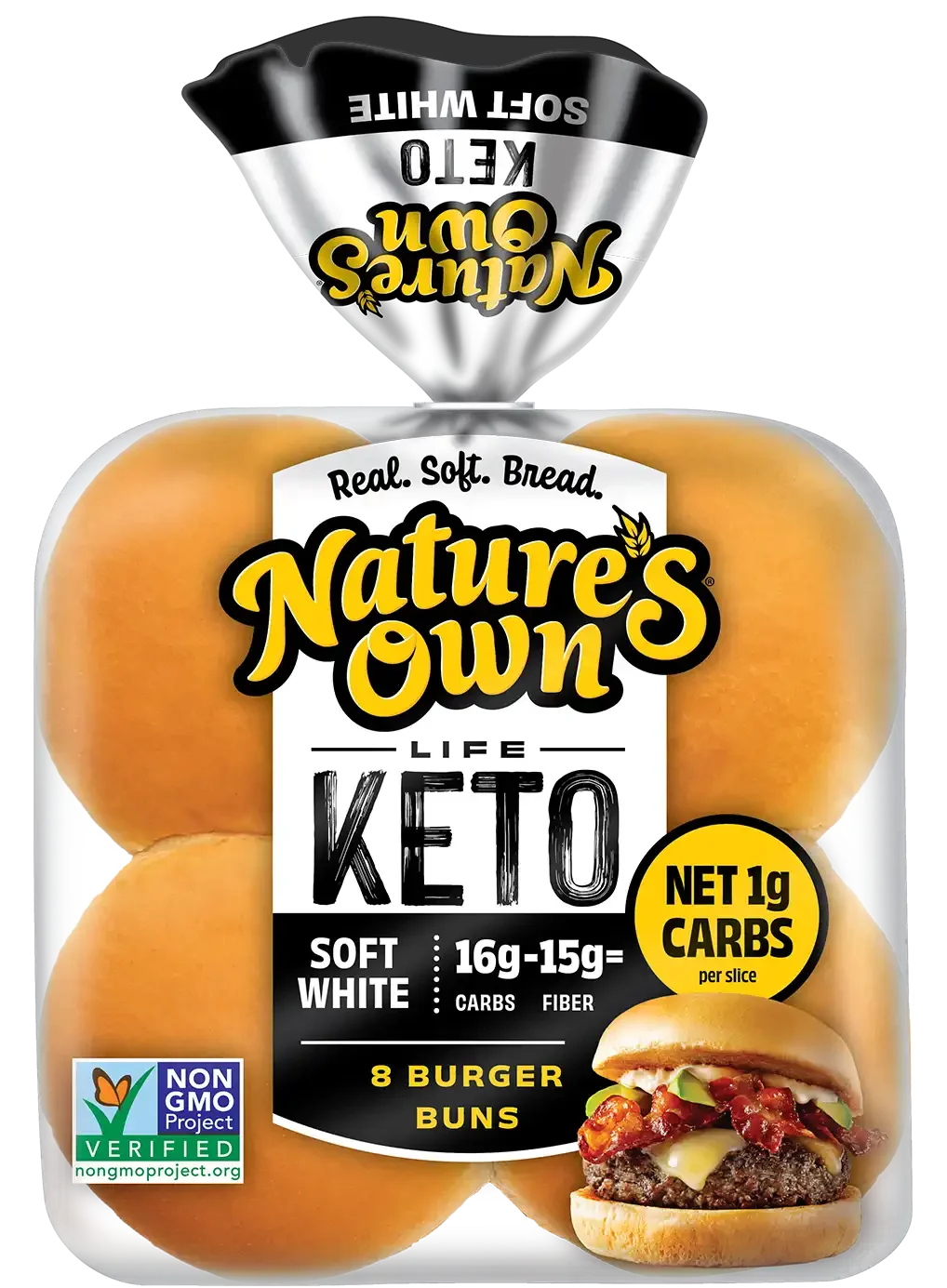




Keto Burger
Summary
The Keto Burger is heavily processed, containing multiple synthetic additives such as calcium propionate and sorbic acid, which are used as preservatives. While it includes beneficial ingredients like resistant wheat starch and avocado oil, the high level of processing and presence of several additives limit its healthiness. Despite having good fiber content, the overall ingredient quality and processing level significantly impact its score.
At a glance
Key ingredients 15
WaterNeutral
Water is a neutral ingredient used as a base or solvent in many food products. It does not contribute any calories or nutrients. Its presence is essential for texture and consistency in food products.
See more about Water →Resistant Wheat StarchGood
Resistant wheat starch is a type of dietary fiber that resists digestion in the small intestine. It can help improve gut health by promoting beneficial bacteria in the colon. It also aids in blood sugar management by slowing glucose absorption.
Risks
Excessive consumption may cause digestive discomfort in some individuals.
Benefits
Promotes gut health and aids in blood sugar management due to its fiber content.
Wheat ProteinNeutral
Wheat protein is a plant-based protein source derived from wheat. It provides essential amino acids but lacks the complete profile found in animal proteins. It is often used in food products to enhance protein content.
Risks
May cause allergic reactions in individuals with wheat allergies or gluten intolerance.
Benefits
Provides a source of plant-based protein, contributing to dietary protein intake.
YeastNeutral
Yeast is used in baking to leaven dough and improve texture. It is a natural ingredient that contributes to the fermentation process. Yeast can also provide some B vitamins and minerals.
Benefits
Contributes to the leavening process and can provide some nutritional benefits such as B vitamins.
AlluloseNeutral
Allulose is a low-calorie sweetener that mimics the taste of sugar. It is absorbed by the body but not metabolized, providing minimal calories. It is often used as a sugar substitute in low-calorie products.
Risks
Excessive consumption may lead to digestive discomfort in some individuals.
Benefits
Provides sweetness with minimal calories, making it suitable for low-calorie diets.
Chicory Root FiberGood
Chicory root fiber is a prebiotic fiber that supports digestive health. It promotes the growth of beneficial gut bacteria and aids in regular bowel movements. It is often used to increase fiber content in food products.
Risks
May cause digestive discomfort if consumed in large amounts.
Benefits
Supports digestive health and promotes beneficial gut bacteria due to its prebiotic properties.
Avocado OilVery Good
Avocado oil is a high-quality fat rich in monounsaturated fats and antioxidants. It supports heart health and has anti-inflammatory properties. Cold-pressed extraction preserves its beneficial compounds.
Benefits
Rich in monounsaturated fats that support heart health and provide anti-inflammatory properties.
SaltNeutral
Salt is used to enhance flavor and preserve food. It is an essential mineral for maintaining fluid balance and nerve function. However, excessive intake can lead to health issues.
Risks
High sodium intake can contribute to hypertension and cardiovascular disease.
Benefits
Essential for maintaining fluid balance and nerve function in the body.
Calcium PropionateBad
Calcium propionate is a preservative used to prevent mold growth in baked goods. It is considered safe in small amounts but is a synthetic additive. Some individuals may experience sensitivity or allergic reactions.
Risks
May cause allergic reactions or sensitivities in some individuals.
Benefits
Extends shelf life by preventing mold growth in food products.
Sorbic AcidBad
Sorbic acid is a preservative used to inhibit mold and yeast growth. It is a synthetic additive commonly used in processed foods. While generally recognized as safe, it may cause allergic reactions in sensitive individuals.
Risks
Potential for allergic reactions or sensitivities in some individuals.
Benefits
Helps extend shelf life by preventing microbial growth.
Steviol Glycoside (Reb M)Neutral
Steviol glycoside (Reb M) is a natural sweetener derived from the stevia plant. It provides sweetness without calories and is considered safe for consumption. It is often used as a sugar substitute in low-calorie products.
Benefits
Provides sweetness without calories, making it suitable for low-calorie diets.
EnzymesNeutral
Enzymes are used in food processing to improve texture and shelf life. They are naturally occurring proteins that catalyze biochemical reactions. Enzymes are generally recognized as safe and are used in small amounts.
Benefits
Improve texture and shelf life of food products through natural biochemical reactions.
Vegetable MonoglyceridesNeutral
Vegetable monoglycerides are emulsifiers used to stabilize food products. They help blend ingredients that typically separate, such as oil and water. While generally safe, they are a processed ingredient.
Benefits
Help stabilize food products by blending ingredients that typically separate.
Fumaric AcidNeutral
Fumaric acid is used as an acidity regulator and preservative in food products. It is a naturally occurring compound found in some fruits and vegetables. It is considered safe for consumption in small amounts.
Benefits
Acts as an acidity regulator and preservative, contributing to food stability.
Guar GumNeutral
Guar gum is a thickening agent derived from guar beans. It is used to improve texture and consistency in food products. While generally safe, excessive consumption may cause digestive issues.
Risks
May cause digestive discomfort if consumed in large amounts.
Benefits
Improves texture and consistency in food products.
Processing
Ultra-Processed Foods
Get the full breakdown in the Scout app
Scan any product to see lab results, healthy alternatives, and your personalized analysis.
Download on theApp Store