



At a glance
Summary
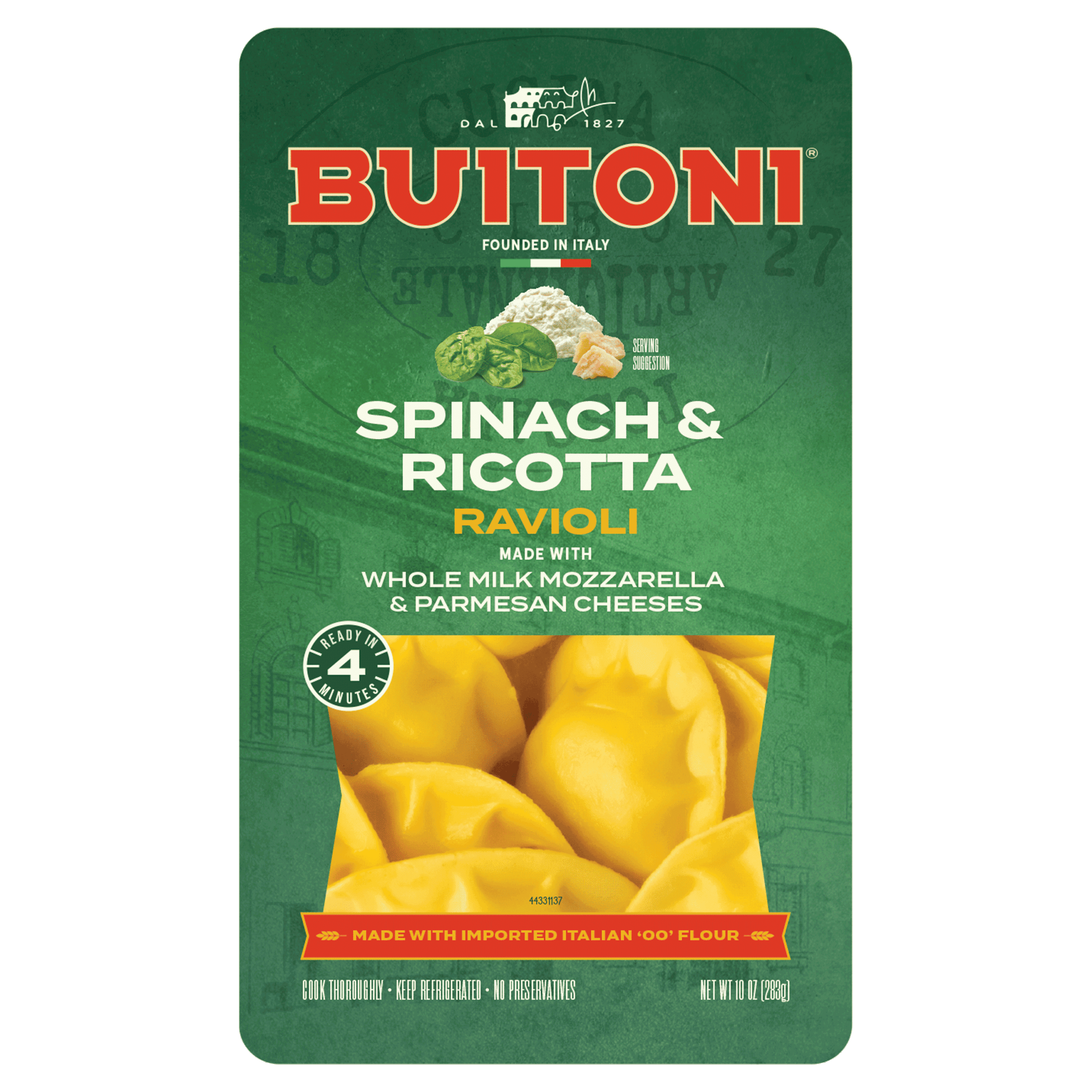
This spinach and ricotta ravioli features a blend of cheeses and spinach, providing a good source of protein and essential nutrients like calcium and iron. The ingredient list is relatively clean, with no artificial additives or seed oils, and includes beneficial components such as ricotta and spinach. However, the product is processed, which limits its score despite the quality ingredients.
Key ingredients 15
SpinachVery Good
Spinach is rich in vitamins A, C, and K, as well as iron and magnesium, supporting overall health. It is a leafy green vegetable known for its antioxidant properties. Consuming spinach can contribute to improved eye health and reduced oxidative stress.
Benefits
Rich in essential vitamins and minerals, supporting immune function and bone health.
Ricotta cheeseGood
Ricotta cheese is a good source of protein and calcium, supporting bone health. It is made from whey, which is a byproduct of cheese production, and is typically lower in fat than other cheeses. The pasteurization process ensures safety by eliminating harmful bacteria.
Benefits
Provides high-quality protein and calcium, beneficial for muscle and bone health.
Low moisture mozzarella cheeseGood
Mozzarella cheese provides a good source of protein and calcium, essential for bone health. It is made from milk and contains beneficial bacteria from cheese cultures. The low moisture content extends shelf life and reduces spoilage.
Benefits
Offers protein and calcium, supporting muscle and bone health.
Parmesan cheeseGood
Parmesan cheese is a hard cheese rich in protein and calcium, supporting bone health. It is aged, which enhances its flavor and digestibility. The cheese cultures used in its production contribute to gut health.
Benefits
High in protein and calcium, beneficial for bone and muscle health.
Fontina cheeseGood
Fontina cheese is a semi-soft cheese that provides protein and calcium, essential for bone health. It is made from milk and contains beneficial bacteria from cheese cultures. The aging process enhances its flavor and nutritional profile.
Benefits
Rich in protein and calcium, supporting bone and muscle health.
EggsGood
Eggs are a high-quality protein source and contain essential nutrients like choline and vitamin D. They are versatile and used in various culinary applications. Eggs support muscle health and provide essential amino acids.
Benefits
Rich in high-quality protein and essential nutrients, supporting muscle and brain health.
SaltNeutral
Salt is used as a seasoning and preservative in food products. It is essential for maintaining fluid balance and nerve function. However, excessive consumption can lead to health issues such as hypertension.
Risks
Excessive salt intake can contribute to high blood pressure and cardiovascular issues.
Benefits
Essential for maintaining fluid balance and nerve function.
Potato starchNeutral
Potato starch is used as a thickening agent in food products. It is a refined carbohydrate with minimal nutritional value. It provides texture and stability to processed foods.
Benefits
Provides texture and stability to food products.
Potato flakesNeutral
Potato flakes are dehydrated potatoes used as a thickening agent. They are a source of carbohydrates but offer limited nutritional benefits. They help improve the texture of processed foods.
Benefits
Contributes to the texture and consistency of food products.
Dried citrus pulpNeutral
Dried citrus pulp is used as a flavoring and fiber source in food products. It is derived from citrus fruits and contains some vitamins and antioxidants. However, its nutritional contribution is minimal in processed foods.
Benefits
Provides flavor and a small amount of fiber.
NutmegNeutral
Nutmeg is a spice used for flavoring in various dishes. It contains some antioxidants and has a warm, aromatic flavor. In small amounts, it is safe and enhances the taste of food.
Risks
In large quantities, nutmeg can cause adverse effects such as nausea and hallucinations.
Benefits
Adds flavor and contains some antioxidants.
Durum wheat semolinaNeutral
Durum wheat semolina is used in pasta production for its high protein content and firm texture. It is a refined grain product that provides carbohydrates and some protein. It is commonly used in pasta due to its desirable cooking properties.
Risks
May cause allergic reactions in individuals with gluten intolerance or celiac disease.
Benefits
Provides carbohydrates and some protein, contributing to energy and satiety.
Beta carotene colorNeutral
Beta carotene is a natural pigment used to add color to food products. It is a precursor to vitamin A and has antioxidant properties. In small amounts, it is safe and contributes to the visual appeal of foods.
Benefits
Provides color and is a precursor to vitamin A, offering antioxidant benefits.
SugarBad
Refined added sugar.
Risks
Excessive sugar intake can contribute to obesity, diabetes, and dental issues.
Benefits
Provides quick energy but lacks essential nutrients.
Wheat flourBad
Refined grain flour stripped of bran and germ.
Risks
May cause allergic reactions in individuals with gluten intolerance or celiac disease.
Benefits
Provides energy through carbohydrates.
Processing
Processed Foods
Get the full breakdown in the Scout appTake Scout shopping
Scan any product to see lab results, healthy alternatives, and your personalized analysis.
Download on theApp Store GET IT ONGoogle Play