
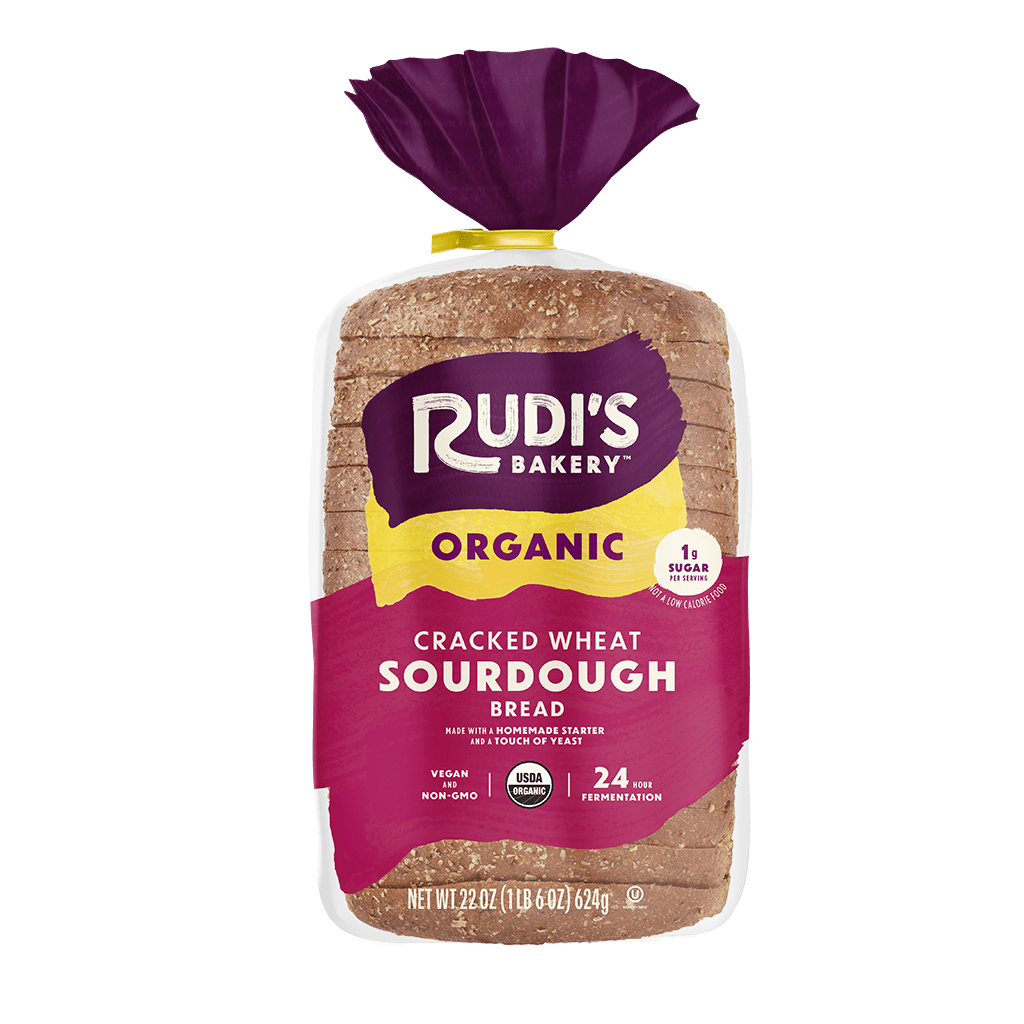


Rudi's Organic Cracked Wheat Sourdough Bread
Analysis updated August 2026 · How Scout scores
At a glance
Summary
This bread features several organic whole grain ingredients, such as organic whole wheat flour and organic cracked wheat, which contribute beneficial nutrients and fiber. However, the presence of organic sunflower oil, a seed oil high in omega-6 fatty acids, is a concern due to its potential inflammatory effects. Additionally, the product is classified as ultra-processed, which limits its overall health rating despite the use of organic ingredients.
Key ingredients 16
Organic whole wheat flourVery Good
Organic whole wheat flour is rich in fiber, vitamins, and minerals. It retains the bran and germ, offering more nutrients than refined flour. Being organic, it avoids synthetic chemicals, enhancing its health profile.
Risks
Contains gluten, which can be problematic for those with gluten intolerance or celiac disease.
Benefits
High in dietary fiber, which aids digestion and helps maintain healthy blood sugar levels.
Organic cracked wheatVery Good
Organic cracked wheat is a whole grain ingredient that provides fiber and essential nutrients. It is minimally processed, retaining most of its natural nutritional value. Its organic nature ensures it is free from harmful chemicals.
Risks
Contains gluten, which may cause issues for those with gluten-related disorders.
Benefits
Rich in dietary fiber and nutrients, supporting digestive health and providing sustained energy.
Organic wheat branVery Good
Organic wheat bran is high in dietary fiber and essential nutrients. It supports digestive health and helps maintain regular bowel movements. Being organic, it is free from synthetic chemicals.
Risks
May cause digestive discomfort in some individuals if consumed in large amounts.
Benefits
Rich in fiber, promoting digestive health and aiding in weight management.
Organic dehydrated rye sourdoughGood
Organic dehydrated rye sourdough adds flavor and aids in natural fermentation. It contains beneficial lactic acid bacteria that can improve gut health. Being organic, it is free from synthetic additives.
Risks
Contains gluten, which may not be suitable for those with gluten sensitivities.
Benefits
Enhances flavor and may support gut health through natural fermentation.
Sea saltGood
Sea salt is a natural source of sodium and trace minerals. It is less processed than table salt and adds flavor to the bread. Its mineral content can provide additional health benefits compared to refined salt.
Risks
Excessive sodium intake can lead to high blood pressure and cardiovascular issues.
Benefits
Provides essential sodium and trace minerals, enhancing flavor and nutritional value.
Organic barley malt syrupGood
Organic barley malt syrup is a natural sweetener that adds flavor and aids fermentation. It is less processed than refined sugars and provides some nutrients. Its organic nature ensures it is free from synthetic additives.
Risks
Contains sugars, which should be consumed in moderation to avoid health issues.
Benefits
Enhances flavor and supports fermentation with some nutritional benefits.
Ascorbic acidGood
Vitamin C — beneficial even when serving as a preservative.
Benefits
Improves dough texture and quality.
WaterNeutral
Water is a neutral ingredient used as a solvent and to provide moisture. It is essential for the dough formation and fermentation process. No significant health impacts are associated with water in this context.
See more about Water →Organic wheat flourNeutral
Standard formulation ingredient — neither beneficial nor harmful at typical use.
Risks
May contain gluten, which can be a concern for individuals with celiac disease or gluten sensitivity.
Benefits
Provides essential carbohydrates for energy and some protein for muscle maintenance.
Organic wheat glutenNeutral
Organic wheat gluten is used to improve the texture and elasticity of the bread. It is a concentrated source of protein derived from wheat. While it enhances bread quality, it does not provide significant additional health benefits.
Risks
Can trigger adverse reactions in individuals with gluten intolerance or celiac disease.
Benefits
Improves bread texture and provides a source of plant-based protein.
Organic brown sugarNeutral
Organic brown sugar is used for sweetness and to aid fermentation. It is less processed than white sugar and retains some molasses content. However, it should be consumed in moderation due to its sugar content.
Risks
Excessive consumption can contribute to health issues like obesity and dental cavities.
Benefits
Provides a natural sweetness and aids in the fermentation process.
YeastNeutral
Yeast is a natural leavening agent used to ferment and rise the dough. It contributes to the bread's texture and flavor. It is a standard ingredient in bread-making with no significant health impacts.
Benefits
Facilitates dough rising and enhances flavor.
Distilled organic white vinegarNeutral
Distilled organic white vinegar is used to enhance flavor and act as a natural preservative. It is made from organic sources, ensuring no synthetic chemicals are used. It has no significant health impacts in small amounts.
Benefits
Acts as a natural preservative and enhances flavor.
Cultured organic wheat starchNeutral
Cultured organic wheat starch is used to improve texture and stability. It is derived from organic wheat, ensuring no synthetic chemicals are involved. It does not provide significant nutritional benefits.
Risks
May contain gluten, which can be a concern for those with gluten intolerance.
Benefits
Improves texture and stability of the bread.
EnzymesNeutral
Enzymes are used to improve dough handling and bread quality. They are naturally occurring proteins that aid in the breakdown of starches. They have no significant health impacts when used in bread-making.
Benefits
Enhances dough handling and improves bread quality.
Organic sunflower oilVery Bad
Organic sunflower oil is a seed oil high in omega-6 fatty acids, which can promote inflammation if consumed excessively. Despite being organic, it is still a processed oil with potential health concerns. It is not recommended for regular consumption due to its fatty acid profile.
Risks
High omega-6 content may promote inflammation when consumed in excess.
Processing
Ultra-Processed Foods
Get the full breakdown in the Scout appTake Scout shopping
Scan any product to see lab results, healthy alternatives, and your personalized analysis.
Download on theApp Store GET IT ONGoogle PlayAmazon pricing & content
CERTAIN CONTENT THAT APPEARS ON THIS SITE COMES FROM AMAZON. THIS CONTENT IS PROVIDED “AS IS” AND IS SUBJECT TO CHANGE OR REMOVAL AT ANY TIME.