
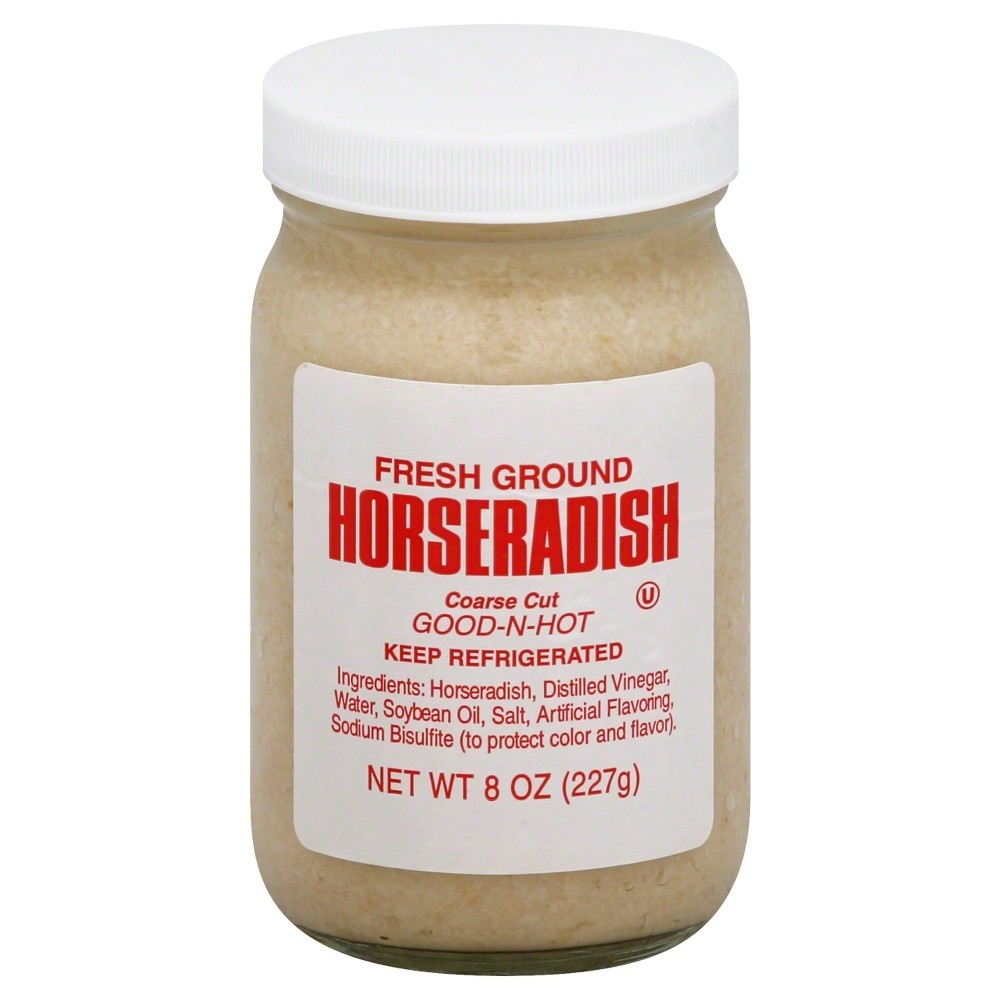

GOOD-N-HOT COARSE CUT FRESH GROUND HORSERADISH
Analysis updated September 2026 · How Scout scores
At a glance
Summary
This horseradish product is ultra-processed, which limits its health score potential. While it contains simple ingredients like horseradish and vinegar, the inclusion of 'natural flavor' introduces ambiguity and potential concerns for those with allergies or sensitivities. The processing level and the presence of this non-transparent ingredient impact its overall rating.
Key ingredients 5
HorseradishNeutral
Horseradish is a root vegetable known for its pungent flavor and potential antimicrobial properties. It is typically consumed in small amounts as a condiment. While it adds flavor, it does not provide significant nutritional benefits.
Risks
Excessive consumption may cause gastrointestinal irritation in sensitive individuals.
Benefits
Contains compounds that may have antimicrobial effects and contribute to flavor enhancement.
Distilled vinegarNeutral
Distilled vinegar is a common acidic ingredient used for flavoring and preservation. It is produced through the fermentation of ethanol by acetic acid bacteria. While it adds acidity and acts as a preservative, it does not offer significant nutritional benefits.
Risks
Excessive consumption may lead to enamel erosion or digestive discomfort.
Benefits
Acts as a preservative and flavor enhancer in food products.
WaterNeutral
Water is a fundamental ingredient used as a solvent and to adjust the consistency of food products. It is essential for hydration and does not contribute calories or nutrients. In this product, it serves to balance the texture and flavor.
Benefits
Essential for hydration and helps in achieving the desired consistency of the product.
SaltNeutral
Salt is used to enhance flavor and preserve food. It is a common ingredient in condiments and processed foods. While necessary for bodily functions, excessive intake can lead to health issues.
Risks
High sodium intake is associated with increased risk of hypertension and cardiovascular diseases.
Benefits
Enhances flavor and acts as a preservative in food products.
Natural flavorBad
Natural flavor is a catch-all term for flavoring agents derived from natural sources. It lacks transparency regarding its specific components and processing methods. This ambiguity can be concerning for individuals with allergies or sensitivities.
Risks
Potential allergen risk due to unspecified components and lack of transparency.
Benefits
Provides flavor enhancement without adding calories or significant nutrients.
Processing
Ultra-Processed Foods
Get the full breakdown in the Scout appTake Scout shopping
Scan any product to see lab results, healthy alternatives, and your personalized analysis.
Download on theApp Store GET IT ONGoogle Play