
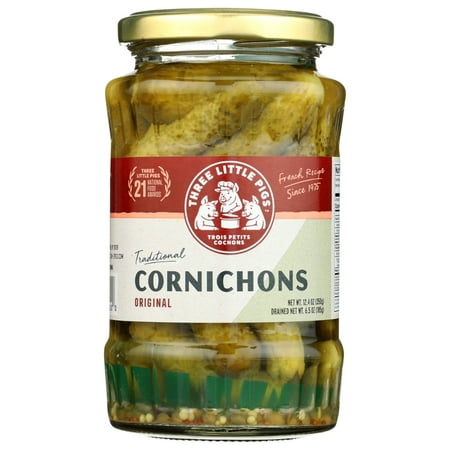

THREE LITTLE PIGS, CORNICHONS BABY SOUR GHERKINS
Analysis updated September 2026 · How Scout scores
At a glance
Summary
This product is ultra-processed due to the inclusion of flavoring, which can contain artificial additives and lacks transparency. However, it contains beneficial ingredients like gherkins, which are low in calories and rich in fiber, contributing positively to its nutritional profile. The presence of vinegar and spices adds flavor without significant negative impact, but the processing level limits its overall health rating.
Key ingredients 8
GherkinsGood
Gherkins are a low-calorie vegetable rich in vitamins and minerals. They provide dietary fiber which aids in digestion and promotes satiety. As a whole food, they are minimally processed and retain most of their natural nutrients.
Benefits
Rich in dietary fiber and essential nutrients, contributing to digestive health and overall nutrition.
SpicesGood
Whole-food seasonings, antioxidant-bearing.
Risks
Potential for allergic reactions in sensitive individuals.
Benefits
May contain beneficial compounds that enhance flavor and aroma.
WaterNeutral
Water is used as a solvent and carrier in food products. It is essential for hydration and does not contribute calories or nutrients. In this product, it serves as a medium for other ingredients.
Benefits
Essential for hydration and acts as a carrier for flavors and nutrients.
VinegarNeutral
Vinegar is used as a preservative and flavor enhancer in pickled products. It provides acidity which helps in preserving the gherkins. While it has some antimicrobial properties, it does not offer significant nutritional benefits.
Risks
Excessive consumption may lead to enamel erosion or digestive discomfort.
Benefits
Acts as a natural preservative and flavor enhancer with some antimicrobial properties.
OnionsNeutral
Onions add flavor and some nutritional value to the product. They contain antioxidants and compounds that may support heart health. However, in small quantities, their impact is limited.
Risks
May cause digestive discomfort in sensitive individuals.
Benefits
Contains antioxidants and compounds that may support heart health.
SaltNeutral
Salt is used for flavor enhancement and preservation in pickled products. It is a common ingredient that helps in extending shelf life. While necessary in small amounts, excessive intake can lead to health issues.
Risks
High sodium intake can contribute to hypertension and cardiovascular issues.
Benefits
Enhances flavor and acts as a preservative.
SulfitesNeutral
Sulfites are used as preservatives to prevent oxidation and maintain color. They are effective in extending shelf life but can cause reactions in sensitive individuals. Their presence in trace amounts is common in processed foods.
Risks
May cause allergic reactions or asthma symptoms in sensitive individuals.
Benefits
Helps preserve the product by preventing oxidation and maintaining color.
FlavouringBad
Flavouring is a broad term that can include artificial additives. It lacks transparency and may contain synthetic compounds. These additives can detract from the natural quality of the product.
Risks
Potential for allergic reactions and adverse health effects from synthetic additives.
Processing
Ultra-Processed Foods
Get the full breakdown in the Scout appTake Scout shopping
Scan any product to see lab results, healthy alternatives, and your personalized analysis.
Download on theApp Store GET IT ONGoogle Play