
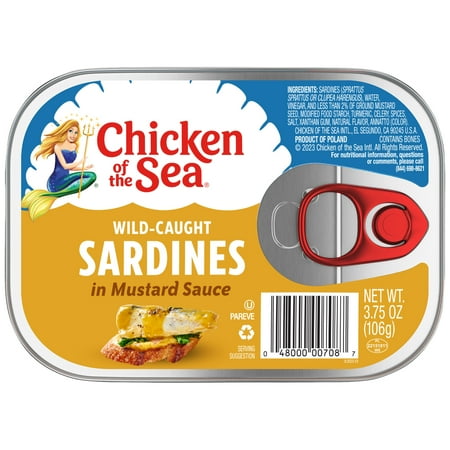
Chicken of the Sea Wild Caught Sardines in Mustard Sauce 3.75 oz.
Summary
This product contains sardines, which are a high-quality source of protein and omega-3 fatty acids, beneficial for heart and brain health. However, the mustard sauce includes several processed ingredients such as maltodextrin, modified starch, and monosodium glutamate, which are associated with health concerns like blood sugar spikes and potential adverse reactions. The presence of multiple additives and the high level of processing contribute to a lower score.
At a glance
Key ingredients 13
SardinesVery Good
Sardines are a high-quality source of protein and omega-3 fatty acids, which are beneficial for heart and brain health. They are typically wild-caught, reducing concerns about farming practices and contaminants. Sardines also provide essential nutrients like vitamin D and calcium.
Benefits
Rich in omega-3 fatty acids that support cardiovascular health and reduce inflammation. Provides a good source of protein and essential nutrients like vitamin D and calcium.
Mustard powderNeutral
Mustard powder is used for flavoring and has minimal nutritional impact. It is derived from mustard seeds and can add a tangy taste to foods. The processing of mustard powder is straightforward, involving drying and grinding of seeds.
Benefits
Provides flavor enhancement with minimal caloric impact. Contains trace amounts of beneficial compounds like glucosinolates.
VinegarNeutral
Vinegar is used as a preservative and flavor enhancer in foods. It is produced through the fermentation of ethanol by acetic acid bacteria. Vinegar can add acidity and tanginess to dishes.
Benefits
May aid in digestion and provide antimicrobial properties. Adds flavor without adding calories.
MaltodextrinBad
Maltodextrin is a highly processed carbohydrate used as a thickener or filler. It is derived from starches like corn, rice, or potato and can cause rapid spikes in blood sugar levels. Its high glycemic index makes it a concern for those managing blood sugar levels.
Risks
May cause rapid blood sugar spikes and is not suitable for individuals with insulin resistance or diabetes.
Benefits
Provides a quick source of energy due to its rapid digestion.
Modified starchBad
Modified starch is used as a thickening agent and stabilizer in processed foods. It undergoes chemical or physical modifications to enhance its properties, which can reduce its nutritional value. The processing can introduce unwanted chemicals or allergens.
Risks
May contain residues from chemical processing and can cause digestive issues in sensitive individuals.
Benefits
Improves texture and stability of food products.
Citric acidNeutral
Citric acid is a natural preservative and flavoring agent found in citrus fruits. It is commonly used to add acidity and enhance flavor in foods. Industrially, it is produced through fermentation of sugars by Aspergillus niger.
Benefits
Acts as a natural preservative and can enhance the flavor profile of foods.
Guar gumNeutral
Guar gum is a thickening agent derived from guar beans. It is used to improve texture and consistency in processed foods. As a soluble fiber, it can aid in digestion when consumed in small amounts.
Risks
Excessive consumption may lead to digestive discomfort such as bloating or gas.
Benefits
Provides dietary fiber that can aid in digestion and improve gut health.
SpicesNeutral
Spices are used to enhance flavor and may offer various health benefits depending on the specific spice. They are typically derived from plant sources and can contain antioxidants. The exact composition of spices in this product is unspecified.
Benefits
May provide antioxidants and enhance the flavor profile of foods.
Monosodium glutamateBad
Monosodium glutamate (MSG) is a flavor enhancer that can cause adverse reactions in sensitive individuals. It is a sodium salt of glutamic acid and is often associated with 'Chinese Restaurant Syndrome'. Some people may experience headaches or other symptoms after consumption.
Risks
May cause headaches, nausea, or other symptoms in sensitive individuals.
Benefits
Enhances the umami flavor in foods, making them more palatable.
Turmeric oleoresinNeutral
Turmeric oleoresin is a concentrated extract used for coloring and flavoring. It contains curcumin, which has anti-inflammatory properties. The extraction process concentrates the active compounds, enhancing its potency.
Benefits
Contains curcumin, which may provide anti-inflammatory and antioxidant benefits.
Xanthan gumNeutral
Xanthan gum is a polysaccharide used as a thickening and stabilizing agent. It is produced through the fermentation of sugars by Xanthomonas campestris. It helps improve texture and consistency in food products.
Risks
Excessive consumption may lead to digestive discomfort such as bloating or gas.
Benefits
Improves texture and stability of food products without significant caloric impact.
Chili powderNeutral
Chili powder is used for flavoring and can add heat to foods. It is made from ground dried chilies and may contain other spices. Chili powder can enhance the flavor profile of dishes.
Benefits
Adds flavor and heat to foods, potentially boosting metabolism.
SaltNeutral
Salt is used as a preservative and flavor enhancer in foods. It is essential for maintaining fluid balance and nerve function in the body. However, excessive consumption can lead to health issues such as hypertension.
Risks
Excessive intake can lead to high blood pressure and other cardiovascular issues.
Benefits
Essential for maintaining fluid balance and nerve function in the body.
Processing
Ultra-Processed Foods
Get the full breakdown in the Scout app
Scan any product to see lab results, healthy alternatives, and your personalized analysis.
Download on theApp Store