
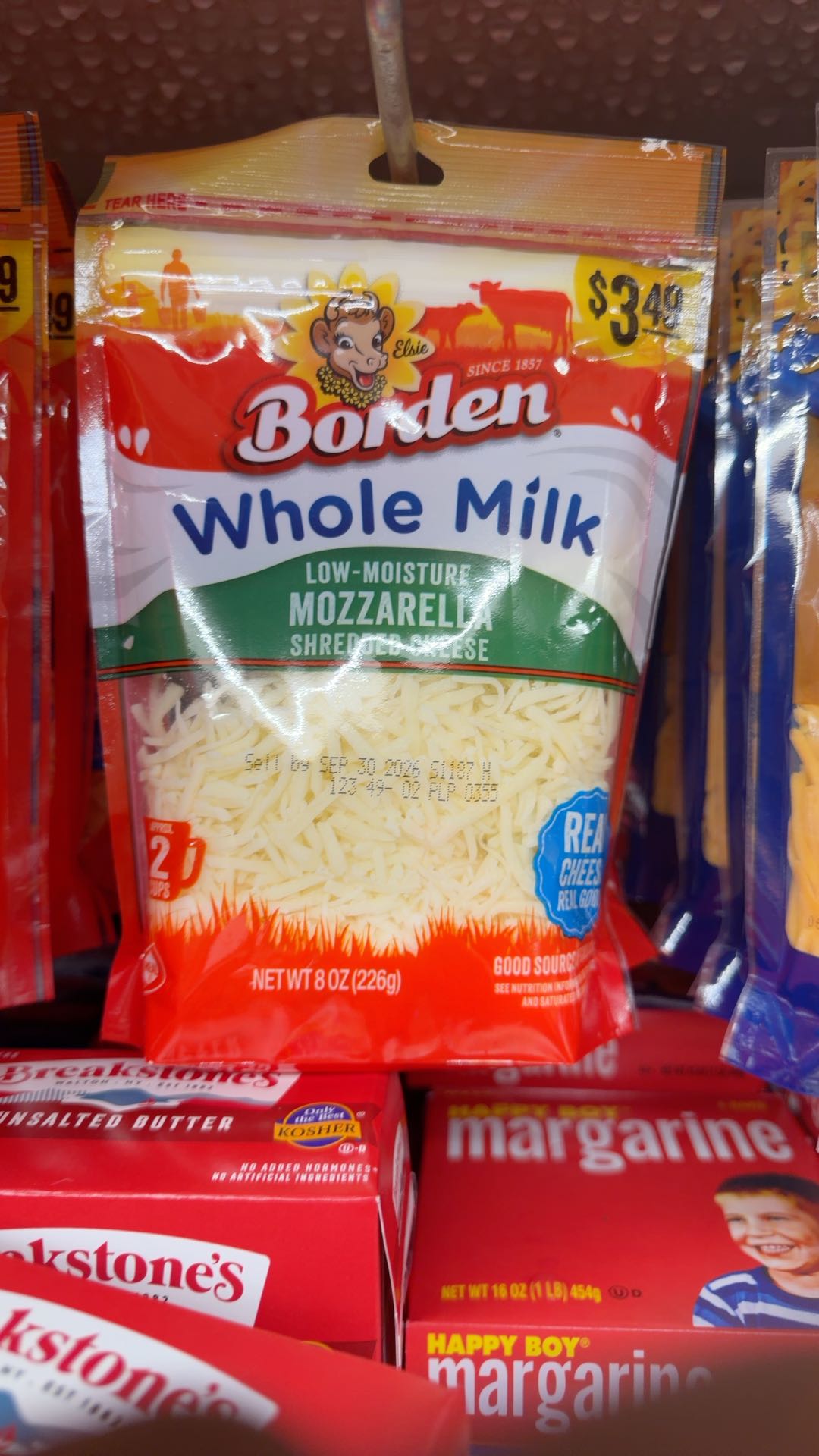


At a glance
Summary
This mozzarella cheese is made from pasteurized milk, providing essential nutrients like calcium and protein. However, it includes additives such as powdered cellulose and natamycin, which contribute to its ultra-processed nature. The presence of these additives and the processing level limit its score, despite the beneficial qualities of the primary ingredient.
Key ingredients 8
Low Moisture Whole Milk MozzarellaNeutral
This ingredient is a standard dairy product providing protein and calcium, with no significant positive or negative impact.
DairyNeutral
Dairy is a common source of essential nutrients like calcium and vitamin D, but its overall impact depends on individual dietary needs.
See more about Dairy →CheeseNeutral
Cheese offers protein and calcium but is also high in saturated fat; its classification remains neutral here.
See more about Cheese →MozzarellaNeutral
Mozzarella is a popular cheese providing nutrients like calcium and protein, with no inherent positive or negative sentiment.
See more about Mozzarella →Whole Milk MozzarellaNeutral
This ingredient is a traditional cheese made from whole milk, offering nutritional value without strong positive or negative connotations.
Low Moisture MozzarellaNeutral
A processed cheese product that maintains moisture and texture, with neutral nutritional impact.
Anti-caking AgentNeutral
Used to prevent clumping, this additive is common in processed foods and has a neutral impact.
E235Bad
E235 is a preservative that has raised health concerns and is considered undesirable in food products.
Processing
Ultra-Processed Foods
Get the full breakdown in the Scout appTake Scout shopping
Scan any product to see lab results, healthy alternatives, and your personalized analysis.
Download on theApp Store GET IT ONGoogle Play