
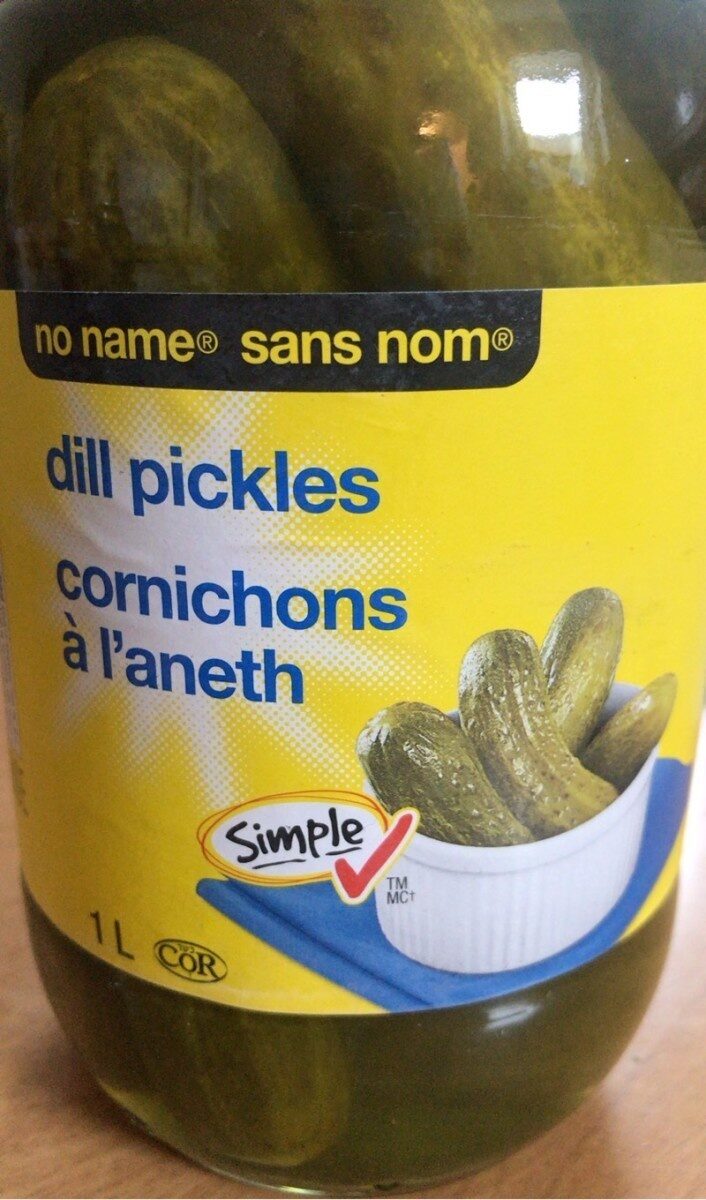


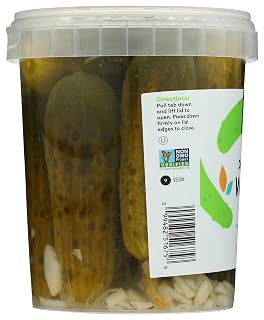

At a glance
Summary
This product contains beneficial ingredients like cucumbers, white vinegar, and turmeric extract, which provide hydration, acidity, and potential anti-inflammatory benefits. However, the presence of Polysorbate 80, a synthetic emulsifier, introduces a level of processing that impacts the overall healthiness of the product. While the ingredient list is relatively short, the processing level and inclusion of an additive prevent it from achieving a higher score.
Key ingredients 8
CucumbersGood
Cucumbers are a low-calorie vegetable rich in water and fiber. They provide hydration and support digestive health. As a whole food, they are minimally processed and retain their natural nutrients.
Benefits
Cucumbers are hydrating and support digestive health due to their high water and fiber content.
White VinegarGood
White vinegar is a natural preservative and flavor enhancer. It aids in the pickling process by providing acidity that prevents spoilage. Vinegar may also have antimicrobial properties.
Risks
Excessive consumption of vinegar can lead to digestive discomfort.
Benefits
Vinegar acts as a preservative and may have antimicrobial properties.
Turmeric ExtractGood
Turmeric extract is known for its anti-inflammatory and antioxidant properties. It adds color and potential health benefits to the product. Turmeric is a natural spice with a long history of use in traditional medicine.
Benefits
Provides anti-inflammatory and antioxidant benefits.
WaterNeutral
Water is used as a solvent and carrier in food products. It is essential for hydration but does not provide additional nutritional benefits in this context. Its presence is necessary for the pickling process.
Benefits
Water is essential for hydration but does not provide additional nutritional benefits in this context.
SaltNeutral
Salt is used for flavor and preservation in pickling. It is a necessary component for the fermentation process. However, excessive salt intake can lead to health issues such as hypertension.
Risks
High sodium intake can contribute to hypertension and cardiovascular issues.
Benefits
Salt is essential for flavor and preservation in pickling.
Calcium ChlorideNeutral
Calcium chloride is used to maintain firmness in pickled products. It is a common additive in food processing. It does not provide significant nutritional benefits.
Benefits
Helps maintain firmness in pickled products.
SeasoningNeutral
Seasoning adds flavor to the product but its composition is unspecified. It may contain a mix of spices and herbs. Without specific details, its health impact is neutral.
Risks
Potential allergens or sensitivities depending on the seasoning components.
Benefits
Enhances flavor profile of the product.
Polysorbate 80Bad
Polysorbate 80 is an emulsifier used to improve texture and stability. It is a synthetic additive and may cause digestive issues in sensitive individuals. Its use is common in processed foods.
Risks
May cause digestive issues and allergic reactions in sensitive individuals.
Benefits
Improves texture and stability in processed foods.
Processing
Processed Foods
Get the full breakdown in the Scout appTake Scout shopping
Scan any product to see lab results, healthy alternatives, and your personalized analysis.
Download on theApp Store GET IT ONGoogle Play