
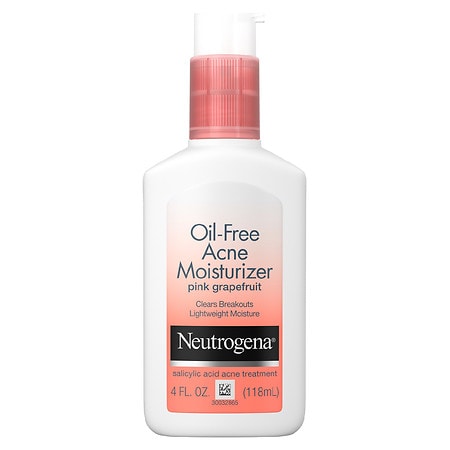


Neutrogena Oil Free Acne Moisturizer Pink Grapefruit / LOTION
Analysis updated August 2026 · How Scout scores
At a glance
Summary
This moisturizer contains beneficial ingredients like glycerin, which is known for its hydrating properties. However, it also includes synthetic compounds such as dimethicone and BHT, which are common in processed skincare products and can be concerning for some users. The presence of these ingredients, along with the processed nature of the product, impacts its overall rating.
Key ingredients 20
GlycerinGood
Glycerin is a humectant that attracts moisture to the skin. It is widely used in skincare for its hydrating properties. It is safe and beneficial for most skin types.
Risks
There are minimal risks associated with glycerin, though it may cause stickiness in high concentrations.
Benefits
Glycerin helps to maintain skin hydration, improving skin barrier function and smoothness.
WaterNeutral
Water is a common solvent used in cosmetic formulations. It helps dissolve other ingredients and provides a base for the product. It is generally considered safe and non-irritating.
Risks
There are no significant risks associated with water in cosmetics.
Benefits
Water helps hydrate the skin and acts as a carrier for other beneficial ingredients.
Dicaprylyl EtherNeutral
Dicaprylyl Ether is an emollient that provides a lightweight feel to the skin. It helps improve the spreadability of the product. It is generally well-tolerated by most skin types.
Risks
There are minimal risks, though it may cause irritation in very sensitive skin.
Benefits
It helps to soften and smooth the skin without leaving a greasy residue.
Cetearyl AlcoholNeutral
Cetearyl Alcohol is a fatty alcohol used as an emollient and thickening agent. It helps stabilize and thicken formulations. It is considered safe for use in cosmetics.
Risks
Rarely, it may cause irritation in individuals with very sensitive skin.
Benefits
It helps to condition and soften the skin, enhancing the texture of the product.
Neopentyl Glycol DiethylhexanoateNeutral
This ingredient is used as an emollient and skin conditioning agent. It provides a silky feel to the skin and enhances the spreadability of the product. It is generally considered safe for use in cosmetics.
Risks
There are minimal risks, though it may cause irritation in very sensitive skin.
Benefits
It helps to improve the texture and feel of the skin, leaving it soft and smooth.
Methyl Gluceth-20Neutral
Methyl Gluceth-20 is a humectant and emollient derived from glucose. It helps to moisturize and soften the skin. It is considered safe and non-irritating for most skin types.
Risks
There are minimal risks, though it may cause irritation in very sensitive skin.
Benefits
It helps to hydrate the skin, improving its texture and feel.
Aluminum Starch OctenylsuccinateNeutral
This ingredient is used as an absorbent and anti-caking agent. It helps to absorb excess oil and improve the texture of the product. It is generally considered safe for use in cosmetics.
Risks
There are minimal risks, though it may cause irritation in very sensitive skin.
Benefits
It helps to mattify the skin, reducing shine and improving the product's feel.
Ceteth-10 PhosphateNeutral
Ceteth-10 Phosphate is an emulsifier that helps blend oil and water-based ingredients. It stabilizes formulations and improves texture. It is generally considered safe for use in cosmetics.
Risks
There are minimal risks, though it may cause irritation in very sensitive skin.
Benefits
It helps to maintain the stability and consistency of the product.
Dicetyl PhosphateNeutral
Dicetyl Phosphate is used as an emulsifier and stabilizer in cosmetic formulations. It helps to maintain the consistency and texture of the product. It is generally considered safe for use in cosmetics.
Risks
There are minimal risks, though it may cause irritation in very sensitive skin.
Benefits
It helps to stabilize emulsions, ensuring a smooth and uniform product.
Steareth-20Neutral
Steareth-20 is an emulsifier that helps blend oil and water-based ingredients. It stabilizes formulations and improves texture. It is generally considered safe for use in cosmetics.
Risks
There are minimal risks, though it may cause irritation in very sensitive skin.
Benefits
It helps to maintain the stability and consistency of the product.
Steareth-2Neutral
Steareth-2 is an emulsifier that helps blend oil and water-based ingredients. It stabilizes formulations and improves texture. It is generally considered safe for use in cosmetics.
Risks
There are minimal risks, though it may cause irritation in very sensitive skin.
Benefits
It helps to maintain the stability and consistency of the product.
Neopentyl Glycol DiisostearateNeutral
This ingredient is used as an emollient and skin conditioning agent. It provides a silky feel to the skin and enhances the spreadability of the product. It is generally considered safe for use in cosmetics.
Risks
There are minimal risks, though it may cause irritation in very sensitive skin.
Benefits
It helps to improve the texture and feel of the skin, leaving it soft and smooth.
Sodium HydroxideNeutral
Sodium Hydroxide is used to adjust the pH of cosmetic formulations. It helps maintain the stability and efficacy of the product. It is generally considered safe in low concentrations.
Risks
In high concentrations, it can be irritating or corrosive to the skin.
Benefits
It helps to balance the pH of the product, ensuring its stability and performance.
Xanthan GumNeutral
Xanthan Gum is a thickening agent used to improve the texture and consistency of cosmetic products. It helps to stabilize emulsions and suspensions. It is generally considered safe for use in cosmetics.
Risks
There are minimal risks, though it may cause irritation in very sensitive skin.
Benefits
It helps to improve the texture and stability of the product.
Magnesium Aluminum SilicateNeutral
Magnesium Aluminum Silicate is a naturally occurring mineral used as a thickening agent. It helps to stabilize emulsions and improve the texture of the product. It is generally considered safe for use in cosmetics.
Risks
There are minimal risks, though it may cause irritation in very sensitive skin.
Benefits
It helps to improve the texture and stability of the product.
Citrus Grandis (Grapefruit) Fruit ExtractNeutral
Grapefruit Extract is used for its antioxidant and astringent properties. It can help to tone and refresh the skin. It is generally considered safe for use in cosmetics.
Risks
It may cause photosensitivity, increasing the risk of sunburn.
Benefits
It provides antioxidant benefits, helping to protect the skin from environmental damage.
DimethiconeBad
Occlusive silicone film-former — flagged under clean-beauty doctrine.
Risks
It may cause breakouts in acne-prone skin due to its occlusive nature.
Benefits
Dimethicone helps to smooth and protect the skin, reducing the appearance of fine lines and dryness.
Sodium BenzoateBad
Synthetic preservative that can form benzene in the presence of vitamin C.
Risks
In rare cases, it may cause irritation or allergic reactions in sensitive individuals.
Benefits
It helps to preserve the product, ensuring its safety and efficacy over time.
Disodium EDTABad
Processed additive flagged under Scout's ingredient doctrine.
Risks
There are minimal risks, though it may cause irritation in very sensitive skin.
Benefits
It helps to enhance the stability and shelf life of the product.
BHTBad
Processed additive flagged under Scout's ingredient doctrine.
Risks
There are concerns about potential skin irritation and systemic effects with prolonged use.
Benefits
It helps to preserve the product, preventing rancidity and maintaining efficacy.
Get the full breakdown in the Scout appTake Scout shopping
Scan any product to see lab results, healthy alternatives, and your personalized analysis.
Download on theApp Store GET IT ONGoogle PlayAmazon pricing & content
Amazon price as of . Product prices and availability are accurate as of the date/time indicated and are subject to change. Any price and availability information displayed on Amazon.com at the time of purchase will apply to the purchase of this product.
CERTAIN CONTENT THAT APPEARS ON THIS SITE COMES FROM AMAZON. THIS CONTENT IS PROVIDED “AS IS” AND IS SUBJECT TO CHANGE OR REMOVAL AT ANY TIME.