
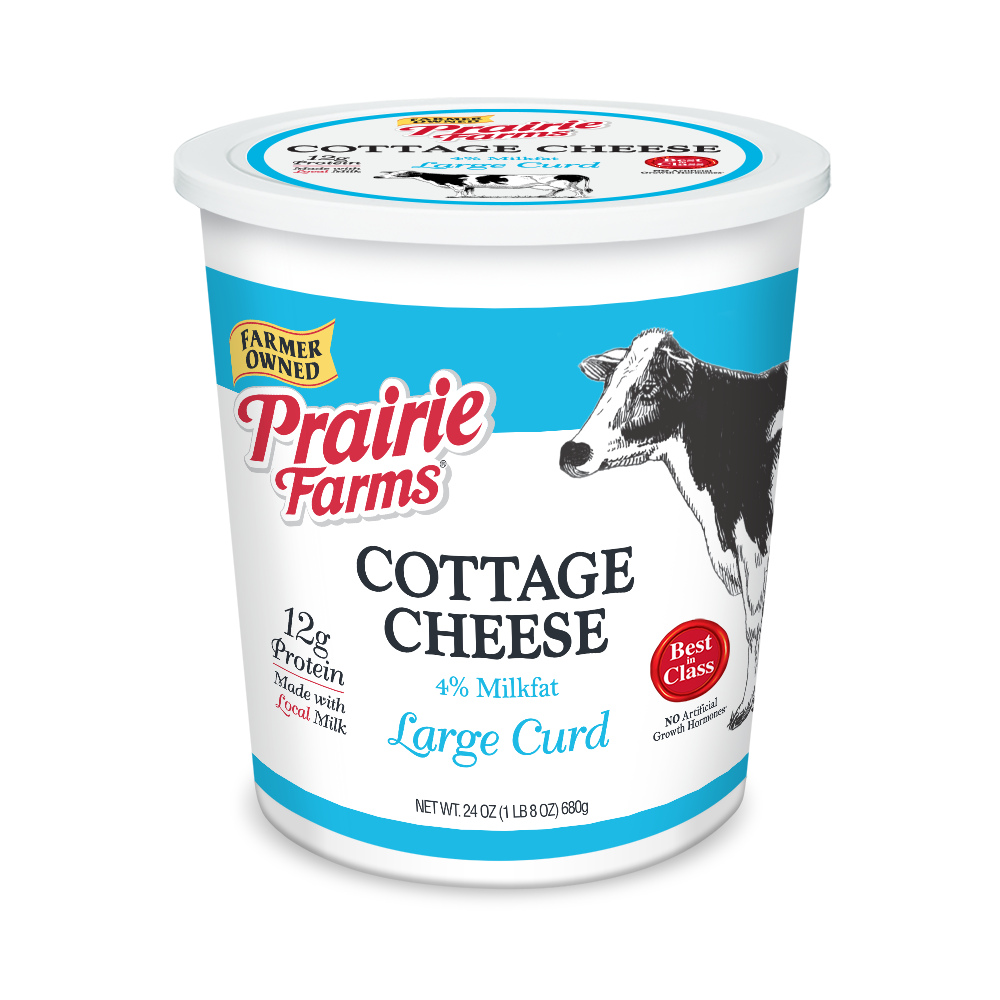


Prairie Farms LARGE CURD COTTAGE CHEESE
Analysis updated September 2026 · How Scout scores
At a glance
Summary
This cottage cheese is ultra-processed, containing multiple additives such as gums and preservatives, which contribute to its processing level. While it includes beneficial ingredients like cream and cheese cultures, the presence of emulsifiers and synthetic preservatives like potassium sorbate detracts from its overall healthiness. The product's processing level and additive content limit its score despite having some redeeming qualities.
Key ingredients 13
CreamGood
Cream adds richness and flavor to dairy products and is a source of fat-soluble vitamins. It is less processed compared to many other fat sources and provides a creamy texture. It enhances the taste and mouthfeel of the product.
Risks
High in saturated fats, which should be consumed in moderation to avoid cardiovascular risks.
Benefits
Rich in fat-soluble vitamins and enhances the flavor and texture of dairy products.
Cheese culturesGood
Cheese cultures are beneficial bacteria used in the fermentation process to develop flavor and texture in cheese. They are natural and contribute to the probiotic content of the product. They enhance the nutritional profile by aiding digestion.
Benefits
Contribute to flavor development and may provide probiotic benefits.
Skim milkNeutral
Standard formulation ingredient — neither beneficial nor harmful at typical use.
Benefits
Provides essential nutrients such as calcium and protein, supporting bone health and muscle maintenance.
Nonfat dry milkNeutral
Nonfat dry milk is a dehydrated form of skim milk, providing similar nutrients without the fat. It is used to increase protein content and improve texture. It is a convenient source of dairy nutrients but lacks the fat content of whole milk.
Benefits
Provides protein and calcium, contributing to the nutritional profile of the product.
LactoseNeutral
Lactose is a natural sugar found in milk, contributing to the carbohydrate content. It is a source of energy but can cause digestive issues in lactose-intolerant individuals. It is naturally present in dairy products.
Risks
May cause digestive discomfort in individuals with lactose intolerance.
Benefits
Provides a source of energy and is naturally present in dairy products.
SaltNeutral
Salt is used to enhance flavor and preserve food. It is a common additive in processed foods but should be consumed in moderation due to potential health risks. It is essential for maintaining fluid balance and nerve function.
Risks
Excessive consumption can lead to high blood pressure and cardiovascular issues.
Benefits
Enhances flavor and acts as a preservative in food products.
Guar gumNeutral
Standard formulation ingredient — neither beneficial nor harmful at typical use.
Risks
May cause digestive discomfort such as bloating and gas in sensitive individuals.
Benefits
Improves texture and stability of food products.
Xanthan gumNeutral
Xanthan gum is a polysaccharide used as a thickening and stabilizing agent in foods. It is produced through fermentation and is generally considered safe. It can improve the texture of food products.
Risks
May cause digestive issues in large amounts for some individuals.
Benefits
Enhances texture and stability in food products.
Carob bean gumNeutral
Carob bean gum is a natural thickener derived from the seeds of the carob tree. It is used to improve texture and is less processed than some other gums. It is generally recognized as safe for consumption.
Benefits
Provides a natural source of thickening and stabilizing properties.
Carbon dioxideNeutral
Carbon dioxide is used in food packaging to maintain freshness by displacing oxygen. It is a natural gas and is generally recognized as safe. It helps preserve the quality of food products.
Benefits
Helps maintain freshness and quality of packaged foods.
EnzymesNeutral
Enzymes are used in cheese production to aid in the coagulation of milk. They are natural proteins that facilitate the cheese-making process. They are essential for developing the texture and flavor of cheese.
Benefits
Essential for cheese production, aiding in texture and flavor development.
Mono and diglyceridesBad
Mono and diglycerides are emulsifiers used to blend ingredients that typically do not mix well. They are derived from oils and are highly processed. They may contain trans fats, which are linked to negative health effects.
Risks
Potential presence of trans fats, which are associated with increased risk of heart disease.
Benefits
Help maintain product consistency and texture.
Potassium sorbateBad
Potassium sorbate is a preservative used to extend shelf life by inhibiting mold and yeast growth. It is synthetically produced and can cause allergic reactions in sensitive individuals. It is commonly used in processed foods.
Risks
May cause allergic reactions or skin irritation in sensitive individuals.
Benefits
Extends shelf life by preventing mold and yeast growth.
Processing
Ultra-Processed Foods
Get the full breakdown in the Scout appTake Scout shopping
Scan any product to see lab results, healthy alternatives, and your personalized analysis.
Download on theApp Store GET IT ONGoogle Play