
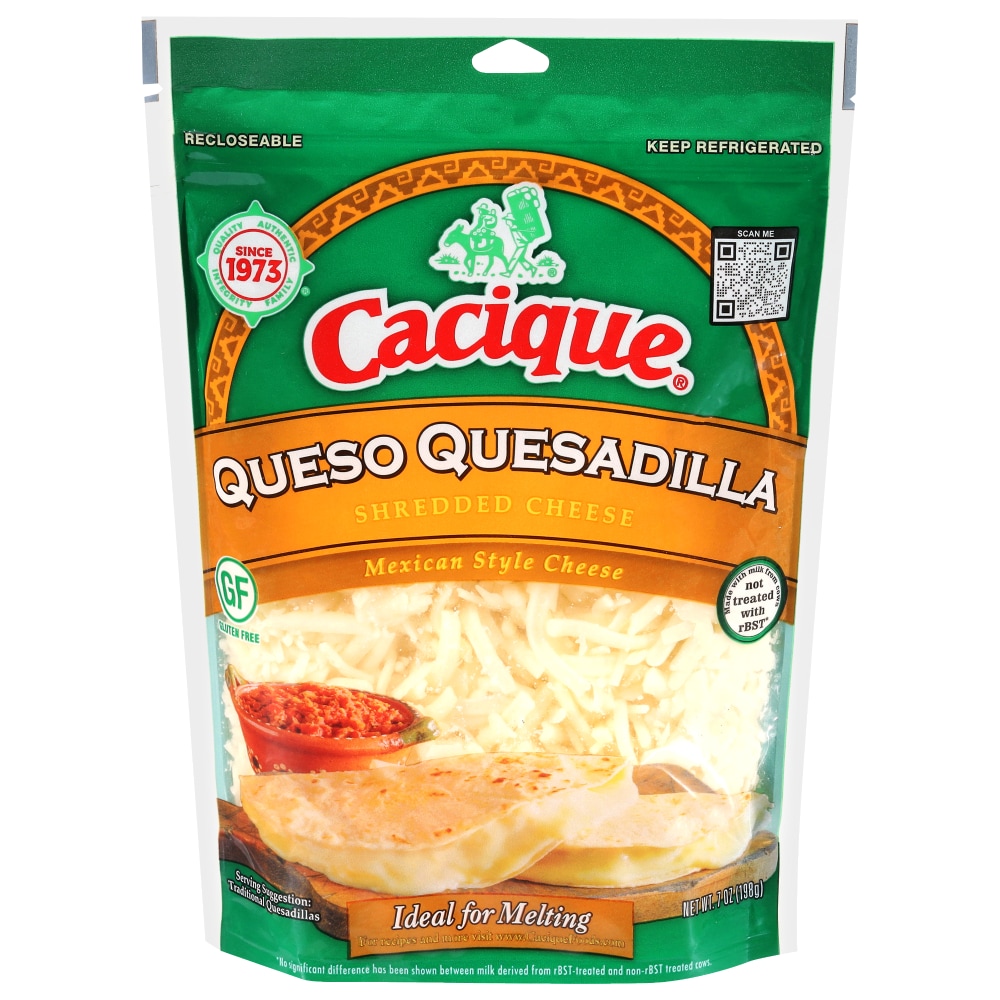


Sargento Queso Quesadilla Shredded Cheese
Analysis updated July 2026 · How Scout scores
At a glance
Summary
This shredded cheese product is processed, containing cultured pasteurized milk and skim milk, which are beneficial for protein and calcium intake. However, it includes natamycin, a synthetic mold inhibitor, and starches to prevent caking, which are indicative of moderate processing. The presence of these additives and the processing level limit its score, despite the overall good quality of the primary ingredients.
Key ingredients 8
Cultured pasteurized grade a milk and skim milkGood
This ingredient provides high-quality dairy, offering essential nutrients and a good source of protein and calcium.
Sea saltGood
Sea salt enhances flavor naturally and supplies essential minerals, making it a beneficial addition in moderation.
See more about Sea salt →Potato starchNeutral
Potato starch is used as a thickening agent and is generally considered neutral in terms of health impact.
See more about Potato starch →Corn starchNeutral
Corn starch acts as a stabilizer and thickener, with no significant health benefits or concerns when consumed in typical amounts.
See more about Corn starch →Calcium sulfateNeutral
Calcium sulfate is added to prevent caking and is a common food additive with a neutral health profile.
See more about Calcium sulfate →EnzymesNeutral
Enzymes are used in cheese production to aid in curdling and aging, with no significant health concerns.
See more about Enzymes →Annatto colorNeutral
Annatto is a natural coloring agent derived from seeds, used to give cheese its characteristic color without health risks.
See more about Annatto color →NatamycinNeutral
Natamycin is a mold inhibitor used to extend shelf life, generally recognized as safe when used appropriately.
See more about Natamycin →Processing
Processed Foods
Get the full breakdown in the Scout appTake Scout shopping
Scan any product to see lab results, healthy alternatives, and your personalized analysis.
Download on theApp Store GET IT ONGoogle PlayAmazon pricing & content
Amazon price as of . Product prices and availability are accurate as of the date/time indicated and are subject to change. Any price and availability information displayed on Amazon.com at the time of purchase will apply to the purchase of this product.
CERTAIN CONTENT THAT APPEARS ON THIS SITE COMES FROM AMAZON. THIS CONTENT IS PROVIDED “AS IS” AND IS SUBJECT TO CHANGE OR REMOVAL AT ANY TIME.