


At a glance
Summary
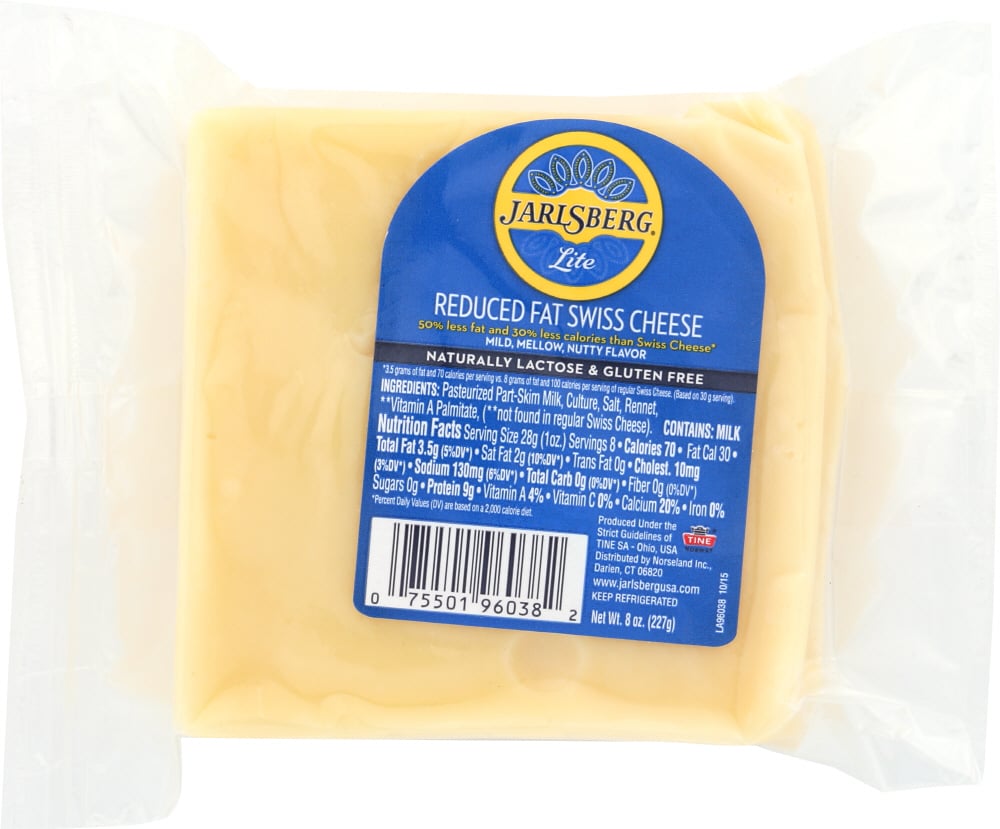
This reduced fat Swiss cheese is made from pasteurized part-skim milk, rennet, salt, and cultures, which are typical ingredients for cheese, ensuring a relatively clean label. The product is processed, which limits its score, but it avoids harmful additives and seed oils, maintaining a focus on traditional cheese-making ingredients. The reduction in fat content is achieved without compromising the quality of the core ingredients, making it a healthier option within its category.
Key ingredients 5
Pasteurized part-skim milkGood
Pasteurized part-skim milk is a primary source of protein and calcium in cheese. The pasteurization process ensures safety by eliminating harmful bacteria. Skimming reduces fat content, making it a lower-calorie option compared to whole milk.
Benefits
Provides essential nutrients such as calcium and protein, which are important for bone health and muscle maintenance.
RennetGood
Beneficial ingredient — whole-food or functional value in this product class.
See more about Rennet →SaltNeutral
Salt is used in cheese for flavor and as a preservative. It is a common ingredient in cheese-making but does not provide additional health benefits. Excessive consumption of salt can lead to health issues such as hypertension.
Risks
High sodium intake can contribute to hypertension and cardiovascular issues.
Vitamin A palmitateNeutral
Vitamin A palmitate is a synthetic form of vitamin A added to fortify foods. It helps maintain vision and immune function but is not naturally occurring in cheese. Overconsumption can lead to toxicity, but it is generally safe in regulated amounts.
Risks
Excessive intake can lead to vitamin A toxicity, but this is unlikely in normal dietary amounts.
Benefits
Supports vision and immune health when consumed in appropriate amounts.
CultureNeutral
Cultures are used in cheese-making to develop flavor and texture. They are essential for fermentation but do not provide direct nutritional benefits. The type of culture can affect the final taste and quality of the cheese.
Benefits
Contributes to the development of flavor and texture in cheese.
Processing
Processed Foods
Get the full breakdown in the Scout appTake Scout shopping
Scan any product to see lab results, healthy alternatives, and your personalized analysis.
Download on theApp Store GET IT ONGoogle Play