
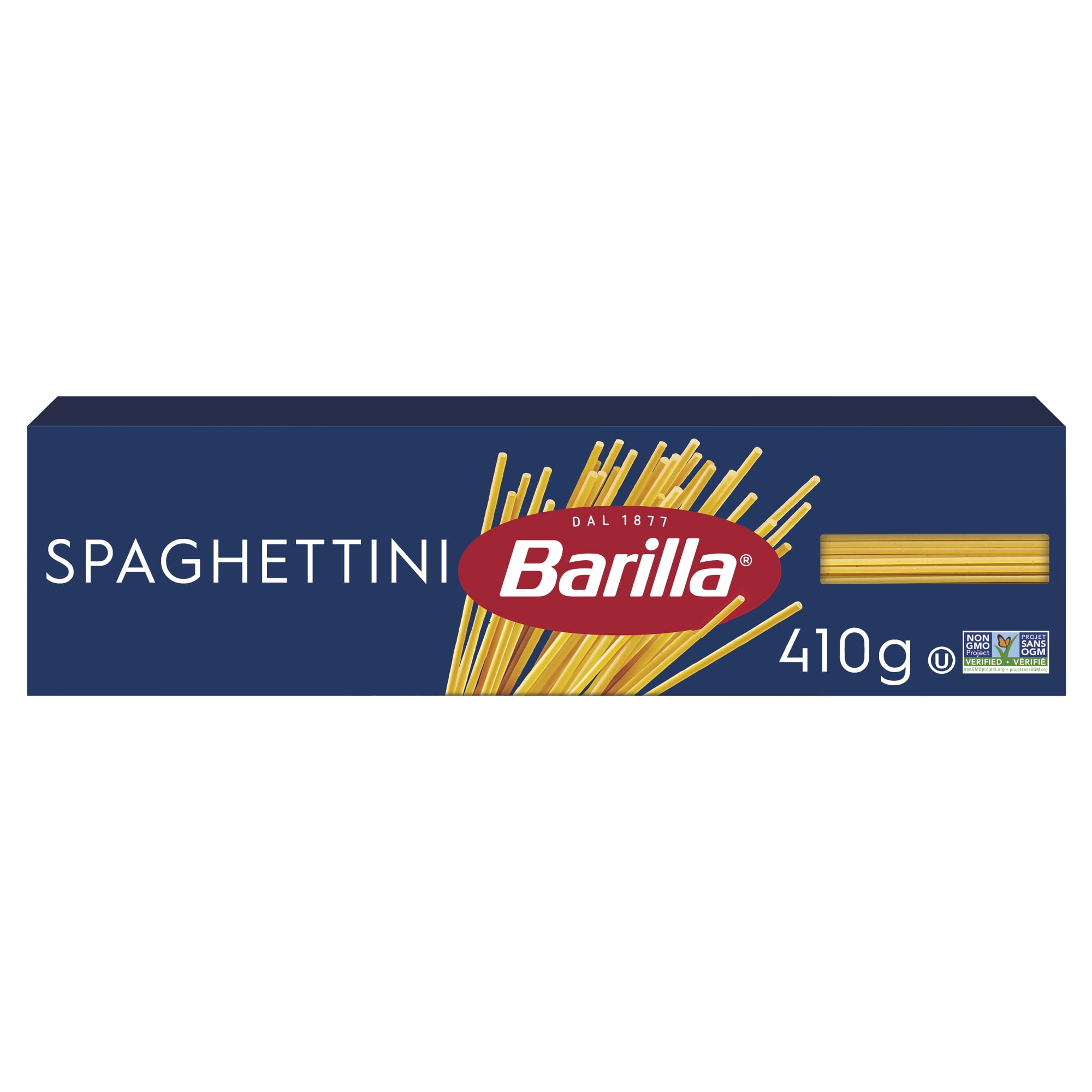


Barilla Spaghettini Pasta 410 G
Analysis updated August 2026 · How Scout scores
At a glance
Summary
This pasta is made from high-quality semolina and durum wheat flour, which are minimally processed and retain their natural nutrients. The product is fortified with essential vitamins and minerals, such as niacin, iron, and folic acid, enhancing its nutritional profile. Its simple ingredient list and minimal processing contribute to a high health rating.
Key ingredients 8
Niacin (vitamin B3)Neutral
Niacin is a B-vitamin essential for energy metabolism, added to enrich the pasta, with no negative impact.
See more about Niacin (vitamin B3) →Ferrous sulphate (iron)Neutral
Ferrous sulphate is an iron supplement used to prevent deficiency, generally safe and beneficial in small amounts.
Thiamine mononitrate (vitamin B1)Neutral
Thiamine mononitrate is a vitamin B1 supplement that supports energy production, added for nutritional enrichment.
See more about Thiamine mononitrate (vitamin B1) →Riboflavin (vitamin B2)Neutral
Riboflavin is a B-vitamin important for cellular energy, included to fortify the product nutritionally.
See more about Riboflavin (vitamin B2) →Folic acidNeutral
Folic acid is a synthetic form of folate, added to support overall health and prevent deficiencies.
See more about Folic acid →Semolina (wheat)Bad
Semolina is a refined wheat product that has been processed to remove most of its fiber and nutrients, which can reduce its nutritional value.
Durum wheat flourBad
Durum wheat flour is a refined flour that lacks the fiber and nutrients found in whole grains, making it less beneficial for a balanced diet.
See more about Durum wheat flour →WheatBad
Wheat is a common allergen and can be problematic for those with gluten sensitivities or celiac disease.
See more about Wheat →Processing
Unprocessed or Minimally Processed Foods
Get the full breakdown in the Scout appTake Scout shopping
Scan any product to see lab results, healthy alternatives, and your personalized analysis.
Download on theApp Store GET IT ONGoogle PlayAmazon pricing & content
Amazon price as of . Product prices and availability are accurate as of the date/time indicated and are subject to change. Any price and availability information displayed on Amazon.com at the time of purchase will apply to the purchase of this product.
CERTAIN CONTENT THAT APPEARS ON THIS SITE COMES FROM AMAZON. THIS CONTENT IS PROVIDED “AS IS” AND IS SUBJECT TO CHANGE OR REMOVAL AT ANY TIME.