
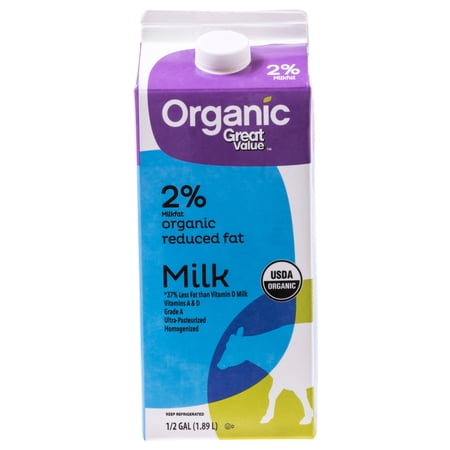
Great Value: Organic 2% Reduced Fat Milk
Summary
This organic milk product is minimally processed and contains high-quality ingredients such as organic reduced fat milk and organic nonfat milk, which provide essential nutrients like calcium and vitamin D. The addition of vitamins A and D3 enhances its nutritional profile, supporting bone health. The organic certification ensures the absence of synthetic pesticides and hormones, contributing to its high health rating.
At a glance
Key ingredients 4
Organic Reduced Fat MilkVery Good
Organic reduced fat milk is a beneficial ingredient due to its high-quality protein and essential nutrients like calcium and vitamin B12. The organic certification ensures that the milk is free from synthetic pesticides and hormones, enhancing its health profile. Additionally, the reduced fat content makes it suitable for those monitoring their fat intake while still providing essential nutrients.
Benefits
Rich in calcium and protein, supporting bone health and muscle maintenance.
Organic Nonfat MilkVery Good
Organic nonfat milk is considered very good due to its nutrient density without the added calories from fat. The organic label indicates it is produced without synthetic chemicals, which is beneficial for health-conscious consumers. It provides essential nutrients like calcium and vitamin D, crucial for bone health.
Benefits
Provides essential nutrients such as calcium and vitamin D without added fat, supporting bone health.
Vitamin A PalmitateNeutral
Vitamin A palmitate is a synthetic form of vitamin A added to fortify milk, ensuring adequate intake of this essential nutrient. It is commonly used in reduced-fat and nonfat dairy products to replace the vitamin A lost when fat is removed. While beneficial for maintaining vision and immune function, excessive intake can lead to toxicity.
Risks
Excessive consumption may lead to vitamin A toxicity, which can cause liver damage and other health issues.
Benefits
Supports vision and immune function by providing an essential nutrient often lost in reduced-fat dairy products.
Vitamin D3Good
Vitamin D3 is added to milk to enhance its nutritional profile, supporting bone health by aiding calcium absorption. It is particularly important in regions with limited sunlight exposure, where natural vitamin D synthesis is reduced. Fortification with vitamin D3 helps prevent deficiencies and supports overall health.
Benefits
Enhances calcium absorption and supports bone health, preventing deficiencies in populations with limited sun exposure.
Processing
Unprocessed or Minimally Processed Foods
Get the full breakdown in the Scout app
Scan any product to see lab results, healthy alternatives, and your personalized analysis.
Download on theApp Store