
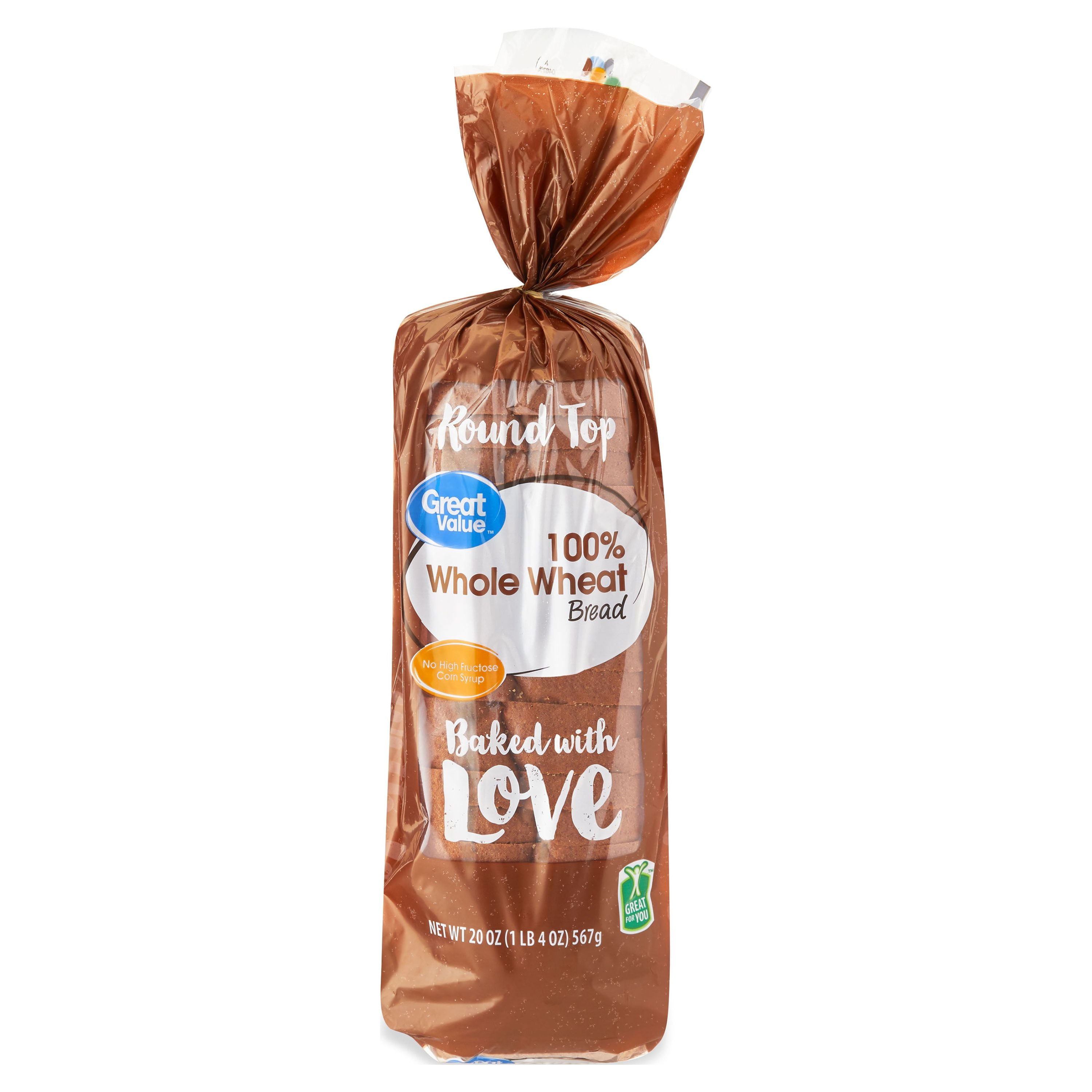



GREAT VALUE, 100% WHOLE WHEAT ROUND TOP BREAD
Near you
Great Value is carried at Walmart stores. Find one within 25 miles.
Summary
This bread is made with whole wheat flour, which is beneficial for its fiber and nutrient content. However, it contains soybean oil, a seed oil that is highly processed and can promote inflammation, and brown sugar, which adds unnecessary refined sugars. The product is heavily processed with multiple additives, including dough conditioners and preservatives, which contribute to its ultra-processed nature and limit its healthfulness.
At a glance
Key ingredients 13
Whole Wheat FlourGood
Whole wheat flour is a source of complex carbohydrates and dietary fiber. It retains the bran and germ, providing essential nutrients like B vitamins and minerals. Compared to refined flour, it offers better nutritional value and supports digestive health.
Benefits
Rich in dietary fiber, which aids in digestion and helps maintain stable blood sugar levels. Provides essential nutrients like B vitamins and minerals.
Soybean OilVery Bad
Soybean oil is a seed oil high in omega-6 fatty acids, which can promote inflammation if consumed in excess. It is often highly processed, which may involve chemical extraction methods. Compared to healthier fats like olive oil, it is less beneficial for heart health.
Risks
High omega-6 content may promote inflammation when consumed in excess. Processing methods can involve chemical solvents.
Brown SugarBad
Brown sugar is a refined sugar that can contribute to increased blood sugar levels and caloric intake. It is minimally processed compared to white sugar but still lacks significant nutritional benefits. Excessive consumption can lead to health issues like obesity and diabetes.
Risks
Contributes to increased blood sugar levels and caloric intake, potentially leading to obesity and diabetes.
Dough ConditionersBad
Dough conditioners like sodium stearoyl lactylate and calcium stearoyl lactylate are additives used to improve dough texture and shelf life. They are synthetic and contribute to the ultra-processed nature of the product. Regular consumption of processed additives may have unknown long-term health effects.
Risks
May contribute to the ultra-processed nature of foods and have unknown long-term health effects.
YeastNeutral
Yeast is a natural leavening agent used in bread making to help dough rise. It is a common ingredient in baking and generally considered safe. It does not provide significant nutritional benefits but is essential for bread texture.
Benefits
Essential for bread texture and rising, but no significant nutritional benefits.
SaltNeutral
Salt is used to enhance flavor and control yeast activity in bread. It is a common ingredient in baking but should be consumed in moderation to avoid health issues like hypertension. It does not provide significant nutritional benefits.
Risks
Excessive consumption can lead to hypertension and cardiovascular issues.
Benefits
Enhances flavor and controls yeast activity in bread.
VinegarNeutral
Vinegar is used as a natural preservative and flavor enhancer in bread. It is generally safe and can help extend the shelf life of baked goods. It does not provide significant nutritional benefits but can improve the taste profile.
Benefits
Acts as a natural preservative and flavor enhancer.
Cultured Wheat FlourNeutral
Cultured wheat flour is used as a natural preservative in bread products. It is made by fermenting wheat flour with specific bacteria. While it helps extend shelf life, it does not provide significant nutritional benefits.
Benefits
Helps extend shelf life as a natural preservative.
Monocalcium PhosphateNeutral
Monocalcium phosphate is a leavening agent used in baking to help dough rise. It is generally recognized as safe when used in food products. It does not provide significant nutritional benefits but is essential for proper leavening.
Benefits
Essential for proper leavening in baking.
Citric AcidNeutral
Citric acid is used as a preservative and flavor enhancer in food products. It is naturally found in citrus fruits and is generally recognized as safe. It does not provide significant nutritional benefits but helps maintain product freshness.
Benefits
Helps maintain product freshness and enhances flavor.
Sodium CitrateNeutral
Sodium citrate is used as an emulsifier and acidity regulator in food products. It is generally recognized as safe and helps maintain product stability. It does not provide significant nutritional benefits.
Benefits
Helps maintain product stability as an emulsifier and acidity regulator.
Soy LecithinNeutral
Soy lecithin is an emulsifier used to improve texture and consistency in food products. It is derived from soybeans and is generally recognized as safe. It does not provide significant nutritional benefits but aids in product formulation.
Benefits
Aids in product formulation by improving texture and consistency.
NatamycinNeutral
Natamycin is a natural antifungal agent used to prevent spoilage in food products. It is derived from fermentation and is generally recognized as safe. It does not provide significant nutritional benefits but helps extend product shelf life.
Benefits
Helps extend product shelf life by preventing spoilage.
Processing
Ultra-Processed Foods
Get the full breakdown in the Scout app
Scan any product to see lab results, healthy alternatives, and your personalized analysis.
Download on theApp Store