
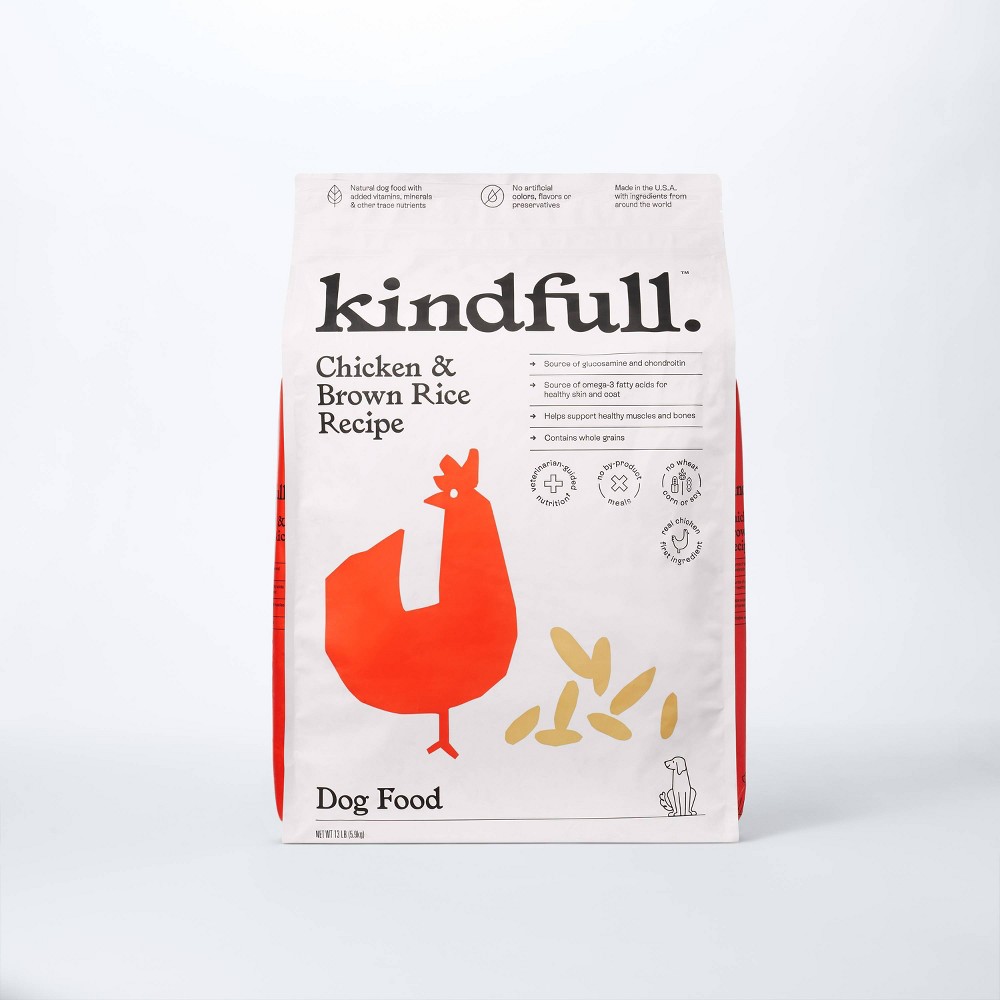
Chicken and Brown Rice Recipe Dry Dog Food - 13lbs - Kindfull™
Analysis updated September 2026 · How Scout scores
At a glance
Summary
This dog food contains high-quality protein sources like chicken and turkey meal, as well as beneficial grains such as brown rice and barley, which provide essential nutrients and fiber. However, the presence of 'natural flavor' as an ingredient raises concerns due to its lack of transparency, and the product's processing level limits its score. Despite these factors, the overall ingredient quality is commendable, contributing to a balanced nutritional profile for pets.
Key ingredients 41
ChickenVery Good
Chicken is a high-quality source of protein that supports muscle maintenance and growth. It provides essential amino acids necessary for overall health. As a whole food, it is minimally processed and nutrient-dense.
Benefits
Rich in protein and essential amino acids, supporting muscle health and overall nutrition.
Chicken MealGood
Chicken meal is a concentrated source of protein and nutrients, often used in pet foods for its high protein content. It includes glucosamine and chondroitin sulfate, which support joint health. The rendering process concentrates nutrients, making it a valuable ingredient.
Benefits
Provides concentrated protein and joint-supporting nutrients like glucosamine and chondroitin.
Brown RiceGood
Brown rice is a whole grain that provides fiber and essential nutrients. It supports digestive health and provides a steady source of energy. As a minimally processed grain, it retains more nutrients compared to refined grains.
Benefits
Rich in fiber and nutrients, supporting digestive health and providing sustained energy.
Dried PeasGood
Dried peas are a good source of plant-based protein and fiber. They contribute to digestive health and provide essential vitamins and minerals. As a whole food, they are minimally processed and nutrient-rich.
Benefits
Provides plant-based protein and fiber, supporting digestive health and nutrient intake.
BarleyGood
Barley is a whole grain that offers fiber and essential nutrients. It supports digestive health and provides a slow-release energy source. As a minimally processed grain, it retains more nutrients than refined grains.
Benefits
Rich in fiber and nutrients, supporting digestive health and providing sustained energy.
Turkey MealGood
Turkey meal is a concentrated source of protein and nutrients, similar to chicken meal. It supports muscle maintenance and growth. The rendering process concentrates nutrients, making it a valuable ingredient.
Benefits
Provides concentrated protein and essential nutrients for muscle health.
FlaxseedsGood
Flaxseeds are rich in omega-3 fatty acids and fiber, supporting heart health and digestion. They provide lignans, which have antioxidant properties. As a whole food, they are minimally processed and nutrient-dense.
Benefits
Rich in omega-3 fatty acids and fiber, supporting heart health and digestion.
Fish OilGood
Fish oil is a rich source of omega-3 fatty acids, which support heart health and reduce inflammation. It provides essential nutrients that are beneficial for skin and coat health in pets. As a supplement, it is often added to enhance nutritional profiles.
Benefits
Rich in omega-3 fatty acids, supporting heart health and reducing inflammation.
TaurineGood
Taurine is an amino acid important for heart health and vision in pets. It is often added to pet foods to prevent deficiencies. As a supplement, it is essential for maintaining overall health in dogs and cats.
Benefits
Supports heart health and vision, preventing deficiencies.
Mixed TocopherolsGood
Mixed tocopherols are natural antioxidants used to preserve fats and oils in pet foods. They help prevent rancidity and extend shelf life. As a natural preservative, they are preferred over synthetic options.
Benefits
Acts as a natural antioxidant, preserving fats and extending shelf life.
Vitamin E SupplementGood
Vitamin E is an antioxidant that supports immune function and skin health. It is often added to pet foods to prevent deficiencies and enhance nutritional profiles. As a supplement, it is generally safe and beneficial.
Benefits
Supports immune function and skin health, preventing deficiencies.
Vitamin A SupplementGood
Vitamin A is essential for vision, immune function, and skin health. It is often added to pet foods to prevent deficiencies and enhance nutritional profiles. As a supplement, it is generally safe and beneficial.
Benefits
Supports vision, immune function, and skin health, preventing deficiencies.
Vitamin D3 SupplementGood
Vitamin D3 is essential for calcium absorption and bone health. It is often added to pet foods to prevent deficiencies and enhance nutritional profiles. As a supplement, it is generally safe and beneficial.
Benefits
Supports calcium absorption and bone health, preventing deficiencies.
Pyridoxine HydrochlorideGood
Beneficial ingredient — whole-food or functional value in this product class.
Benefits
Supports protein metabolism and cognitive function, preventing deficiencies.
BiotinGood
Beneficial ingredient — whole-food or functional value in this product class.
Benefits
Supports skin, hair, and nail health, preventing deficiencies.
Rosemary ExtractGood
Beneficial ingredient — whole-food or functional value in this product class.
Benefits
Acts as a natural preservative, maintaining freshness and preventing spoilage.
Rice BranNeutral
Rice bran is a byproduct of rice milling that contains fiber and some nutrients. It can support digestive health but is less nutrient-dense than whole grains. It is often used as a filler in pet foods.
Benefits
Provides fiber that can aid in digestion.
Chicken FatNeutral
Chicken fat is a source of energy and essential fatty acids for pets. It is preserved with mixed tocopherols, a natural antioxidant. While it provides necessary fats, it should be balanced with other nutrients.
Benefits
Provides essential fatty acids and energy for pets.
SaltNeutral
Salt is used to enhance flavor and preserve food. It is necessary in small amounts for electrolyte balance. Excessive consumption can lead to health issues, but it is generally safe in controlled amounts.
Risks
Excessive salt intake can lead to health issues such as hypertension.
Benefits
Provides essential sodium for electrolyte balance.
L-ThreonineNeutral
L-Threonine is an essential amino acid important for protein synthesis and immune function. It is often added to pet foods to ensure a complete amino acid profile. As a supplement, it is generally safe and beneficial in appropriate amounts.
Benefits
Supports protein synthesis and immune function.
Potassium ChlorideNeutral
Potassium chloride is used as a source of potassium, an essential mineral for maintaining fluid balance and nerve function. It is often added to pet foods to ensure adequate mineral intake. While beneficial, it should be balanced with other nutrients.
Risks
Excessive intake can lead to hyperkalemia, but this is rare in balanced diets.
Benefits
Provides essential potassium for fluid balance and nerve function.
Choline ChlorideNeutral
Choline chloride is a source of choline, an essential nutrient for liver function and brain health. It is often added to pet foods to support cognitive development and liver health. As a supplement, it is generally safe and beneficial.
Benefits
Supports liver function and cognitive health.
DL-MethionineNeutral
DL-Methionine is an essential amino acid that supports protein synthesis and urinary health. It is often added to pet foods to ensure a complete amino acid profile. As a supplement, it is generally safe and beneficial in appropriate amounts.
Benefits
Supports protein synthesis and urinary health.
Citric AcidNeutral
Citric acid is used as a preservative and flavor enhancer in pet foods. It helps maintain freshness and prevent spoilage. While generally safe, it is a processed additive.
Benefits
Helps preserve freshness and prevent spoilage.
Iron Amino Acid ComplexNeutral
Iron amino acid complex is a source of iron, essential for oxygen transport and energy production. It is often added to pet foods to prevent anemia. As a supplement, it is generally safe and beneficial in appropriate amounts.
Risks
Excessive iron intake can lead to toxicity, but this is rare in balanced diets.
Benefits
Provides essential iron for oxygen transport and energy production.
Zinc Amino Acid ComplexNeutral
Zinc amino acid complex is a source of zinc, important for immune function and skin health. It is often added to pet foods to ensure adequate mineral intake. While beneficial, it should be balanced with other nutrients.
Risks
Excessive zinc intake can lead to toxicity, but this is rare in balanced diets.
Benefits
Supports immune function and skin health.
Ferrous SulfateNeutral
Ferrous sulfate is a source of iron, essential for oxygen transport and energy production. It is often added to pet foods to prevent anemia. As a supplement, it is generally safe and beneficial in appropriate amounts.
Risks
Excessive iron intake can lead to toxicity, but this is rare in balanced diets.
Benefits
Provides essential iron for oxygen transport and energy production.
Zinc OxideNeutral
Zinc oxide is a source of zinc, important for immune function and skin health. It is often added to pet foods to ensure adequate mineral intake. While beneficial, it should be balanced with other nutrients.
Risks
Excessive zinc intake can lead to toxicity, but this is rare in balanced diets.
Benefits
Supports immune function and skin health.
Copper Amino Acid ComplexNeutral
Copper amino acid complex is a source of copper, essential for iron metabolism and connective tissue health. It is often added to pet foods to ensure adequate mineral intake. While beneficial, it should be balanced with other nutrients.
Risks
Excessive copper intake can lead to toxicity, but this is rare in balanced diets.
Benefits
Supports iron metabolism and connective tissue health.
Sodium SeleniteNeutral
Sodium selenite is a source of selenium, an essential trace mineral with antioxidant properties. It is often added to pet foods to prevent deficiencies. While beneficial, it should be balanced with other nutrients.
Risks
Excessive selenium intake can lead to toxicity, but this is rare in balanced diets.
Benefits
Provides selenium, supporting antioxidant defenses and preventing deficiencies.
Manganese Amino Acid ComplexNeutral
Manganese amino acid complex is a source of manganese, important for bone health and metabolism. It is often added to pet foods to ensure adequate mineral intake. While beneficial, it should be balanced with other nutrients.
Risks
Excessive manganese intake can lead to toxicity, but this is rare in balanced diets.
Benefits
Supports bone health and metabolic processes.
Niacin SupplementNeutral
Niacin is a B vitamin important for energy metabolism and skin health. It is often added to pet foods to prevent deficiencies. As a supplement, it is generally safe and beneficial in appropriate amounts.
Benefits
Supports energy metabolism and skin health, preventing deficiencies.
D-Calcium PantothenateNeutral
D-Calcium pantothenate is a source of vitamin B5, important for energy metabolism and adrenal function. It is often added to pet foods to prevent deficiencies. As a supplement, it is generally safe and beneficial in appropriate amounts.
Benefits
Supports energy metabolism and adrenal function, preventing deficiencies.
Riboflavin SupplementNeutral
Riboflavin is a B vitamin important for energy production and antioxidant function. It is often added to pet foods to prevent deficiencies. As a supplement, it is generally safe and beneficial in appropriate amounts.
Benefits
Supports energy production and antioxidant function, preventing deficiencies.
Manganous OxideNeutral
Manganous oxide is a source of manganese, important for bone health and metabolism. It is often added to pet foods to ensure adequate mineral intake. While beneficial, it should be balanced with other nutrients.
Risks
Excessive manganese intake can lead to toxicity, but this is rare in balanced diets.
Benefits
Supports bone health and metabolic processes.
Thiamine MononitrateNeutral
Thiamine mononitrate is a source of vitamin B1, important for energy metabolism and nerve function. It is often added to pet foods to prevent deficiencies. As a supplement, it is generally safe and beneficial in appropriate amounts.
Benefits
Supports energy metabolism and nerve function, preventing deficiencies.
Vitamin B12 SupplementNeutral
Vitamin B12 is important for red blood cell formation and nerve function. It is often added to pet foods to prevent deficiencies. As a supplement, it is generally safe and beneficial in appropriate amounts.
Benefits
Supports red blood cell formation and nerve function, preventing deficiencies.
Calcium IodateNeutral
Calcium iodate is a source of iodine, essential for thyroid function and metabolism. It is often added to pet foods to prevent deficiencies. While beneficial, it should be balanced with other nutrients.
Risks
Excessive iodine intake can lead to thyroid dysfunction, but this is rare in balanced diets.
Benefits
Supports thyroid function and metabolism, preventing deficiencies.
Folic AcidNeutral
Folic acid is a B vitamin important for DNA synthesis and cell division. It is often added to pet foods to prevent deficiencies. As a supplement, it is generally safe and beneficial in appropriate amounts.
Benefits
Supports DNA synthesis and cell division, preventing deficiencies.
Natural FlavorBad
Natural flavor is a vague term that can include a variety of substances, often used to enhance taste. It lacks transparency and can mask the presence of less desirable ingredients. While not inherently harmful, it is less preferred due to its lack of specificity.
Risks
Potential for undisclosed additives or allergens.
Copper SulfateBad
Processed additive flagged under Scout's ingredient doctrine.
Risks
Excessive copper intake can lead to toxicity, but this is rare in balanced diets.
Benefits
Supports iron metabolism and connective tissue health.
Processing
Processed Foods
Get the full breakdown in the Scout appTake Scout shopping
Scan any product to see lab results, healthy alternatives, and your personalized analysis.
Download on theApp Store GET IT ONGoogle Play