
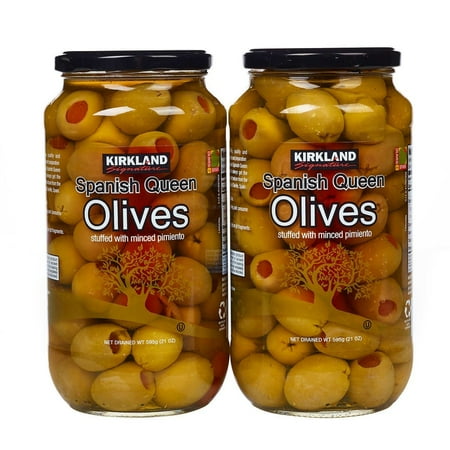

Kirkland Signature Pimento Stuffed Spanish Queen Olives 21 oz. Jars x 2 Jars
Analysis updated August 2026 · How Scout scores
At a glance
Summary
This product is ultra-processed, which limits its health rating despite being based on olives. The presence of additives such as guar gum and potassium sorbate, which are used for texture and preservation, respectively, contributes to its processing level. While olives are generally healthy, the use of synthetic preservatives and thickeners detracts from the overall score.
Key ingredients 9
Spanish olivesNeutral
Spanish olives are a source of healthy fats and provide a distinct flavor to dishes. They are typically preserved in brine, which can increase sodium content. While they offer some nutritional benefits, they are not considered a significant source of essential nutrients.
Risks
High sodium content due to preservation methods may pose a risk for individuals with hypertension.
Benefits
Contains monounsaturated fats that can support heart health when consumed in moderation.
WaterNeutral
Water is used as a solvent and carrier in food products. It is essential for hydration but does not contribute additional nutritional value in this context. Its presence is necessary for the preservation and texture of the product.
See more about Water →Minced pimientoNeutral
Minced pimiento adds flavor and color to the olives. It is a type of pepper that is low in calories and provides some vitamins. However, in small quantities, it does not significantly impact the nutritional profile of the product.
Benefits
Provides a mild flavor and some vitamins, such as vitamin C, in small amounts.
SaltNeutral
Salt is used for flavor enhancement and preservation. It is a common ingredient in processed foods but can contribute to high sodium intake. While necessary for preservation, excessive consumption can lead to health issues.
Risks
High sodium intake can increase the risk of hypertension and cardiovascular diseases.
Benefits
Enhances flavor and acts as a preservative in food products.
Lactic acidNeutral
Lactic acid is used as a preservative and acidity regulator in foods. It is naturally occurring and generally recognized as safe. It helps maintain the product's pH and extends shelf life.
Benefits
Helps preserve food and maintain acidity, contributing to food safety and shelf life.
Sodium alginateNeutral
Sodium alginate is a thickening and gelling agent derived from brown seaweed. It is used to improve texture and stability in food products. While it is generally safe, it does not provide nutritional benefits.
Risks
Excessive consumption may cause digestive discomfort in sensitive individuals.
Benefits
Improves texture and stability of food products without significant nutritional benefits.
Guar gumNeutral
Standard formulation ingredient — neither beneficial nor harmful at typical use.
Risks
May cause digestive discomfort, such as bloating and gas, in sensitive individuals.
Benefits
Provides texture and stability to food products but offers no significant nutritional benefits.
Calcium chlorideNeutral
Calcium chloride is used as a firming agent in canned vegetables and fruits. It helps maintain texture and is generally recognized as safe. It does not contribute significant nutritional value.
Benefits
Helps maintain firmness and texture in processed foods.
Potassium sorbateBad
Potassium sorbate is a preservative used to inhibit mold and yeast growth in foods. While effective, it is a synthetic additive that some consumers prefer to avoid. Long-term consumption of synthetic preservatives is a concern for some health-conscious individuals.
Risks
May cause allergic reactions or sensitivities in some individuals.
Benefits
Extends shelf life by preventing microbial growth, ensuring food safety.
Processing
Ultra-Processed Foods
Get the full breakdown in the Scout appTake Scout shopping
Scan any product to see lab results, healthy alternatives, and your personalized analysis.
Download on theApp Store GET IT ONGoogle Play