
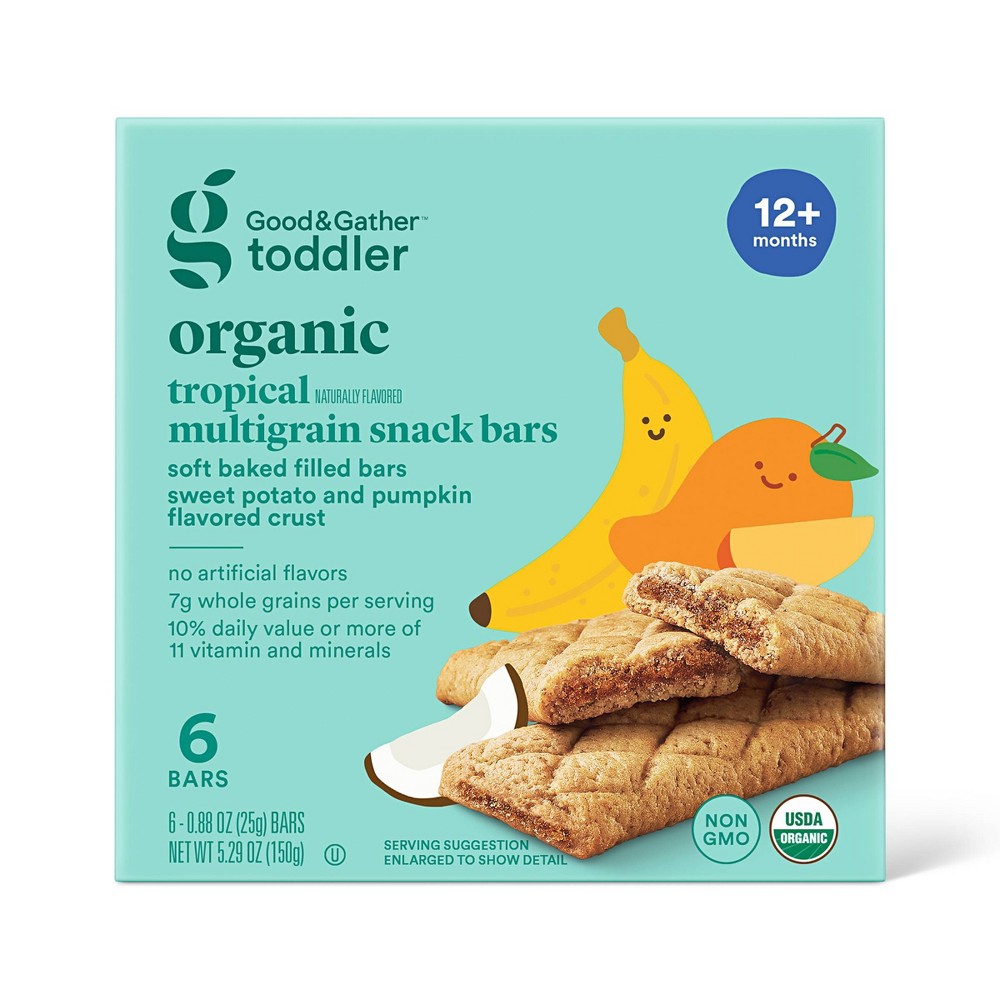

Organic Tropical Multigrain Snack Bars - 5.29oz - Good & Gather™
Analysis updated October 2026 · How Scout scores
At a glance
Summary
This snack bar features several organic whole grain flours and vegetable powders, which are beneficial for providing fiber and nutrients. However, the presence of organic sunflower oil, a seed oil high in omega-6 fatty acids, and natural vanilla flavor, a processed ingredient, detracts from its overall healthiness. The product is moderately processed, which limits its score despite the use of organic ingredients.
Key ingredients 17
Organic creamy whole wheat flourGood
Organic creamy whole wheat flour is a minimally processed source of carbohydrates and fiber. Being organic, it is free from synthetic pesticides and fertilizers. It provides essential nutrients like B vitamins and iron.
Risks
Contains gluten, which may be a concern for individuals with celiac disease or gluten sensitivity.
Benefits
Rich in dietary fiber, which supports digestive health and provides sustained energy.
Organic whole grain oat flourGood
Organic whole grain oat flour is a nutritious source of fiber and protein. Being organic, it is free from synthetic pesticides. It supports heart health and provides sustained energy.
Risks
Contains gluten, which may be a concern for individuals with celiac disease or gluten sensitivity.
Benefits
Rich in beta-glucans, which can help lower cholesterol levels and improve heart health.
Organic whole grain barley flourGood
Organic whole grain barley flour is a nutritious source of fiber and essential nutrients. Being organic, it is free from synthetic pesticides. It supports heart health and provides sustained energy.
Risks
Contains gluten, which may be a concern for individuals with celiac disease or gluten sensitivity.
Benefits
Rich in dietary fiber, which supports digestive health and helps maintain healthy cholesterol levels.
Organic dried sweet potato powderGood
Organic dried sweet potato powder is a nutrient-rich ingredient providing vitamins and fiber. Being organic, it is free from synthetic pesticides. It adds natural sweetness and color to foods.
Benefits
Rich in beta-carotene, which supports eye health and provides antioxidant benefits.
Organic dried pumpkin powderGood
Organic dried pumpkin powder is a nutrient-rich ingredient providing vitamins and fiber. Being organic, it is free from synthetic pesticides. It adds natural sweetness and color to foods.
Benefits
Rich in vitamins A and C, which support immune function and provide antioxidant benefits.
Sea saltGood
Sea salt is a minimally processed source of sodium and trace minerals. It is a natural ingredient that enhances flavor. It provides essential electrolytes for bodily functions.
Risks
Excessive sodium intake can lead to high blood pressure and other health issues.
Benefits
Contains trace minerals that support various bodily functions and enhance flavor.
Organic wheat flourNeutral
Organic wheat flour is a common baking ingredient providing carbohydrates and some protein. It is organic, reducing exposure to synthetic chemicals. However, it is less nutrient-dense compared to whole grain flours.
Risks
Contains gluten, which may be a concern for individuals with celiac disease or gluten sensitivity.
Benefits
Provides energy and some essential nutrients like B vitamins.
Organic wheat starchNeutral
Organic wheat starch is used as a thickening agent and is less processed than conventional starches. It is organic, reducing exposure to synthetic chemicals. However, it provides little nutritional value.
Risks
Contains gluten, which may be a concern for individuals with celiac disease or gluten sensitivity.
Organic tapioca starchNeutral
Organic tapioca starch is a gluten-free thickening agent. It is organic, reducing exposure to synthetic chemicals. However, it is primarily a source of carbohydrates with minimal nutrients.
Benefits
Provides a gluten-free alternative for thickening and texture in foods.
Organic maca gumNeutral
Organic maca gum is used as a natural thickener and stabilizer. It is organic, reducing exposure to synthetic chemicals. It is a minimally processed ingredient.
Benefits
Provides texture and stability to food products without significant nutritional benefits.
Organic tapioca flourNeutral
Organic tapioca flour is a gluten-free flour alternative. It is organic, reducing exposure to synthetic chemicals. It is primarily a source of carbohydrates with minimal nutrients.
Benefits
Provides a gluten-free alternative for baking and thickening.
Organic pumpkin juice concentrate from squashNeutral
Organic pumpkin juice concentrate from squash is used as a natural sweetener and flavor enhancer. It is organic, reducing exposure to synthetic chemicals. However, it is a concentrated source of sugars.
Risks
High in natural sugars, which can contribute to increased blood sugar levels if consumed in excess.
Benefits
Provides natural sweetness and some vitamins and antioxidants from pumpkin.
Organic carrot juice concentrate from squashNeutral
Organic carrot juice concentrate from squash is used as a natural sweetener and flavor enhancer. It is organic, reducing exposure to synthetic chemicals. However, it is a concentrated source of sugars.
Risks
High in natural sugars, which can contribute to increased blood sugar levels if consumed in excess.
Benefits
Provides natural sweetness and some vitamins and antioxidants from carrots.
Baking sodaNeutral
Baking soda is a common leavening agent used in baking. It is a simple chemical compound with no significant health risks. It helps baked goods rise and achieve a light texture.
Benefits
Provides leavening properties that improve the texture of baked goods.
Organic apple juice concentrateBad
Processed additive flagged under Scout's ingredient doctrine.
Risks
High in natural sugars, which can contribute to increased blood sugar levels if consumed in excess.
Benefits
Provides natural sweetness and some vitamins and antioxidants from apples.
Natural vanilla flavorBad
Natural vanilla flavor is a processed ingredient used to enhance flavor. It is less natural than whole vanilla beans and may contain additives. It lacks the nutritional benefits of whole vanilla.
Risks
May contain additives and is less natural than whole vanilla beans.
Benefits
Provides vanilla flavor without significant nutritional benefits.
Organic sunflower oilVery Bad
Organic sunflower oil is a seed oil high in omega-6 fatty acids, which can promote inflammation. Despite being organic, it is still heavily processed. It lacks the beneficial monounsaturated fats found in healthier oils like olive oil.
Risks
High omega-6 content may promote inflammation when consumed in excess.
Processing
Processed Foods
Get the full breakdown in the Scout appTake Scout shopping
Scan any product to see lab results, healthy alternatives, and your personalized analysis.
Download on theApp Store GET IT ONGoogle Play