
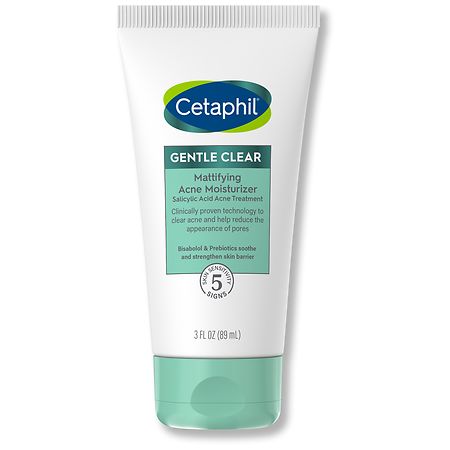

Cetaphil Gentle Clear Mattifying Acne Moisturizer With Salicylic Acid 3 fl oz
Analysis updated August 2026 · How Scout scores
At a glance
Summary
This moisturizer contains beneficial ingredients like glycerin, squalane, and sodium hyaluronate, which provide hydration and improve skin elasticity. However, it also includes synthetic compounds such as dimethicone and sodium polyacrylate, which are common in processed skincare products. The presence of phenoxyethanol as a preservative and other synthetic emulsifiers slightly lowers the score due to potential irritation concerns for sensitive skin types.
Key ingredients 36
SqualaneVery Good
Squalane is a highly effective emollient and natural antioxidant. It mimics the skin's natural oils, providing deep hydration and improving skin elasticity. It is non-comedogenic and suitable for all skin types.
Risks
There are no significant risks associated with squalane.
Benefits
It provides intense hydration and helps to improve skin texture and elasticity.
GlycerinGood
Glycerin is a powerful humectant that attracts moisture to the skin, keeping it hydrated. It is a natural compound found in lipids and is widely used in skincare for its moisturizing properties. It is considered safe and beneficial for all skin types.
Risks
There are no significant risks associated with glycerin.
Benefits
It helps to maintain skin hydration and improves skin barrier function.
Caprylic/Capric TriglycerideGood
Caprylic/Capric Triglyceride is an emollient derived from coconut oil and glycerin. It helps to moisturize and replenish the skin without leaving a greasy residue. It is considered safe and beneficial for all skin types.
Risks
There are minimal risks associated with its use.
Benefits
It provides lightweight hydration and improves the spreadability of the product.
BisabololGood
Bisabolol is a natural compound known for its soothing and anti-inflammatory properties. It helps to calm irritated skin and reduce redness. It is considered safe and beneficial for sensitive skin.
Risks
There are no significant risks associated with bisabolol.
Benefits
It provides soothing relief to irritated skin and reduces inflammation.
Glycyrrhiza Glabra (Licorice) Root ExtractGood
Glycyrrhiza Glabra (Licorice) Root Extract is known for its skin brightening and anti-inflammatory properties. It helps to reduce redness and even out skin tone. It is considered safe and beneficial for sensitive skin.
Risks
There are no significant risks associated with licorice root extract.
Benefits
It helps to brighten the skin and reduce inflammation.
Sodium HyaluronateGood
Sodium Hyaluronate is a powerful humectant that attracts and retains moisture in the skin. It helps to plump and hydrate the skin, reducing the appearance of fine lines. It is considered safe and beneficial for all skin types.
Risks
There are no significant risks associated with sodium hyaluronate.
Benefits
It provides intense hydration and helps to improve skin elasticity.
AllantoinGood
Allantoin is known for its soothing and healing properties. It helps to calm irritated skin and promote cell regeneration. It is considered safe and beneficial for sensitive skin.
Risks
There are no significant risks associated with allantoin.
Benefits
It provides soothing relief to irritated skin and promotes healing.
WaterNeutral
Water is a common solvent used in cosmetics to dissolve other ingredients. It helps in forming emulsions and is essential for hydration. It does not have any direct benefits or risks.
Risks
There are no significant risks associated with water in cosmetics.
Benefits
Water helps in hydrating the skin and acts as a base for other ingredients.
Butylene GlycolNeutral
Butylene Glycol is a common humectant that helps to retain moisture in the skin. It also acts as a solvent and improves the texture of the product. It is generally considered safe for use in cosmetics.
Risks
In rare cases, it may cause irritation or allergic reactions in sensitive individuals.
Benefits
It helps in keeping the skin hydrated and improves the spreadability of the product.
Cetearyl AlcoholNeutral
Cetearyl Alcohol is a fatty alcohol used as an emollient and thickening agent in cosmetics. It helps to soften the skin and improve the texture of the product. It is generally considered safe and non-irritating.
Risks
There are minimal risks associated with its use, though it may cause mild irritation in very sensitive skin.
Benefits
It provides a smooth, soft feel to the skin and helps stabilize emulsions.
Sodium PolyacrylateNeutral
Sodium Polyacrylate is a thickening agent and film-forming polymer used in cosmetics. It helps to improve the texture and stability of the product. It is generally considered safe for use in cosmetics.
Risks
There are minimal risks, though it may cause irritation if used in high concentrations.
Benefits
It enhances the texture and consistency of the product, providing a smooth application.
Ceteareth-20Neutral
Ceteareth-20 is an emulsifying agent that helps to blend oil and water-based ingredients. It improves the texture and stability of cosmetic formulations. It is generally considered safe for use in cosmetics.
Risks
There is a potential risk of contamination with 1,4-dioxane, a byproduct of ethoxylation.
Benefits
It helps to create stable emulsions and improves product consistency.
Hydrogenated PolydeceneNeutral
Hydrogenated Polydecene is a synthetic emollient that provides a silky feel to the skin. It is used to improve the texture and spreadability of cosmetic products. It is considered safe for use in cosmetics.
Risks
There are minimal risks associated with its use.
Benefits
It provides a smooth, non-greasy feel and enhances product application.
Ethylhexyl PalmitateNeutral
Ethylhexyl Palmitate is an ester used as an emollient and thickening agent in cosmetics. It provides a smooth, soft feel to the skin. It is generally considered safe for use in cosmetics.
Risks
It may cause mild irritation or breakouts in acne-prone skin.
Benefits
It enhances the texture and spreadability of the product.
Aluminum Starch OctenylsuccinateNeutral
Aluminum Starch Octenylsuccinate is used as an absorbent and anti-caking agent in cosmetics. It helps to absorb excess oil and improve the texture of the product. It is generally considered safe for use in cosmetics.
Risks
There are minimal risks associated with its use.
Benefits
It helps to control oil and provides a matte finish.
PPG-2 Myristyl Ether PropionateNeutral
PPG-2 Myristyl Ether Propionate is an emollient and skin conditioning agent. It provides a smooth, silky feel to the skin. It is generally considered safe for use in cosmetics.
Risks
There are minimal risks associated with its use.
Benefits
It enhances the texture and feel of the product on the skin.
Alpha-Glucan OligosaccharideNeutral
Alpha-Glucan Oligosaccharide is a prebiotic ingredient that supports the skin's natural microbiome. It helps to maintain a healthy balance of skin flora. It is generally considered safe for use in cosmetics.
Risks
There are minimal risks associated with its use.
Benefits
It supports the skin's natural defenses and promotes a healthy microbiome.
Caprylyl GlycolNeutral
Caprylyl Glycol is a humectant and skin conditioning agent. It helps to retain moisture and improve the texture of the product. It is generally considered safe for use in cosmetics.
Risks
There are minimal risks associated with its use.
Benefits
It helps to keep the skin hydrated and enhances product stability.
Zinc GluconateNeutral
Zinc Gluconate is used for its anti-inflammatory and soothing properties. It helps to calm irritated skin and reduce redness. It is generally considered safe for use in cosmetics.
Risks
There are minimal risks associated with its use.
Benefits
It helps to soothe and calm the skin, reducing inflammation.
C12-15 Alkyl LactateNeutral
C12-15 Alkyl Lactate is an emollient and skin conditioning agent. It provides a smooth, soft feel to the skin. It is generally considered safe for use in cosmetics.
Risks
There are minimal risks associated with its use.
Benefits
It enhances the texture and feel of the product on the skin.
Morus Alba Root ExtractNeutral
Morus Alba Root Extract is a botanical extract with antioxidant properties. It helps to protect the skin from environmental damage. It is generally considered safe for use in cosmetics.
Risks
There are minimal risks associated with its use.
Benefits
It provides antioxidant protection and helps to brighten the skin.
EthylhexylglycerinNeutral
Ethylhexylglycerin is a skin conditioning agent and preservative enhancer. It helps to improve the efficacy of preservatives and provides a soft feel to the skin. It is generally considered safe for use in cosmetics.
Risks
There are minimal risks associated with its use.
Benefits
It enhances the preservation of the product and provides a smooth feel.
Hexylene GlycolNeutral
Hexylene Glycol is a solvent and viscosity agent used in cosmetics. It helps to improve the texture and spreadability of the product. It is generally considered safe for use in cosmetics.
Risks
There are minimal risks associated with its use.
Benefits
It enhances the texture and application of the product.
Safflower Oil/Palm Oil Aminopropanediol EstersNeutral
Safflower Oil/Palm Oil Aminopropanediol Esters are emollients that help to moisturize and soften the skin. They provide a smooth, non-greasy feel. They are generally considered safe for use in cosmetics.
Risks
There are minimal risks associated with their use.
Benefits
They provide lightweight hydration and improve skin texture.
PPG-5-Laureth-5Neutral
PPG-5-Laureth-5 is an emulsifier and surfactant used in cosmetics. It helps to blend oil and water components and improve product texture. It is generally considered safe for use in cosmetics.
Risks
There are minimal risks associated with its use.
Benefits
It aids in the formation of stable emulsions and enhances product consistency.
Sodium HydroxideNeutral
Sodium Hydroxide is used to adjust the pH of cosmetic formulations. It helps to maintain the stability and efficacy of the product. It is generally considered safe for use in cosmetics when used in low concentrations.
Risks
In high concentrations, it can be corrosive and cause skin irritation.
Benefits
It helps to maintain the desired pH level of the product.
Kojic AcidNeutral
Kojic Acid is used for its skin brightening properties. It helps to reduce the appearance of dark spots and hyperpigmentation. It is generally considered safe for use in cosmetics.
Risks
It may cause irritation or sensitivity in some individuals.
Benefits
It helps to even out skin tone and reduce pigmentation.
Hydroxypropyl CyclodextrinNeutral
Hydroxypropyl Cyclodextrin is used as a stabilizer and solubilizer in cosmetics. It helps to improve the delivery of active ingredients. It is generally considered safe for use in cosmetics.
Risks
There are minimal risks associated with its use.
Benefits
It enhances the stability and efficacy of active ingredients.
Sophora Angustifolia Root ExtractNeutral
Sophora Angustifolia Root Extract is a botanical extract with antioxidant properties. It helps to protect the skin from environmental damage. It is generally considered safe for use in cosmetics.
Risks
There are minimal risks associated with its use.
Benefits
It provides antioxidant protection and helps to soothe the skin.
Polyquaternium-11Neutral
Polyquaternium-11 is a film-forming agent used to provide a smooth, glossy finish. It helps to improve the texture and hold of cosmetic products. It is generally considered safe for use in cosmetics.
Risks
There are minimal risks associated with its use.
Benefits
It provides a smooth, glossy finish and enhances product texture.
Arctostaphylos Uva-Ursi Leaf ExtractNeutral
Arctostaphylos Uva-Ursi Leaf Extract is a botanical extract with astringent and antioxidant properties. It helps to tighten the skin and reduce inflammation. It is generally considered safe for use in cosmetics.
Risks
There are minimal risks associated with its use.
Benefits
It provides antioxidant protection and helps to tighten the skin.
Scutellaria Baicalensis Root ExtractNeutral
Scutellaria Baicalensis Root Extract is a botanical extract with antioxidant and anti-inflammatory properties. It helps to protect the skin from environmental damage. It is generally considered safe for use in cosmetics.
Risks
There are minimal risks associated with its use.
Benefits
It provides antioxidant protection and helps to soothe the skin.
DimethiconeBad
Occlusive silicone film-former — flagged under clean-beauty doctrine.
Risks
It may cause build-up on the skin with prolonged use, potentially leading to clogged pores.
Benefits
It provides a silky, smooth feel and helps to lock in moisture.
Polysorbate 60Bad
Processed additive flagged under Scout's ingredient doctrine.
Risks
There is a potential risk of contamination with 1,4-dioxane.
Benefits
It aids in the formation of stable emulsions and enhances product texture.
PhenoxyethanolBad
Processed additive flagged under Scout's ingredient doctrine.
Risks
In high concentrations, it may cause skin irritation or allergic reactions.
Benefits
It helps to preserve the product and extend its shelf life.
Disodium EDTABad
Processed additive flagged under Scout's ingredient doctrine.
Risks
There are minimal risks associated with its use.
Benefits
It enhances the stability and shelf life of the product.
Get the full breakdown in the Scout appTake Scout shopping
Scan any product to see lab results, healthy alternatives, and your personalized analysis.
Download on theApp Store GET IT ONGoogle PlayAmazon pricing & content
Amazon price as of . Product prices and availability are accurate as of the date/time indicated and are subject to change. Any price and availability information displayed on Amazon.com at the time of purchase will apply to the purchase of this product.
CERTAIN CONTENT THAT APPEARS ON THIS SITE COMES FROM AMAZON. THIS CONTENT IS PROVIDED “AS IS” AND IS SUBJECT TO CHANGE OR REMOVAL AT ANY TIME.