
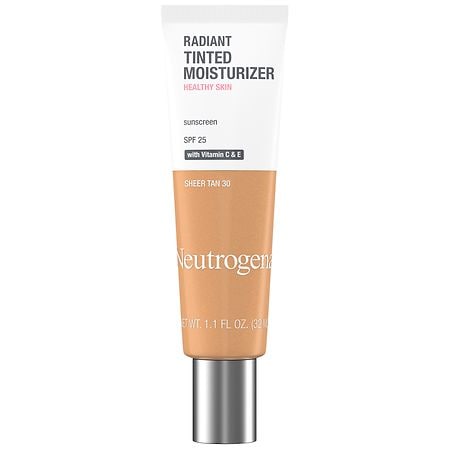


Neutrogena Healthy Skin Radiant Tinted Facial Lightweight Moisturizer with Vitamins A, C, & E, SPF 30 - Sheer Tan 30 - 1.1 fl oz
Analysis updated August 2026 · How Scout scores
At a glance
Summary
This moisturizer contains beneficial ingredients like squalane, bisabolol, and vitamins A, C, and E, which offer hydration, soothing, and antioxidant benefits. However, the presence of PEG compounds and synthetic polymers indicates a moderate level of processing, which affects the overall score. Additionally, while titanium dioxide provides sun protection, the inclusion of multiple synthetic ingredients limits the product's rating.
Key ingredients 30
SqualaneVery Good
Squalane is a highly effective emollient and natural antioxidant. It helps to hydrate and protect the skin, improving its texture and appearance. It is well-tolerated by most skin types and is considered very beneficial.
Benefits
Hydrates and protects the skin, improving texture and appearance.
BisabololVery Good
Bisabolol is a natural compound known for its soothing and anti-inflammatory properties. It helps to calm irritated skin and reduce redness. It is considered very beneficial for sensitive skin.
Benefits
Soothes and calms irritated skin, reducing redness.
Retinyl PalmitateVery Good
Retinyl Palmitate is a form of Vitamin A, known for its anti-aging properties. It helps to improve skin texture and reduce the appearance of fine lines and wrinkles. It is considered very beneficial for skin care.
Risks
May cause irritation in very sensitive skin types.
Benefits
Improves skin texture and reduces signs of aging.
Dipotassium GlycyrrhizateGood
Dipotassium Glycyrrhizate is derived from licorice root and is known for its soothing and anti-inflammatory properties. It helps to calm irritated skin and reduce redness. It is considered beneficial for sensitive skin.
Benefits
Soothes and calms irritated skin, reducing redness.
Tocopheryl AcetateGood
Tocopheryl Acetate is a form of Vitamin E, known for its antioxidant properties. It helps to protect the skin from free radical damage and improve its overall health. It is considered very beneficial for skin care.
Benefits
Protects the skin from free radical damage and improves skin health.
Pantothenic AcidGood
Pantothenic Acid, also known as Vitamin B5, is known for its moisturizing and healing properties. It helps to improve skin hydration and repair damaged skin. It is considered beneficial for skin care.
Benefits
Improves skin hydration and aids in skin repair.
Ascorbic AcidGood
Ascorbic Acid, also known as Vitamin C, is a powerful antioxidant that helps to brighten the skin and reduce signs of aging. It protects the skin from environmental damage and improves its overall appearance. It is considered very beneficial for skin care.
Risks
May cause irritation in very sensitive skin types.
Benefits
Brightens the skin and reduces signs of aging.
Iron OxidesGood
Beneficial ingredient — whole-food or functional value in this product class.
Benefits
Provides color to the product.
MicaGood
Beneficial ingredient — whole-food or functional value in this product class.
Benefits
Adds shimmer and enhances skin appearance.
WaterNeutral
Water is a common solvent used in cosmetics to dissolve other ingredients. It helps in the application and absorption of the product. It does not provide direct benefits or risks.
Benefits
Acts as a solvent and helps in the application of the product.
Phenyl TrimethiconeNeutral
Phenyl Trimethicone is a silicone used to improve the texture and spreadability of products. It provides a smooth, silky feel on the skin. It is generally considered safe for use in cosmetics.
Risks
May cause build-up on the skin with excessive use.
Benefits
Improves texture and provides a smooth application.
Cetearyl AlcoholNeutral
Cetearyl Alcohol is a fatty alcohol used as an emollient and thickener in cosmetics. It helps to soften and smooth the skin. It is not drying like other alcohols and is considered safe.
Risks
Rarely, it may cause skin irritation in sensitive individuals.
Benefits
Acts as an emollient and thickener, providing a creamy texture.
Butylene GlycolNeutral
Butylene Glycol is a solvent and conditioning agent that helps to improve the texture of the product. It also acts as a humectant, attracting moisture to the skin. It is generally considered safe for use in cosmetics.
Risks
May cause irritation in very sensitive skin types.
Benefits
Acts as a humectant, helping to retain moisture in the skin.
SilicaNeutral
Silica is used in cosmetics to improve the texture and absorb excess oil. It provides a matte finish and helps to control shine. It is generally considered safe for use in cosmetics.
Risks
Inhalation of silica dust can be harmful, but this is not a concern in liquid products.
Benefits
Improves texture and provides a matte finish.
Barium SulfateNeutral
Barium Sulfate is used as a pigment and opacifying agent in cosmetics. It helps to provide coverage and improve the appearance of the skin. It is considered safe for use in cosmetics.
Benefits
Provides coverage and improves skin appearance.
PEG-100 StearateNeutral
PEG-100 Stearate is an emulsifier that helps to blend water and oil-based ingredients. It improves the texture and stability of the product. It is generally considered safe for use in cosmetics.
Risks
May cause irritation in very sensitive skin types.
Benefits
Acts as an emulsifier, improving texture and stability.
Glyceryl StearateNeutral
Glyceryl Stearate is an emulsifier and emollient that helps to soften and smooth the skin. It also helps to stabilize the product. It is generally considered safe for use in cosmetics.
Risks
Rarely, it may cause skin irritation in sensitive individuals.
Benefits
Acts as an emollient and emulsifier, providing a creamy texture.
Hydroxyethyl Acrylate/Sodium Acryloyldimethyl Taurate CopolymerNeutral
This copolymer is used as a thickening agent and stabilizer in cosmetics. It helps to improve the texture and consistency of the product. It is generally considered safe for use in cosmetics.
Benefits
Improves texture and consistency of the product.
Caprylyl GlycolNeutral
Caprylyl Glycol is a skin conditioning agent and preservative. It helps to improve the texture of the product and extend its shelf life. It is generally considered safe for use in cosmetics.
Risks
May cause irritation in very sensitive skin types.
Benefits
Improves texture and acts as a preservative.
Magnesium Aluminum SilicateNeutral
Magnesium Aluminum Silicate is a naturally occurring mineral used as a thickening agent. It helps to improve the texture and stability of the product. It is generally considered safe for use in cosmetics.
Benefits
Improves texture and stability of the product.
Polysorbate 20Neutral
Polysorbate 20 is an emulsifier used to blend oil and water-based ingredients. It helps to improve the texture and stability of the product. It is generally considered safe for use in cosmetics.
Risks
May cause irritation in very sensitive skin types.
Benefits
Acts as an emulsifier, improving texture and stability.
Polymethyl MethacrylateNeutral
Polymethyl Methacrylate is a synthetic polymer used to improve the texture and spreadability of products. It provides a smooth, silky feel on the skin. It is generally considered safe for use in cosmetics.
Benefits
Improves texture and provides a smooth application.
Cetyl HydroxyethylcelluloseNeutral
Cetyl Hydroxyethylcellulose is a thickening agent used to improve the texture and consistency of products. It helps to stabilize the product and provide a smooth application. It is generally considered safe for use in cosmetics.
Benefits
Improves texture and consistency of the product.
Xanthan GumNeutral
Xanthan Gum is a natural thickening agent used to improve the texture and consistency of products. It helps to stabilize the product and provide a smooth application. It is generally considered safe for use in cosmetics.
Benefits
Improves texture and consistency of the product.
Tetrasodium EDTANeutral
Tetrasodium EDTA is a chelating agent used to improve the stability and efficacy of cosmetics. It helps to bind metal ions and prevent them from affecting the product. It is generally considered safe for use in cosmetics.
Risks
May cause irritation in very sensitive skin types.
Benefits
Improves stability and efficacy of the product.
PEG-12 DimethiconeNeutral
PEG-12 Dimethicone is a silicone-based polymer used to improve the texture and spreadability of products. It provides a smooth, silky feel on the skin. It is generally considered safe for use in cosmetics.
Benefits
Improves texture and provides a smooth application.
Titanium DioxideNeutral
Standard formulation ingredient — neither beneficial nor harmful at typical use.
Benefits
Protects the skin from UV radiation and provides coverage.
PhenoxyethanolBad
Processed additive flagged under Scout's ingredient doctrine.
Risks
May cause irritation in very sensitive skin types.
Benefits
Acts as a preservative, extending the shelf life of the product.
Polysorbate 60Bad
Processed additive flagged under Scout's ingredient doctrine.
Risks
May cause irritation in very sensitive skin types.
Benefits
Acts as an emulsifier, improving texture and stability.
Sorbic AcidBad
Processed additive flagged under Scout's ingredient doctrine.
Risks
May cause irritation in very sensitive skin types.
Benefits
Acts as a preservative, extending the shelf life of the product.
Get the full breakdown in the Scout appTake Scout shopping
Scan any product to see lab results, healthy alternatives, and your personalized analysis.
Download on theApp Store GET IT ONGoogle PlayAmazon pricing & content
CERTAIN CONTENT THAT APPEARS ON THIS SITE COMES FROM AMAZON. THIS CONTENT IS PROVIDED “AS IS” AND IS SUBJECT TO CHANGE OR REMOVAL AT ANY TIME.