
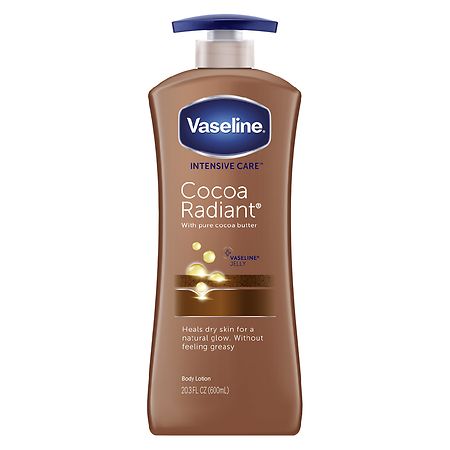

Vaseline Cocoa Radiant Body Lotion Cocoa for Dry Skin Cocoa Radiant Lotion Made with Ultra-Hydrating Lipids and Pure Cocoa Butter for a Long-Lasting Radiant Glow 20.3 Fl oz
Summary
This body lotion contains pure cocoa butter, which is a beneficial natural ingredient known for its moisturizing properties. However, the presence of synthetic fragrance results in a deduction due to potential skin irritation and allergy risks. The product is moderately processed, which affects its overall rating, but it does not contain any highly concerning chemicals or harsh surfactants.
At a glance
Key ingredients 30
Water
Water is a universal solvent and is used as a base in many cosmetic formulations. It helps to dissolve other ingredients and provides hydration to the skin. It is generally considered safe and non-irritating.
Risks
There are no significant risks associated with water in cosmetic formulations.
Benefits
Water hydrates the skin and helps in the absorption of other beneficial ingredients.
Glycerin
Glycerin is a humectant that attracts moisture to the skin, helping to keep it hydrated. It is commonly used in skincare products for its moisturizing properties. It is generally well-tolerated and safe for most skin types.
Risks
In rare cases, glycerin can cause irritation or allergic reactions in sensitive individuals.
Benefits
Glycerin helps maintain skin hydration and improves skin barrier function.
Petrolatum
Petrolatum is used as an occlusive agent to lock in moisture and protect the skin barrier. It is effective in preventing moisture loss but can be comedogenic for some skin types. It is a controversial ingredient due to its petroleum origin.
Risks
Petrolatum can clog pores and may cause breakouts in acne-prone skin.
Benefits
It provides a protective barrier on the skin, preventing moisture loss and aiding in skin healing.
Stearic Acid
Stearic acid is a fatty acid used as an emulsifier and thickener in cosmetics. It helps stabilize formulations and provides a smooth texture. It is generally considered safe and non-irritating.
Risks
Stearic acid can cause mild irritation in sensitive skin types.
Benefits
It helps improve the texture and stability of cosmetic products.
Dimethicone
Dimethicone is a silicone-based polymer used to provide a smooth application and form a protective barrier on the skin. It is commonly used in skincare for its ability to improve texture and prevent moisture loss. It is generally considered safe but can cause buildup on the skin.
Risks
Dimethicone can cause skin irritation or allergic reactions in sensitive individuals.
Benefits
It provides a silky texture and helps retain moisture in the skin.
Butylene Glycol
Butylene glycol is a solvent and conditioning agent that helps improve the texture and spreadability of products. It is commonly used in cosmetics for its moisturizing properties. It is generally considered safe but can cause irritation in sensitive skin.
Risks
Butylene glycol can cause irritation or allergic reactions in sensitive individuals.
Benefits
It helps improve product texture and provides hydration to the skin.
Glycol Stearate
Glycol stearate is an emulsifier that helps blend oil and water-based ingredients. It is used to improve the texture and stability of cosmetic formulations. It is generally considered safe and non-irritating.
Risks
Glycol stearate can cause mild irritation in sensitive skin types.
Benefits
It helps stabilize formulations and provides a smooth texture.
PEG-100 Stearate
PEG-100 stearate is an emulsifier used to blend oil and water-based ingredients in cosmetics. It helps improve the texture and stability of products. It is generally considered safe but can be contaminated with harmful impurities.
Risks
PEG-100 stearate can be contaminated with ethylene oxide and 1,4-dioxane, which are potential carcinogens.
Benefits
It helps stabilize formulations and provides a smooth texture.
Isopropyl Myristate
Isopropyl myristate is an emollient that helps improve the texture and absorption of products. It is commonly used in cosmetics for its ability to enhance skin feel. It is generally considered safe but can be comedogenic.
Risks
Isopropyl myristate can clog pores and cause breakouts in acne-prone skin.
Benefits
It improves product absorption and provides a smooth skin feel.
Helianthus Annuus Seed Oil
Helianthus annuus seed oil, or sunflower seed oil, is a natural oil rich in fatty acids and antioxidants. It is used in skincare for its moisturizing and nourishing properties. It is generally well-tolerated and beneficial for most skin types.
Risks
There are minimal risks associated with sunflower seed oil, though it can cause allergic reactions in rare cases.
Benefits
It provides hydration and nourishment to the skin, improving skin barrier function.
Cocos Nucifera Oil
Cocos nucifera oil, or coconut oil, is a natural oil used for its moisturizing and antibacterial properties. It is commonly used in skincare for its ability to hydrate and protect the skin. It is generally well-tolerated but can be comedogenic for some skin types.
Risks
Coconut oil can clog pores and cause breakouts in acne-prone skin.
Benefits
It provides deep hydration and has antibacterial properties that can benefit the skin.
Glyceryl Stearate
Glyceryl stearate is an emulsifier that helps blend oil and water-based ingredients in cosmetics. It is used to improve the texture and stability of products. It is generally considered safe and non-irritating.
Risks
Glyceryl stearate can cause mild irritation in sensitive skin types.
Benefits
It helps stabilize formulations and provides a smooth texture.
Theobroma Cacao Seed Butter
Theobroma cacao seed butter, or cocoa butter, is a natural fat extracted from cocoa beans. It is used in skincare for its moisturizing and antioxidant properties. It is generally well-tolerated and beneficial for most skin types.
Risks
Cocoa butter can be comedogenic and may cause breakouts in acne-prone skin.
Benefits
It provides deep hydration and helps improve skin elasticity.
Phenoxyethanol
Phenoxyethanol is a preservative used to prevent microbial growth in cosmetic products. It is effective in extending the shelf life of products but can cause irritation in sensitive skin. It is generally considered safe in low concentrations.
Risks
Phenoxyethanol can cause skin irritation or allergic reactions in sensitive individuals.
Benefits
It helps preserve the product and prevent microbial contamination.
Cetyl Alcohol
Cetyl alcohol is a fatty alcohol used as an emollient and thickener in cosmetics. It helps improve the texture and stability of products. It is generally considered safe and non-irritating.
Risks
Cetyl alcohol can cause mild irritation in sensitive skin types.
Benefits
It provides a smooth texture and helps retain moisture in the skin.
Magnesium Aluminum Silicate
Magnesium aluminum silicate is a naturally occurring mineral used as a thickener and stabilizer in cosmetics. It helps improve the texture and stability of products. It is generally considered safe and non-irritating.
Risks
There are minimal risks associated with magnesium aluminum silicate, though it can cause irritation in sensitive skin.
Benefits
It helps stabilize formulations and provides a smooth texture.
Parfum
Parfum, or fragrance, is used to add scent to cosmetic products. It is a common ingredient but can cause irritation and allergic reactions in sensitive individuals. It is generally considered safe but is a known skin sensitizer.
Risks
Fragrance can cause skin irritation, allergic reactions, and sensitization.
Benefits
It provides a pleasant scent to the product.
Methylparaben
Methylparaben is a preservative used to prevent microbial growth in cosmetic products. It is effective in extending the shelf life of products but is controversial due to potential endocrine-disrupting effects. It is generally considered safe in low concentrations.
Risks
Methylparaben can cause skin irritation and has been linked to endocrine disruption.
Benefits
It helps preserve the product and prevent microbial contamination.
Hydroxyethylcellulose
Hydroxyethylcellulose is a thickening agent used to improve the texture and stability of cosmetic products. It is derived from cellulose and is generally considered safe and non-irritating. It helps provide a smooth and consistent texture.
Risks
There are minimal risks associated with hydroxyethylcellulose, though it can cause irritation in sensitive skin.
Benefits
It helps stabilize formulations and provides a smooth texture.
Xanthan Gum
Xanthan gum is a natural thickening agent used to improve the texture and stability of cosmetic products. It is derived from fermented sugars and is generally considered safe and non-irritating. It helps provide a smooth and consistent texture.
Risks
There are minimal risks associated with xanthan gum, though it can cause irritation in sensitive skin.
Benefits
It helps stabilize formulations and provides a smooth texture.
Propylparaben
Propylparaben is a preservative used to prevent microbial growth in cosmetic products. It is effective in extending the shelf life of products but is controversial due to potential endocrine-disrupting effects. It is generally considered safe in low concentrations.
Risks
Propylparaben can cause skin irritation and has been linked to endocrine disruption.
Benefits
It helps preserve the product and prevent microbial contamination.
Disodium EDTA
Disodium EDTA is a chelating agent used to improve the stability and efficacy of cosmetic products. It helps bind metal ions and prevent product degradation. It is generally considered safe but can cause irritation in sensitive skin.
Risks
Disodium EDTA can cause skin irritation or allergic reactions in sensitive individuals.
Benefits
It helps stabilize formulations and improve product efficacy.
Stearamide Amp
Stearamide AMP is an emulsifier and thickener used to improve the texture and stability of cosmetic products. It helps blend oil and water-based ingredients and provides a smooth texture. It is generally considered safe and non-irritating.
Risks
There are minimal risks associated with stearamide AMP, though it can cause irritation in sensitive skin.
Benefits
It helps stabilize formulations and provides a smooth texture.
Coumarin
Coumarin is a fragrance ingredient used to add scent to cosmetic products. It is a common ingredient but can cause irritation and allergic reactions in sensitive individuals. It is generally considered safe but is a known skin sensitizer.
Risks
Coumarin can cause skin irritation, allergic reactions, and sensitization.
Benefits
It provides a pleasant scent to the product.
Geraniol
Geraniol is a fragrance ingredient used to add scent to cosmetic products. It is a common ingredient but can cause irritation and allergic reactions in sensitive individuals. It is generally considered safe but is a known skin sensitizer.
Risks
Geraniol can cause skin irritation, allergic reactions, and sensitization.
Benefits
It provides a pleasant scent to the product.
Hexyl Cinnamal
Hexyl cinnamal is a fragrance ingredient used to add scent to cosmetic products. It is a common ingredient but can cause irritation and allergic reactions in sensitive individuals. It is generally considered safe but is a known skin sensitizer.
Risks
Hexyl cinnamal can cause skin irritation, allergic reactions, and sensitization.
Benefits
It provides a pleasant scent to the product.
Hydroxycitronellal
Hydroxycitronellal is a fragrance ingredient used to add scent to cosmetic products. It is a common ingredient but can cause irritation and allergic reactions in sensitive individuals. It is generally considered safe but is a known skin sensitizer.
Risks
Hydroxycitronellal can cause skin irritation, allergic reactions, and sensitization.
Benefits
It provides a pleasant scent to the product.
Limonene
Limonene is a fragrance ingredient used to add scent to cosmetic products. It is a common ingredient but can cause irritation and allergic reactions in sensitive individuals. It is generally considered safe but is a known skin sensitizer.
Risks
Limonene can cause skin irritation, allergic reactions, and sensitization.
Benefits
It provides a pleasant scent to the product.
Linalool
Linalool is a fragrance ingredient used to add scent to cosmetic products. It is a common ingredient but can cause irritation and allergic reactions in sensitive individuals. It is generally considered safe but is a known skin sensitizer.
Risks
Linalool can cause skin irritation, allergic reactions, and sensitization.
Benefits
It provides a pleasant scent to the product.
Caramel
Caramel is a coloring agent used to add color to cosmetic products. It is derived from heated sugar and is generally considered safe and non-irritating. It is used to provide a natural brown color to products.
Risks
There are minimal risks associated with caramel, though it can cause irritation in sensitive skin.
Benefits
It provides a natural color to cosmetic products.
Processing
Processed Foods
Get the full breakdown in the Scout app
Scan any product to see lab results, healthy alternatives, and your personalized analysis.
Download on theApp Store