La Roche Posay Toleriane Hydrating Facial Cleanser - 6.7 fl oz: Paraben-Free, Sulfate-Free, Noncomedogenic, For Sensitive Skin
La Roche-Posay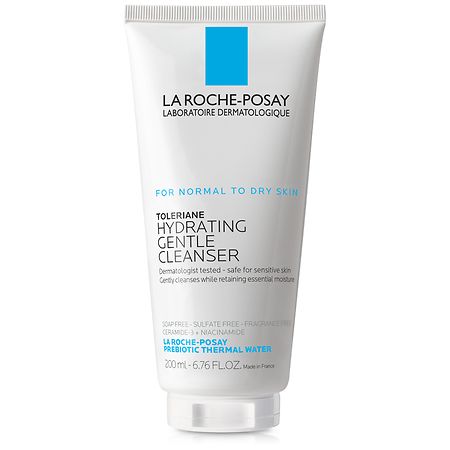
At a glance
Summary
This facial cleanser contains beneficial ingredients such as glycerin, ceramide NP, niacinamide, panthenol, and tocopherol, which are known for their moisturizing, barrier-restoring, and anti-inflammatory properties. The product is free from parabens and sulfates, which are often associated with skin irritation, and it is formulated for sensitive skin. The presence of some synthetic ingredients like polysorbate 60 and ammonium polyacryloyldimethyl taurate is noted, but they are generally considered safe and do not significantly detract from the overall ingredient quality. Its plastic packaging can shed microplastics into the product and lowers its score.
Key ingredients 15
PanthenolVery Good
Panthenol, also known as provitamin B5, is a moisturizing agent that helps to soothe and repair the skin. It is known for its ability to improve skin hydration and reduce inflammation.
Risks
There are minimal risks, though it may cause irritation in very rare cases.
Benefits
It hydrates and soothes the skin, promoting healing and reducing inflammation.
TocopherolVery Good
Tocopherol, or Vitamin E, is an antioxidant that helps to protect the skin from environmental damage. It is known for its moisturizing and anti-aging properties.
Risks
There are minimal risks, though it may cause irritation in very rare cases.
Benefits
It protects the skin from oxidative stress and enhances moisture retention.
GlycerinGood
Glycerin is a humectant that attracts moisture to the skin, helping to keep it hydrated. It is well-tolerated by most skin types and enhances the skin's natural barrier function.
Risks
There are minimal risks associated with glycerin, though it may cause irritation in very rare cases.
Benefits
It improves skin hydration and helps maintain a healthy skin barrier.
Ceramide NPGood
Ceramide NP is a lipid that helps to restore the skin's natural barrier. It is beneficial for maintaining skin hydration and protecting against environmental damage.
Risks
There are minimal risks associated with ceramides.
Benefits
It strengthens the skin barrier and improves moisture retention.
NiacinamideGood
Niacinamide is a form of Vitamin B3 that offers multiple skin benefits, including improving skin tone and texture. It is known for its anti-inflammatory properties and ability to reduce redness and irritation.
Risks
There are minimal risks, though high concentrations may cause irritation in sensitive skin.
Benefits
It improves skin texture, reduces redness, and enhances the skin barrier.
Aqua / Water / Eau (La Roche-Posay Prebiotic Thermal Water)Neutral
Water is a universal solvent and is used as a base in many cosmetic formulations. It helps dissolve other ingredients and provides hydration. The prebiotic thermal water may offer additional skin-soothing benefits.
Risks
There are no significant risks associated with water in cosmetic formulations.
Benefits
It hydrates the skin and can enhance the delivery of other beneficial ingredients.
Pentaerythrityl TetraethylhexanoateNeutral
This ingredient is an emollient that helps to soften and smooth the skin. It is commonly used in cosmetics for its ability to improve texture and spreadability.
Risks
There are no significant risks associated with this ingredient in cosmetic formulations.
Benefits
It enhances the texture of the product and provides a smooth application.
Ammonium Polyacryloyldimethyl TaurateNeutral
This ingredient is used as a thickening agent and stabilizer in cosmetic formulations. It helps to improve the texture and consistency of the product.
Risks
There are no significant risks associated with this ingredient.
Benefits
It provides stability and enhances the texture of the formulation.
Sodium ChlorideNeutral
Sodium chloride, or salt, is used as a thickening agent in cosmetic formulations. It helps to improve the viscosity and stability of the product.
Risks
In high concentrations, it may cause dryness or irritation.
Benefits
It enhances the texture and stability of the formulation.
Coco-BetaineNeutral
Coco-betaine is a mild surfactant derived from coconut oil. It is used to cleanse the skin without stripping natural oils.
Risks
There are minimal risks, though it may cause irritation in very sensitive skin.
Benefits
It gently cleanses the skin while maintaining moisture balance.
Caprylyl GlycolNeutral
Caprylyl glycol is a skin-conditioning agent that also acts as a preservative. It helps to improve the texture and feel of the product.
Risks
There are minimal risks associated with this ingredient.
Benefits
It conditions the skin and enhances product stability.
T-Butyl AlcoholNeutral
T-Butyl alcohol is used as a solvent and denaturant in cosmetic formulations. It helps to dissolve other ingredients and improve product consistency.
Risks
There are minimal risks, though it may cause irritation in sensitive skin.
Benefits
It acts as a solvent, enhancing the formulation's consistency.
Propylene GlycolBad
Processed additive flagged under Scout's ingredient doctrine.
Risks
In rare cases, it may cause skin irritation or allergic reactions.
Benefits
It aids in moisture retention and enhances the product's texture.
Polysorbate 60Bad
Processed additive flagged under Scout's ingredient doctrine.
Risks
In rare cases, it may cause skin irritation.
Benefits
It stabilizes emulsions and improves the consistency of the product.
Disodium EDTABad
Processed additive flagged under Scout's ingredient doctrine.
Risks
There are minimal risks, though it may cause irritation in sensitive individuals.
Benefits
It stabilizes the formulation and improves product longevity.
Processing
Processed Foods
Get the full breakdown in the Scout appTake Scout shopping
Scan any product to see lab results, healthy alternatives, and your personalized analysis.
Are you La Roche-Posay? Fix an error Get the badge Get tested
Amazon pricing & content
Amazon price as of . Product prices and availability are accurate as of the date/time indicated and are subject to change. Any price and availability information displayed on Amazon.com at the time of purchase will apply to the purchase of this product.
CERTAIN CONTENT THAT APPEARS ON THIS SITE COMES FROM AMAZON. THIS CONTENT IS PROVIDED “AS IS” AND IS SUBJECT TO CHANGE OR REMOVAL AT ANY TIME.