
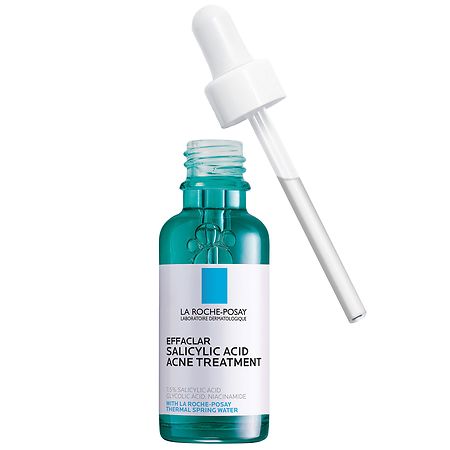


La Roche Posay Acne Treatment Salicylic Acid Face Serum - 1oz: Contains Glycolic Acid, Unscented, Acne-Prone
La Roche-PosayAnalysis updated August 2026 · How Scout scores
At a glance
Summary
This serum contains beneficial ingredients like glycolic acid, niacinamide, and salicylic acid, which are effective for exfoliation and acne treatment. However, the presence of denatured alcohol as a top ingredient can be drying and damaging to the skin barrier, and the inclusion of perfume may cause irritation for sensitive skin. These factors, along with the use of PEG compounds, contribute to a moderate processing level and impact the overall safety profile of the product.
Key ingredients 19
GLYCOLIC ACIDGood
Glycolic acid is an alpha hydroxy acid (AHA) used for its exfoliating properties. It helps remove dead skin cells and promotes cell turnover. It is effective in improving skin texture and tone.
Risks
May cause irritation or sensitivity, especially in high concentrations.
Benefits
Improves skin texture, reduces fine lines, and enhances radiance.
NIACINAMIDEGood
Niacinamide is a form of Vitamin B3 known for its anti-inflammatory and brightening properties. It helps improve skin barrier function and reduces redness. It is well-tolerated by most skin types.
Risks
Generally considered safe with minimal risk of irritation.
Benefits
Reduces inflammation, improves skin tone, and strengthens the skin barrier.
SALICYLIC ACIDGood
Salicylic acid is a beta hydroxy acid (BHA) known for its exfoliating and anti-acne properties. It penetrates pores to clear out impurities and reduce acne. It is effective in treating oily and acne-prone skin.
Risks
May cause dryness or irritation, especially in sensitive skin.
Benefits
Clears pores, reduces acne, and improves skin texture.
WATERNeutral
Water is a common solvent used in cosmetic formulations. It helps dissolve other ingredients and provides a base for the serum. It is generally considered safe and non-irritating.
Risks
There are no significant risks associated with water in cosmetics.
Benefits
Water hydrates the skin and helps in the absorption of other active ingredients.
PROPANEDIOLNeutral
Propanediol is a glycol that acts as a solvent and humectant in skincare products. It is generally considered safe and non-irritating. It helps improve the texture and feel of the product.
Risks
Rarely, it may cause irritation in sensitive individuals.
Benefits
Helps to hydrate the skin and improve product absorption.
DIMETHYL ISOSORBIDENeutral
Dimethyl isosorbide is used as a solvent to enhance the delivery of active ingredients. It is considered safe for use in cosmetics. It helps improve the efficacy of other ingredients.
Risks
Minimal risk of irritation or sensitivity.
Benefits
Enhances the penetration and effectiveness of active ingredients.
PENTYLENE GLYCOLNeutral
Pentylene glycol is a synthetic humectant and solvent. It helps retain moisture in the skin and improves product texture. It is generally considered safe and non-irritating.
Risks
Low risk of irritation or allergic reaction.
Benefits
Moisturizes the skin and enhances product stability.
SODIUM HYDROXIDENeutral
Sodium hydroxide is used to adjust the pH of cosmetic formulations. It is effective in small concentrations to ensure product stability. It is generally considered safe when used appropriately.
Risks
Can be irritating in high concentrations.
Benefits
Helps maintain the desired pH level of the product.
PEG-60 HYDROGENATED CASTOR OILNeutral
PEG-60 hydrogenated castor oil is an emulsifier and surfactant. It helps blend oil and water-based ingredients. It is generally considered safe for use in cosmetics.
Risks
Potential for contamination with impurities during manufacturing.
Benefits
Improves product texture and stability.
HYDROXYETHYLPIPERAZINE ETHANE SULFONIC ACIDNeutral
This ingredient is used as a buffering agent to maintain pH balance. It is effective in stabilizing formulations. It is generally considered safe for use in cosmetics.
Risks
Minimal risk of irritation or sensitivity.
Benefits
Helps maintain product stability and effectiveness.
CITRIC ACIDNeutral
Citric acid is used to adjust the pH of cosmetic products. It is effective in maintaining product stability. It is generally considered safe for use in cosmetics.
Risks
Can cause irritation in sensitive skin if used in high concentrations.
Benefits
Helps maintain the desired pH level and product stability.
PEG-30 GLYCERYL COCOATENeutral
PEG-30 glyceryl cocoate is an emulsifier and surfactant. It helps blend oil and water-based ingredients. It is generally considered safe for use in cosmetics.
Risks
Potential for contamination with impurities during manufacturing.
Benefits
Improves product texture and stability.
CAPRYLOYL SALICYLIC ACIDNeutral
Capryloyl salicylic acid is a derivative of salicylic acid with exfoliating properties. It is effective in improving skin texture and reducing acne. It is generally considered safe for use in cosmetics.
Risks
May cause irritation or sensitivity in some individuals.
Benefits
Exfoliates the skin and reduces acne.
BIOSACCHARIDE GUM-1Neutral
Biosaccharide gum-1 is a polysaccharide used for its moisturizing properties. It helps hydrate the skin and improve product texture. It is generally considered safe for use in cosmetics.
Risks
Low risk of irritation or allergic reaction.
Benefits
Moisturizes the skin and enhances product feel.
MALTODEXTRINNeutral
Maltodextrin is used as a binding agent and stabilizer in cosmetics. It helps improve product texture and stability. It is generally considered safe for use in cosmetics.
Risks
Minimal risk of irritation or sensitivity.
Benefits
Improves product texture and stability.
PHYTIC ACIDNeutral
Phytic acid is used as a chelating agent to stabilize cosmetic formulations. It helps prevent discoloration and degradation of the product. It is generally considered safe for use in cosmetics.
Risks
Low risk of irritation or sensitivity.
Benefits
Stabilizes formulations and prevents product degradation.
POLYQUATERNIUM-10Neutral
Polyquaternium-10 is a conditioning agent used in cosmetics. It helps improve the texture and feel of the product. It is generally considered safe for use in cosmetics.
Risks
Minimal risk of irritation or sensitivity.
Benefits
Conditions the skin and improves product feel.
PERFUMEBad
Perfume is used to add fragrance to cosmetic products. It can cause irritation and allergic reactions, especially in sensitive individuals. It is often criticized for its potential to cause skin sensitization.
Risks
High risk of irritation and allergic reactions.
Benefits
Provides a pleasant scent to the product.
DENATURED ALCOHOLVery Bad
Denatured alcohol is used as a solvent and astringent in cosmetics. It can be drying and irritating to the skin, especially in high concentrations. It may disrupt the skin's natural barrier.
Risks
Can cause dryness and irritation, particularly for sensitive skin types.
Benefits
Provides a quick-drying finish and helps other ingredients penetrate the skin.
Get the full breakdown in the Scout appTake Scout shopping
Scan any product to see lab results, healthy alternatives, and your personalized analysis.
Download on theApp Store GET IT ONGoogle PlayAmazon pricing & content
Amazon price as of . Product prices and availability are accurate as of the date/time indicated and are subject to change. Any price and availability information displayed on Amazon.com at the time of purchase will apply to the purchase of this product.
CERTAIN CONTENT THAT APPEARS ON THIS SITE COMES FROM AMAZON. THIS CONTENT IS PROVIDED “AS IS” AND IS SUBJECT TO CHANGE OR REMOVAL AT ANY TIME.