
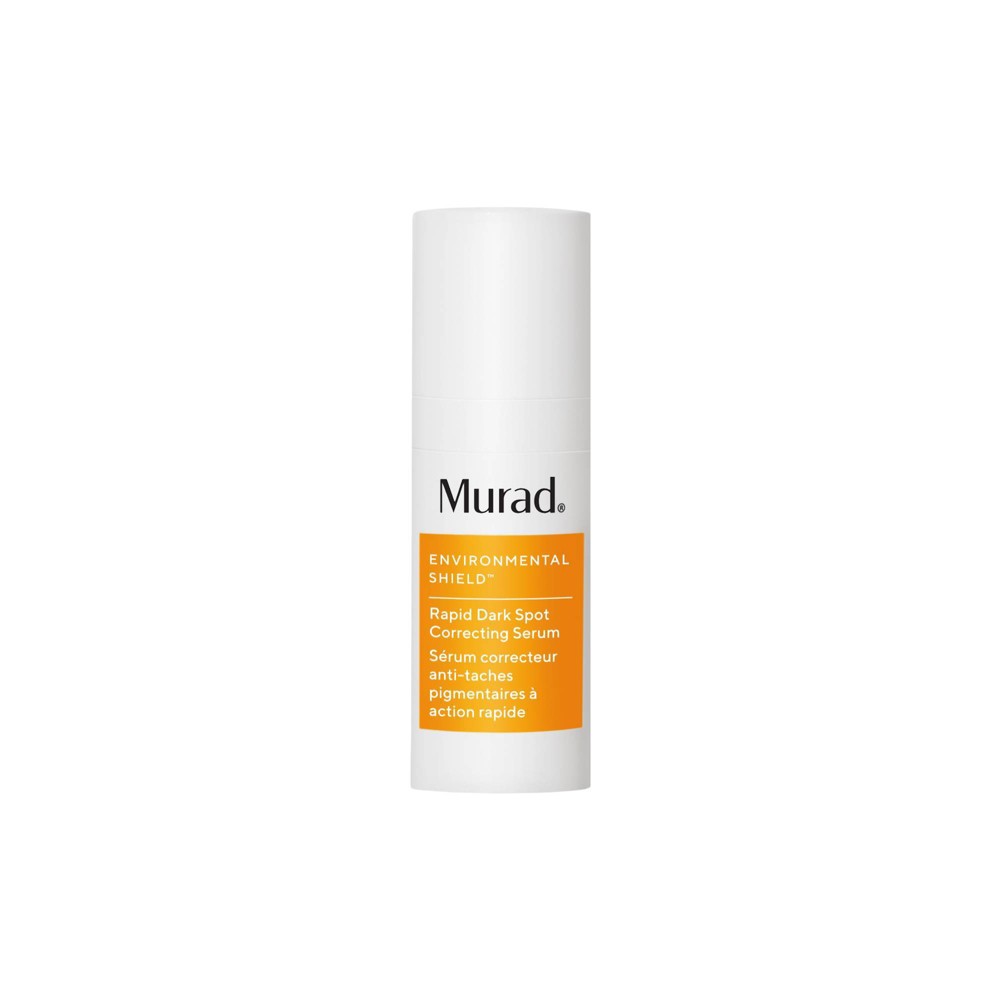

Murad Rapid Dark Spot Correcting Serum
Analysis updated August 2026 · How Scout scores
At a glance
Summary
This serum contains beneficial ingredients like glycolic acid and tranexamic acid, which are effective for exfoliation and reducing hyperpigmentation. However, the presence of alcohol and fragrance can be irritating and drying, especially for sensitive skin. The inclusion of sodium metabisulfite as a preservative also raises concerns due to potential allergic reactions, impacting the overall safety profile of the product.
Key ingredients 42
Tranexamic AcidVery Good
Tranexamic Acid is known for its ability to reduce hyperpigmentation and dark spots. It works by inhibiting melanin production, leading to a more even skin tone. It is effective in treating melasma and other pigmentation disorders.
Risks
Generally well-tolerated, but may cause mild irritation in some individuals.
Benefits
Reduces hyperpigmentation and dark spots, promoting an even skin tone.
Hexapeptide-2Very Good
Hexapeptide-2 is a peptide known for its skin-brightening properties. It helps to reduce the appearance of dark spots and improve overall skin tone. Peptides are generally well-tolerated and beneficial for skin health.
Risks
Minimal risk of irritation or allergic reaction.
Benefits
Reduces dark spots and improves skin tone.
AllantoinVery Good
Allantoin is known for its soothing and healing properties. It helps to calm irritated skin and promote skin repair. It is beneficial for sensitive and damaged skin.
Risks
Generally considered safe with minimal risk of irritation.
Benefits
Soothes and heals the skin, promoting repair.
Glycolic AcidGood
Glycolic Acid is an alpha hydroxy acid (AHA) known for its exfoliating properties. It helps to remove dead skin cells, promoting a brighter and more even skin tone. It is effective in reducing the appearance of fine lines and dark spots.
Risks
May cause irritation or sensitivity, especially in high concentrations or for sensitive skin.
Benefits
Promotes exfoliation, brightens skin, and reduces fine lines and dark spots.
GlycerinGood
Glycerin is a humectant that attracts moisture to the skin, helping to keep it hydrated. It is widely used in skincare for its moisturizing properties. It is suitable for all skin types and helps to improve skin barrier function.
Risks
Generally considered safe with minimal risk of irritation.
Benefits
Attracts moisture to the skin, improving hydration and barrier function.
Methyl Gluceth-20Good
Methyl Gluceth-20 is a gentle humectant and emollient derived from glucose. It helps to moisturize and soften the skin without causing irritation. It is suitable for sensitive skin types.
Risks
Very low risk of irritation or allergic reaction.
Benefits
Moisturizes and softens the skin, suitable for sensitive skin.
4-EthylresorcinolGood
4-Ethylresorcinol is an antioxidant that helps to brighten the skin and reduce pigmentation. It is effective in improving skin tone and reducing the appearance of dark spots. It also provides some protection against environmental damage.
Risks
May cause mild irritation in sensitive skin.
Benefits
Brightens skin, reduces pigmentation, and provides antioxidant protection.
Rice Amino AcidsGood
Rice Amino Acids are known for their moisturizing and conditioning properties. They help to improve skin texture and hydration. Amino acids are essential for maintaining healthy skin.
Risks
Generally considered safe with low risk of irritation.
Benefits
Moisturizes and conditions the skin, improving texture and hydration.
UreaGood
Urea is a powerful humectant that helps to retain moisture in the skin. It also has keratolytic properties, which help to exfoliate and soften the skin. It is beneficial for dry and rough skin conditions.
Risks
May cause mild irritation in sensitive skin.
Benefits
Retains moisture, exfoliates, and softens the skin.
Yeast Amino AcidsGood
Yeast Amino Acids provide moisturizing and conditioning benefits to the skin. They help to improve skin texture and hydration. Amino acids are essential for maintaining healthy skin.
Risks
Generally considered safe with low risk of irritation.
Benefits
Moisturizes and conditions the skin, improving texture and hydration.
TrehaloseGood
Trehalose is a sugar that acts as a humectant, helping to retain moisture in the skin. It also provides antioxidant protection, helping to protect the skin from environmental damage. It is suitable for all skin types.
Risks
Generally considered safe with minimal risk of irritation.
Benefits
Retains moisture and provides antioxidant protection.
InositolGood
Inositol is a carbohydrate that helps to improve skin hydration and texture. It is known for its moisturizing properties and is beneficial for maintaining healthy skin. It is suitable for all skin types.
Risks
Generally considered safe with minimal risk of irritation.
Benefits
Improves skin hydration and texture.
TaurineGood
Beneficial ingredient — whole-food or functional value in this product class.
Risks
Generally considered safe with minimal risk of irritation.
Benefits
May improve skin hydration and reduce oxidative stress.
BetaineGood
Betaine is a natural humectant that helps to retain moisture in the skin. It is known for its soothing and anti-irritant properties, making it suitable for sensitive skin. It helps to improve skin hydration and texture.
Risks
Generally considered safe with minimal risk of irritation.
Benefits
Retains moisture, soothes, and improves skin hydration and texture.
Zinc GluconateGood
Zinc Gluconate is known for its anti-inflammatory and soothing properties. It helps to reduce redness and irritation, making it beneficial for acne-prone skin. It also provides some antimicrobial benefits.
Risks
Generally considered safe with minimal risk of irritation.
Benefits
Reduces redness and irritation, provides antimicrobial benefits.
Dipotassium GlycyrrhizateGood
Dipotassium Glycyrrhizate is derived from licorice root and is known for its soothing and anti-inflammatory properties. It helps to reduce redness and irritation, making it suitable for sensitive skin. It also helps to improve skin hydration.
Risks
Generally considered safe with minimal risk of irritation.
Benefits
Soothes, reduces redness and irritation, and improves skin hydration.
Water/Aqua/EauNeutral
Water is a common solvent used in cosmetics to dissolve other ingredients. It helps in the application and absorption of the product. It does not have any direct benefits or risks.
Risks
There are no known risks associated with water in cosmetics.
Benefits
Water helps in the application and absorption of the product.
AlcoholNeutral
Standard formulation ingredient — neither beneficial nor harmful at typical use.
Risks
Alcohol can cause dryness and irritation, particularly for sensitive skin.
Benefits
It can enhance the penetration of other ingredients.
Butylene GlycolNeutral
Butylene Glycol is a common solvent and conditioning agent in cosmetics. It helps to improve the texture and spreadability of the product. It is generally considered safe and non-irritating.
Risks
Rarely, it may cause irritation in very sensitive individuals.
Benefits
Improves product texture and spreadability.
HydroxyethylcelluloseNeutral
Hydroxyethylcellulose is a thickening agent used to improve the texture and consistency of cosmetic products. It is generally considered safe and non-irritating. It does not have any direct benefits or risks.
Risks
There are no known risks associated with hydroxyethylcellulose in cosmetics.
Benefits
Improves texture and consistency of products.
Sodium SulfiteNeutral
Sodium Sulfite is used as a preservative and antioxidant in cosmetics. It helps to prevent the oxidation of other ingredients, extending the shelf life of the product. It is generally considered safe in low concentrations.
Risks
May cause irritation in sensitive individuals.
Benefits
Acts as a preservative and antioxidant.
Sodium HydroxideNeutral
Sodium Hydroxide is used to adjust the pH of cosmetic products. It is a strong base and must be used in controlled amounts to avoid irritation. It does not have any direct benefits or risks when used appropriately.
Risks
Can cause irritation if used in high concentrations.
Benefits
Adjusts the pH of cosmetic products.
PPG-26-Buteth-26Neutral
PPG-26-Buteth-26 is a synthetic polymer used as an emollient and conditioning agent. It helps to improve the texture and feel of the product. It is generally considered safe and non-irritating.
Risks
Generally considered safe with minimal risk of irritation.
Benefits
Improves texture and feel of the product.
PEG-40 Hydrogenated Castor OilNeutral
PEG-40 Hydrogenated Castor Oil is used as an emulsifier and surfactant in cosmetics. It helps to mix oil and water-based ingredients, improving product stability. It is generally considered safe but may cause irritation in some individuals.
Risks
May cause irritation in sensitive individuals.
Benefits
Acts as an emulsifier and surfactant, improving product stability.
Polyquaternium-4Neutral
Polyquaternium-4 is a conditioning agent used to improve the texture and feel of cosmetic products. It helps to enhance the spreadability and application of the product. It is generally considered safe and non-irritating.
Risks
Generally considered safe with minimal risk of irritation.
Benefits
Improves texture and feel of the product.
Denatonium BenzoateNeutral
Denatonium Benzoate is used as a bittering agent to prevent accidental ingestion of cosmetic products. It is one of the most bitter substances known and is used in very low concentrations. It does not have any direct benefits or risks.
Risks
There are no known risks associated with denatonium benzoate in cosmetics.
Benefits
Prevents accidental ingestion of products.
t-Butyl AlcoholNeutral
t-Butyl Alcohol is used as a solvent and denaturant in cosmetics. It helps to dissolve other ingredients and improve product stability. It is generally considered safe in low concentrations.
Risks
May cause irritation in sensitive individuals.
Benefits
Acts as a solvent and denaturant, improving product stability.
Citrus Aurantium Bergamia (Bergamot) Peel OilNeutral
Bergamot Peel Oil is used for its fragrance and potential skin benefits. It may have antibacterial and anti-inflammatory properties. However, it can cause photosensitivity and irritation in some individuals.
Risks
May cause photosensitivity and irritation, especially when exposed to sunlight.
Benefits
Provides fragrance and may have antibacterial and anti-inflammatory properties.
CitronellolNeutral
Citronellol is a fragrance ingredient derived from plants such as rose and geranium. It is used to impart a floral scent to cosmetic products. It does not have any direct benefits or risks.
Risks
May cause irritation or allergic reactions in sensitive individuals.
Benefits
Provides a floral scent to cosmetic products.
Citrus Limon (Lemon) Peel OilNeutral
Lemon Peel Oil is used for its fragrance and potential skin benefits. It may have antibacterial and astringent properties. However, it can cause photosensitivity and irritation in some individuals.
Risks
May cause photosensitivity and irritation, especially when exposed to sunlight.
Benefits
Provides fragrance and may have antibacterial and astringent properties.
Geranyl AcetateNeutral
Geranyl Acetate is a fragrance ingredient used to impart a floral scent to cosmetic products. It is derived from various essential oils. It does not have any direct benefits or risks.
Risks
May cause irritation or allergic reactions in sensitive individuals.
Benefits
Provides a floral scent to cosmetic products.
Benzyl SalicylateNeutral
Benzyl Salicylate is a fragrance ingredient used to impart a floral scent to cosmetic products. It is also used as a UV light absorber. It does not have any direct benefits or risks.
Risks
May cause irritation or allergic reactions in sensitive individuals.
Benefits
Provides a floral scent and acts as a UV light absorber.
Citrus Aurantium Peel OilNeutral
Citrus Aurantium Peel Oil is used for its fragrance and potential skin benefits. It may have antibacterial and astringent properties. However, it can cause photosensitivity and irritation in some individuals.
Risks
May cause photosensitivity and irritation, especially when exposed to sunlight.
Benefits
Provides fragrance and may have antibacterial and astringent properties.
Sodium MetabisulfiteBad
Sodium Metabisulfite is used as a preservative and antioxidant in cosmetics. It can cause allergic reactions and irritation in some individuals, particularly those with sensitive skin. It is generally used in low concentrations to minimize risks.
Risks
May cause allergic reactions and irritation, especially in sensitive individuals.
Benefits
Acts as a preservative and antioxidant.
Disodium EDTABad
Processed additive flagged under Scout's ingredient doctrine.
Risks
May cause irritation in sensitive individuals.
Benefits
Improves stability and efficacy of products.
PhenoxyethanolBad
Processed additive flagged under Scout's ingredient doctrine.
Risks
May cause irritation in sensitive individuals.
Benefits
Prevents the growth of bacteria and mold, extending product shelf life.
Potassium SorbateBad
Synthetic preservative — flagged in daily-use products.
Risks
May cause irritation in sensitive individuals.
Benefits
Prevents the growth of mold and yeast, extending product shelf life.
Benzyl AlcoholBad
Processed additive flagged under Scout's ingredient doctrine.
Risks
May cause irritation in sensitive individuals.
Benefits
Acts as a preservative and solvent, preventing microbial growth.
Sodium BenzoateBad
Synthetic preservative that can form benzene in the presence of vitamin C.
Risks
May cause irritation in sensitive individuals.
Benefits
Prevents the growth of bacteria and fungi, extending product shelf life.
LinaloolBad
Processed additive flagged under Scout's ingredient doctrine.
Risks
May cause irritation or allergic reactions in sensitive individuals.
Benefits
Provides a pleasant scent to cosmetic products.
LimoneneBad
Processed additive flagged under Scout's ingredient doctrine.
Risks
May cause irritation or allergic reactions in sensitive individuals.
Benefits
Provides a fresh, citrus scent to cosmetic products.
Fragrance (Parfum)Very Bad
Fragrance is used to impart a pleasant scent to cosmetic products. However, it can cause irritation and allergic reactions in sensitive individuals. It is often a mixture of various chemicals, some of which may be harmful.
Risks
May cause irritation and allergic reactions, especially in sensitive individuals.
Benefits
Provides a pleasant scent to cosmetic products.
Get the full breakdown in the Scout appTake Scout shopping
Scan any product to see lab results, healthy alternatives, and your personalized analysis.
Download on theApp Store GET IT ONGoogle PlayAmazon pricing & content
Amazon price as of . Product prices and availability are accurate as of the date/time indicated and are subject to change. Any price and availability information displayed on Amazon.com at the time of purchase will apply to the purchase of this product.
CERTAIN CONTENT THAT APPEARS ON THIS SITE COMES FROM AMAZON. THIS CONTENT IS PROVIDED “AS IS” AND IS SUBJECT TO CHANGE OR REMOVAL AT ANY TIME.