
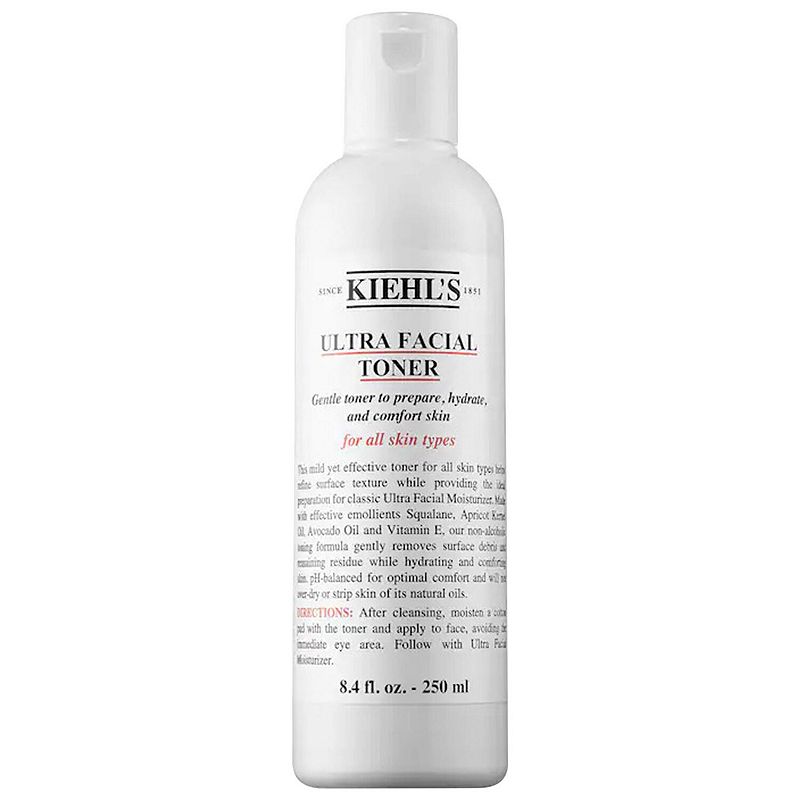


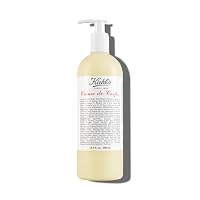
Kiehl's Since 1851 Ultra Facial Toner, 8.4 fl. oz.
Analysis updated August 2026 · How Scout scores
At a glance
Summary
This toner contains several beneficial ingredients like squalane, sodium hyaluronate, and various natural oils, which provide excellent moisturizing and antioxidant properties. However, the presence of ethylhexyl salicylate, which can cause skin irritation, and triethanolamine, with potential contamination concerns, lowers its safety profile. The product is moderately processed, which also impacts its overall rating.
Key ingredients 17
SqualaneVery Good
Squalane is a highly effective emollient and natural antioxidant. It mimics the skin's natural oils, making it an excellent moisturizer. It is non-irritating and suitable for all skin types.
Benefits
Provides deep hydration and helps reduce fine lines.
Ascorbyl GlucosideVery Good
Ascorbyl Glucoside is a stable form of Vitamin C used for its antioxidant properties. It helps brighten the skin and reduce signs of aging. It is well-tolerated and effective in improving skin tone.
Risks
Minimal risk of irritation; generally safe.
Benefits
Brightens skin and provides antioxidant protection.
Prunus Amygdalus Dulcis Oil / Sweet Almond OilVery Good
Sweet Almond Oil is a natural oil rich in vitamins and fatty acids. It nourishes and softens the skin, making it smooth and supple. It is gentle and suitable for sensitive skin.
Risks
Rarely, it may cause allergic reactions in individuals with nut allergies.
Benefits
Nourishes and moisturizes the skin effectively.
Prunus Armeniaca Kernel Oil / Apricot Kernel OilVery Good
Apricot Kernel Oil is a lightweight oil that absorbs easily into the skin. It is rich in vitamins A and E, which help nourish and protect the skin. It is suitable for all skin types and provides excellent emollient properties.
Risks
Minimal risk of irritation; generally safe.
Benefits
Moisturizes and revitalizes the skin.
TocopherolVery Good
Tocopherol, or Vitamin E, is a powerful antioxidant that protects the skin from free radical damage. It helps improve skin texture and provides anti-aging benefits. It is well-tolerated and beneficial for most skin types.
Risks
Rarely, it may cause mild irritation in sensitive skin.
Benefits
Protects against oxidative stress and improves skin health.
Persea Gratissima Oil / Avocado OilVery Good
Avocado Oil is a nourishing oil rich in vitamins and essential fatty acids. It deeply moisturizes and soothes the skin, promoting a healthy complexion. It is suitable for dry and sensitive skin types.
Risks
Minimal risk of irritation; generally safe.
Benefits
Deeply nourishes and hydrates the skin.
GlycerinGood
Glycerin is a humectant that attracts moisture to the skin, helping to keep it hydrated. It is widely used in skincare for its moisturizing properties. It is generally well-tolerated and beneficial for most skin types.
Risks
Rarely, it can cause irritation in very sensitive skin.
Benefits
Helps maintain skin hydration and improves skin barrier function.
Sodium HyaluronateGood
Sodium Hyaluronate is a form of hyaluronic acid that provides intense hydration. It helps retain moisture in the skin, making it plump and smooth. It is suitable for all skin types and is non-irritating.
Benefits
Deeply hydrates and improves skin elasticity.
Aqua / WaterNeutral
Water is a common solvent used in cosmetics to dissolve other ingredients. It helps in the application and absorption of the product. It does not have any direct benefits or risks.
Benefits
Acts as a solvent and carrier for other ingredients.
Sorbitan OleateNeutral
Sorbitan Oleate is an emulsifier that helps blend oil and water-based ingredients. It is derived from sorbitol and oleic acid. It is generally considered safe for use in cosmetics.
Risks
Low risk of irritation or allergic reaction.
Benefits
Helps maintain product consistency and stability.
Peg-100 StearateNeutral
PEG-100 Stearate is an emulsifier that helps blend ingredients in formulations. It is derived from stearic acid and polyethylene glycol. It is generally considered safe but can be contaminated with harmful impurities.
Risks
Potential contamination with ethylene oxide or 1,4-dioxane.
Benefits
Improves product texture and emulsification.
P-Anisic AcidNeutral
P-Anisic Acid is used as a fragrance ingredient and preservative. It has antimicrobial properties that help preserve the product. It is generally considered safe for use in cosmetics.
Risks
Potential for mild irritation in sensitive skin.
Benefits
Provides antimicrobial benefits and enhances fragrance.
PhenoxyethanolBad
Processed additive flagged under Scout's ingredient doctrine.
Risks
Potential for skin irritation, especially in sensitive individuals.
Benefits
Helps maintain product integrity by preventing microbial contamination.
Acrylates / C10-30 Alkyl Acrylate CrosspolymerBad
Processed additive flagged under Scout's ingredient doctrine.
Risks
May cause mild irritation in sensitive skin types.
Benefits
Improves product texture and stability.
Ethylhexyl SalicylateBad
Ethylhexyl Salicylate is a UV filter used in sunscreens and cosmetics. It helps protect the skin from UVB rays. However, it can cause skin irritation and is not considered reef-safe.
Risks
Potential skin irritant and environmental concerns.
Benefits
Provides UVB protection in sun care products.
Potassium SorbateBad
Synthetic preservative — flagged in daily-use products.
Risks
May cause mild irritation in sensitive individuals.
Benefits
Extends shelf life by preventing microbial growth.
TriethanolamineBad
Triethanolamine is used to adjust pH and stabilize emulsions in cosmetics. It can cause skin irritation and has potential contamination concerns with nitrosamines. It is not recommended for long-term use on the skin.
Risks
Potential skin irritant and contamination with nitrosamines.
Benefits
Helps stabilize and emulsify formulations.
Get the full breakdown in the Scout appTake Scout shopping
Scan any product to see lab results, healthy alternatives, and your personalized analysis.
Download on theApp Store GET IT ONGoogle PlayAmazon pricing & content
Amazon price as of . Product prices and availability are accurate as of the date/time indicated and are subject to change. Any price and availability information displayed on Amazon.com at the time of purchase will apply to the purchase of this product.
CERTAIN CONTENT THAT APPEARS ON THIS SITE COMES FROM AMAZON. THIS CONTENT IS PROVIDED “AS IS” AND IS SUBJECT TO CHANGE OR REMOVAL AT ANY TIME.