
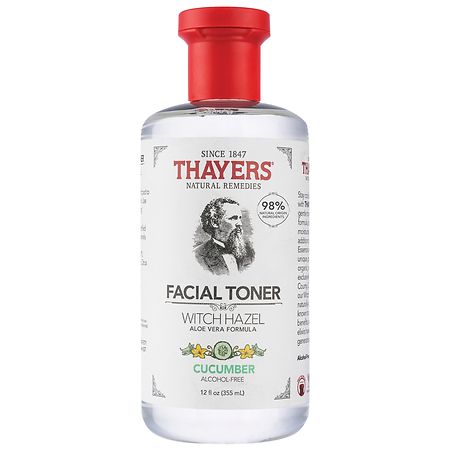
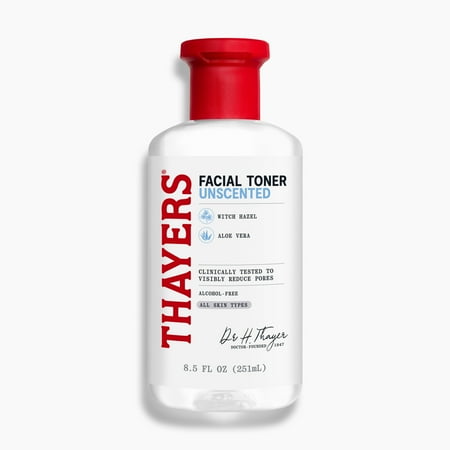
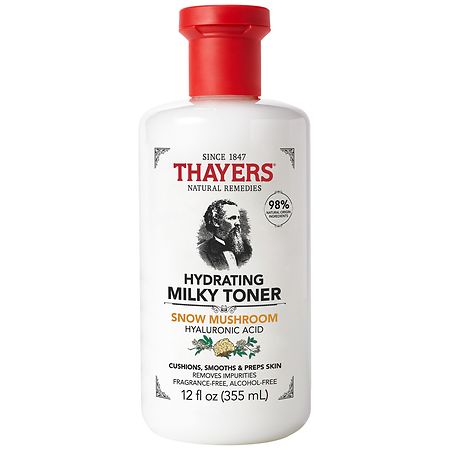
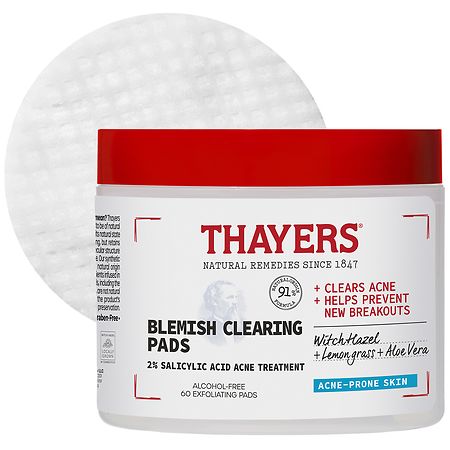
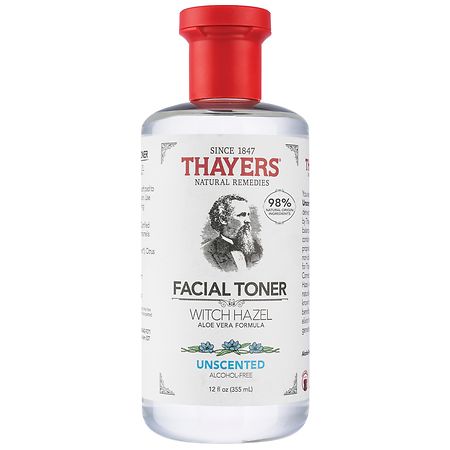
Thayers Remedies Witch Hazel Alcohol Free Toner with Cucumber - 12 fl oz: Paraben-Free, Sulfate-Free, Vegan
Analysis updated April 2026 · How Scout scores
At a glance
Summary
This toner contains beneficial ingredients like glycerin, witch hazel, aloe vera, and cucumber extract, which are known for their moisturizing and soothing properties. However, the presence of phenoxyethanol, a preservative that can cause irritation in sensitive individuals, slightly lowers its safety profile. The product is mostly safe with minor synthetic preservatives, contributing to a moderate processing level.
Key ingredients 10
Aloe Barbadensis Leaf ExtractVery Good
Aloe vera is renowned for its soothing and moisturizing properties. It is often used to calm irritated skin and provide hydration. It is suitable for all skin types and is particularly beneficial for sensitive or sunburned skin.
Risks
Aloe vera is generally safe, but some individuals may experience allergic reactions.
Benefits
Aloe vera helps soothe and hydrate the skin, reducing inflammation and promoting healing.
GlycerinGood
Glycerin is a humectant that attracts moisture to the skin, helping to keep it hydrated. It is a common ingredient in skincare products due to its moisturizing properties. It is generally well-tolerated and beneficial for all skin types.
Risks
There are minimal risks associated with glycerin, though in rare cases it may cause irritation.
Benefits
Glycerin helps maintain skin hydration and improves skin barrier function.
Hamamelis Virginiana (Witch Hazel) Bark/Leaf/Twig ExtractGood
Witch hazel is known for its astringent properties, which can help tighten skin and reduce inflammation. It is often used in toners to help control oil and soothe irritation. It is generally safe for most skin types when used appropriately.
Risks
Overuse may lead to dryness or irritation, especially in sensitive skin.
Benefits
Witch hazel can help reduce redness and control oil production, making it beneficial for acne-prone skin.
Cucumis Sativus (Cucumber) Fruit ExtractGood
Cucumber extract is known for its cooling and soothing properties. It is often used in skincare products to reduce puffiness and hydrate the skin. It is generally safe and beneficial for all skin types.
Risks
There are minimal risks associated with cucumber extract, though allergic reactions are possible.
Benefits
Cucumber extract helps soothe and refresh the skin, reducing puffiness and providing hydration.
Aqua/Water/EauNeutral
Water is a universal solvent and is used as a base in many cosmetic formulations. It helps dissolve other ingredients and provides hydration. It is generally considered safe and non-irritating.
Risks
There are no significant risks associated with water in cosmetic products.
Benefits
Water helps in hydrating the skin and acts as a carrier for other beneficial ingredients.
Caprylyl GlycolNeutral
Caprylyl glycol is used as a skin conditioning agent and preservative booster. It helps improve the texture of formulations and enhances the effectiveness of preservatives. It is generally considered safe and non-irritating.
Risks
There are minimal risks associated with caprylyl glycol, though irritation is possible in rare cases.
Benefits
It helps maintain product stability and enhances skin hydration.
EthylhexylglycerinNeutral
Ethylhexylglycerin is used as a preservative and skin conditioning agent. It helps improve the efficacy of other preservatives and enhances skin feel. It is generally considered safe and non-irritating.
Risks
There are minimal risks associated with ethylhexylglycerin, though irritation is possible in rare cases.
Benefits
It helps maintain product stability and improves skin texture.
Citric AcidNeutral
Citric acid is used to adjust the pH of cosmetic formulations. It can also act as an exfoliant, helping to remove dead skin cells. It is generally safe when used in appropriate concentrations.
Risks
High concentrations can cause irritation, especially in sensitive skin.
Benefits
It helps maintain the stability of formulations and can improve skin texture.
Potassium HydroxideNeutral
Potassium hydroxide is used to adjust the pH of cosmetic products. It is effective in small amounts but can be irritating in higher concentrations. It is generally considered safe when used appropriately.
Risks
High concentrations can cause skin irritation and damage.
Benefits
It helps maintain the stability and effectiveness of formulations.
PhenoxyethanolBad
Phenoxyethanol is a preservative used to prevent microbial growth in cosmetic products. While effective, it can cause irritation in some individuals, particularly those with sensitive skin. It is considered safe in low concentrations but can be problematic in higher amounts.
Risks
Phenoxyethanol can cause skin irritation and allergic reactions in sensitive individuals.
Benefits
It helps extend the shelf life of products by preventing microbial contamination.
Get the full breakdown in the Scout appTake Scout shopping
Scan any product to see lab results, healthy alternatives, and your personalized analysis.
Download on theApp Store GET IT ONGoogle PlayAmazon pricing & content
Amazon price as of . Product prices and availability are accurate as of the date/time indicated and are subject to change. Any price and availability information displayed on Amazon.com at the time of purchase will apply to the purchase of this product.
CERTAIN CONTENT THAT APPEARS ON THIS SITE COMES FROM AMAZON. THIS CONTENT IS PROVIDED “AS IS” AND IS SUBJECT TO CHANGE OR REMOVAL AT ANY TIME.