
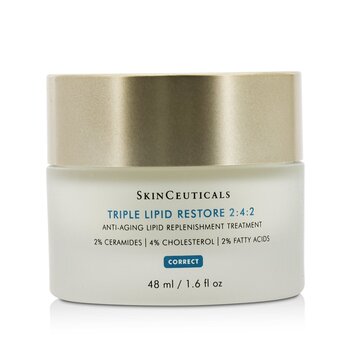


Skin Ceuticals Triple Lipid Restore 2:4:2 48ml/1.6oz
Analysis updated August 2026 · How Scout scores
At a glance
Summary
This serum contains beneficial ingredients like glycerin, cholesterol, and ceramide 3, which support skin hydration and barrier function. However, it also includes phenoxyethanol, chlorphenesin, and linalool, which can cause irritation and allergic reactions in some individuals. The presence of these preservatives and fragrance components, along with the level of processing, impacts the overall safety and quality of the product.
Key ingredients 15
GlycerinGood
Glycerin is a well-known humectant that attracts moisture to the skin, promoting hydration and softness.
See more about Glycerin →CholesterolGood
Cholesterol supports the skin's barrier function, helping to maintain healthy, resilient skin.
See more about Cholesterol →Ceramide 3Good
Ceramide 3 is a key lipid that strengthens the skin's natural barrier, aiding in moisture retention and skin health.
Helianthus Annuus Seed Oil Unsaponifiables/Sunflower Seed Oil UnsaponifiablesGood
Sunflower seed oil unsaponifiables are rich in beneficial fatty acids that nourish and support the skin's barrier.
AdenosineGood
Adenosine is known for its soothing properties and potential to improve the appearance of fine lines, supporting skin comfort.
Ceramide EopGood
Ceramide Eop helps reinforce the skin's natural lipid barrier, promoting hydration and skin resilience.
See more about Ceramide Eop →TocopherolGood
Tocopherol, or vitamin E, acts as an antioxidant, protecting skin cells from environmental damage.
See more about Tocopherol →Aqua/Water/EauNeutral
Water is a fundamental base for many skincare products, providing hydration without added benefits or risks.
See more about Aqua/Water/Eau →DimethiconeBad
Dimethicone helps create a smooth texture and forms a protective barrier on the skin, enhancing product application.
See more about Dimethicone →Lavandula Angustifolia Oil/Lavender OilBad
Lavender oil can sometimes cause skin irritation or allergic reactions in sensitive individuals.
Rosmarinus Officinalis Leaf Oil/Rosemary Leaf OilBad
Rosemary oil may cause irritation or allergic responses, especially in sensitive skin types.
Mentha Piperita Oil/Peppermint OilBad
Peppermint oil can cause a cooling sensation that may irritate sensitive or compromised skin.
LinaloolBad
Linalool is a fragrance component that can trigger allergic reactions or skin sensitivities in some people.
See more about Linalool →BhtBad
BHT is a preservative that has raised concerns regarding potential skin sensitivities and environmental impact.
See more about Bht →LimoneneBad
Limonene is a fragrance ingredient that may cause allergic reactions or skin irritation in sensitive individuals.
See more about Limonene →Processing
Processed Foods
Get the full breakdown in the Scout appTake Scout shopping
Scan any product to see lab results, healthy alternatives, and your personalized analysis.
Download on theApp Store GET IT ONGoogle Play