
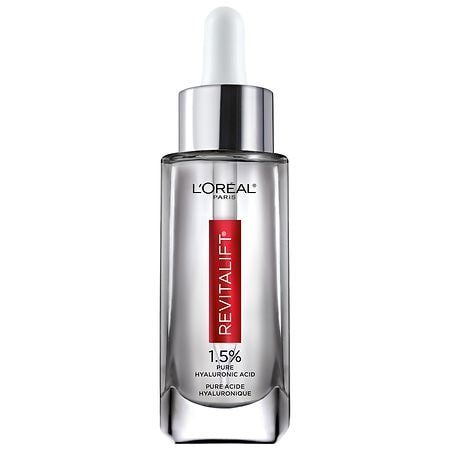
L'Oreal Paris Revitalift Derm Intensives Hyaluronic Acid Serum - 1 fl oz: Anti-Aging Vitamin C Facial Treatment
Analysis updated July 2026 · How Scout scores
At a glance
Summary
This serum contains beneficial ingredients like sodium hyaluronate and ascorbyl glucoside, which are known for their hydrating and anti-aging properties. However, the presence of PEG-60 hydrogenated castor oil and phenoxyethanol, which are synthetic and can be irritating to some skin types, slightly lowers its rating. The product is moderately processed, which also impacts its overall score.
Key ingredients 13
Ascorbyl GlucosideVery Good
Ascorbyl Glucoside is a stable form of Vitamin C that provides antioxidant benefits. It helps brighten the skin and reduce signs of aging. It is a beneficial ingredient for improving skin tone and texture.
Risks
There are minimal risks, though it can cause irritation in very sensitive skin.
Benefits
It provides antioxidant protection and helps brighten the skin.
GlycerinGood
Glycerin is a humectant that attracts moisture to the skin, helping to keep it hydrated. It is widely used in skincare products for its moisturizing properties. It is generally considered safe and beneficial for most skin types.
Risks
There are minimal risks associated with glycerin, though it can cause irritation in very sensitive skin.
Benefits
Glycerin helps maintain skin hydration and improves skin barrier function.
Sodium HyaluronateGood
Sodium Hyaluronate is a form of hyaluronic acid that is highly effective in retaining moisture in the skin. It can hold up to 1000 times its weight in water, making it an excellent hydrating agent. It is beneficial for all skin types, especially dry and aging skin.
Risks
There are minimal risks, though it can cause irritation in very sensitive skin.
Benefits
It provides intense hydration and helps reduce the appearance of fine lines and wrinkles.
Secale Cereale Seed Extract/Rye Seed ExtractGood
Rye Seed Extract is known for its skin-conditioning properties. It can help improve skin texture and provide antioxidant benefits. It is a beneficial ingredient for maintaining healthy skin.
Risks
There are minimal risks, though it can cause irritation in very sensitive skin.
Benefits
It provides antioxidant benefits and helps improve skin texture.
Calcium PantothenateGood
Calcium Pantothenate, a form of Vitamin B5, is known for its moisturizing and healing properties. It helps improve skin hydration and repair the skin barrier. It is beneficial for maintaining healthy skin.
Risks
There are minimal risks associated with this ingredient.
Benefits
It enhances skin hydration and supports skin barrier repair.
Aqua/WaterNeutral
Aqua, or water, is a common solvent used in cosmetic formulations. It helps dissolve other ingredients and provides a base for the product. It does not have any direct benefits or risks associated with its use.
Risks
There are no significant risks associated with water in cosmetic products.
Benefits
Water acts as a solvent and carrier for other beneficial ingredients.
Hydroxyethylpiperazine Ethane Sulfonic AcidNeutral
This ingredient is used as a buffering agent to maintain the pH balance of the product. It helps stabilize the formulation and enhance the effectiveness of other ingredients. It does not have direct skin benefits or risks.
Risks
There are no significant risks associated with this ingredient in cosmetic formulations.
Benefits
It helps maintain the stability and effectiveness of the product.
PEG-60 Hydrogenated Castor OilNeutral
This ingredient is used as an emulsifier and surfactant in cosmetic formulations. It helps blend oil and water-based ingredients. It is generally considered safe for use in cosmetics.
Risks
There is a potential risk of irritation for very sensitive skin types.
Benefits
It helps improve the texture and consistency of the product.
Dipeptide Diaminobutyroyl Benzylamide DiacetateNeutral
This synthetic peptide is used for its potential anti-aging benefits. It is believed to help reduce the appearance of fine lines and wrinkles. However, more research is needed to fully understand its efficacy.
Risks
There are minimal risks, though it can cause irritation in very sensitive skin.
Benefits
It may help reduce the appearance of fine lines and wrinkles.
Pentylene GlycolNeutral
Pentylene Glycol is used as a solvent and skin-conditioning agent in cosmetics. It helps improve the texture and spreadability of the product. It is generally considered safe for use in cosmetics.
Risks
There are minimal risks, though it can cause irritation in very sensitive skin.
Benefits
It enhances the texture and spreadability of the product.
Disodium EDTABad
Processed additive flagged under Scout's ingredient doctrine.
Risks
There are minimal risks, though it can cause irritation in very sensitive skin.
Benefits
It helps maintain the stability and effectiveness of the product.
PhenoxyethanolBad
Phenoxyethanol is a preservative used to prevent microbial growth in cosmetics. It is effective but can cause irritation and allergic reactions in some individuals. It is considered a moderate risk ingredient in skincare.
Risks
It can cause skin irritation and allergic reactions in sensitive individuals.
Benefits
It helps preserve the product by preventing microbial growth.
ChlorphenesinBad
Chlorphenesin is a preservative used to prevent microbial growth in cosmetics. It can cause irritation and allergic reactions in some individuals. It is considered a moderate risk ingredient in skincare.
Risks
It can cause skin irritation and allergic reactions in sensitive individuals.
Benefits
It helps preserve the product by preventing microbial growth.
Get the full breakdown in the Scout appTake Scout shopping
Scan any product to see lab results, healthy alternatives, and your personalized analysis.
Download on theApp Store GET IT ONGoogle PlayAmazon pricing & content
Amazon price as of . Product prices and availability are accurate as of the date/time indicated and are subject to change. Any price and availability information displayed on Amazon.com at the time of purchase will apply to the purchase of this product.
CERTAIN CONTENT THAT APPEARS ON THIS SITE COMES FROM AMAZON. THIS CONTENT IS PROVIDED “AS IS” AND IS SUBJECT TO CHANGE OR REMOVAL AT ANY TIME.