
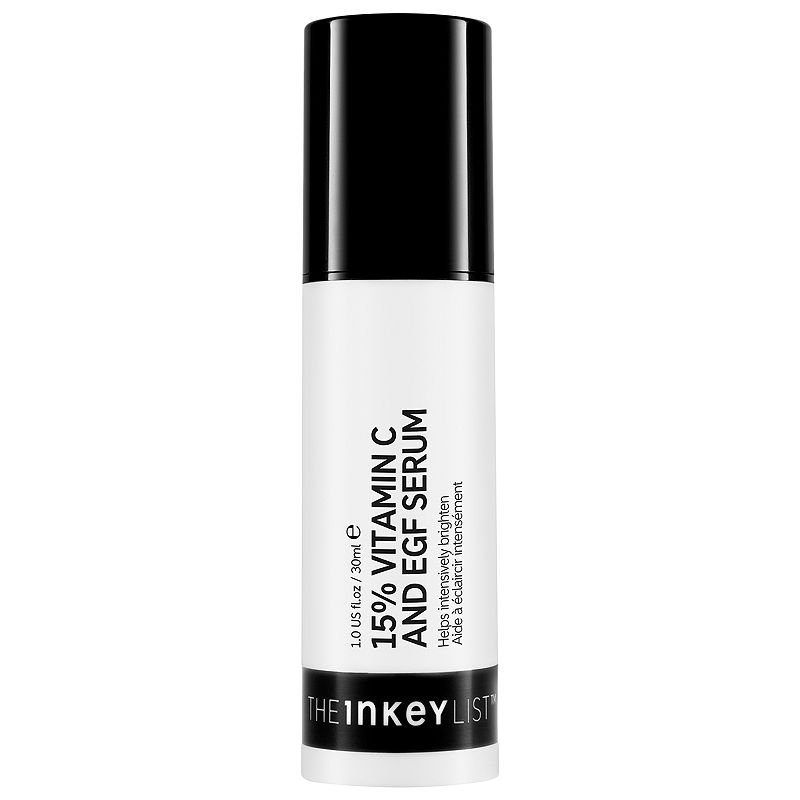


The INKEY List 15% Vitamin C & EGF Brightening Serum, Size: 1 Oz, None
Analysis updated September 2026 · How Scout scores
At a glance
Summary
This serum contains beneficial ingredients like Ascorbyl Glucoside and Oligopeptide-1, which are known for their antioxidant and skin-rejuvenating properties. However, the presence of Sodium Metabisulfite, a potential allergen, and PEG-40 Hydrogenated Castor Oil, a synthetic emulsifier, slightly detracts from its overall safety profile. The product is moderately processed with a mix of beneficial and synthetic components.
Key ingredients 13
Ascorbyl GlucosideVery Good
Ascorbyl Glucoside is a stable form of Vitamin C, known for its antioxidant properties. It helps brighten the skin and reduce signs of aging. It is well-tolerated by most skin types.
Risks
In rare cases, it may cause mild irritation or allergic reactions.
Benefits
It provides antioxidant protection and helps improve skin tone and texture.
Oligopeptide-1Very Good
Oligopeptide-1, also known as Epidermal Growth Factor (EGF), is known for its skin-rejuvenating properties. It helps stimulate cell growth and repair, improving skin texture and appearance. It is highly regarded for its anti-aging benefits.
Risks
There are minimal risks associated with its use, though some individuals may experience mild irritation.
Benefits
It promotes skin regeneration and reduces signs of aging.
Aqua (Water/Eau)Neutral
Aqua is commonly used as a solvent in cosmetic formulations. It helps dissolve other ingredients and provides a base for the serum. It does not have any direct benefits or risks associated with its use.
Risks
There are no known risks associated with water in cosmetic formulations.
Benefits
Water acts as a carrier for other ingredients, allowing them to be evenly distributed.
Sodium HydroxideNeutral
Sodium Hydroxide is used to adjust the pH of cosmetic products. It is effective in small amounts to ensure product stability. It is generally safe when used in low concentrations.
Risks
In high concentrations, it can be irritating to the skin and eyes.
Benefits
It helps maintain the desired pH level of the product, ensuring its effectiveness and stability.
PEG-40 Hydrogenated Castor OilNeutral
PEG-40 Hydrogenated Castor Oil is an emulsifier that helps blend oil and water-based ingredients. It enhances the texture and spreadability of the product. It is generally considered safe for use in cosmetics.
Risks
There is a potential risk of contamination with ethylene oxide or 1,4-dioxane during manufacturing.
Benefits
It improves the consistency and application of the serum.
Butylene GlycolNeutral
Butylene Glycol is a humectant that helps retain moisture in the skin. It also improves the texture and spreadability of cosmetic products. It is generally considered safe for use in cosmetics.
Risks
In rare cases, it may cause mild irritation or allergic reactions.
Benefits
It helps keep the skin hydrated and enhances the product's texture.
Xanthan GumNeutral
Xanthan Gum is a thickening agent used to stabilize cosmetic formulations. It helps improve the texture and consistency of the product. It is derived from natural sources and is generally safe for use.
Risks
There are no significant risks associated with its use in cosmetics.
Benefits
It enhances the viscosity and stability of the serum.
EthylhexylglycerinNeutral
Ethylhexylglycerin is used as a skin conditioning agent and preservative enhancer. It helps improve the efficacy of other preservatives in the formulation. It is generally considered safe for use in cosmetics.
Risks
It may cause mild irritation in sensitive individuals.
Benefits
It enhances the preservation of the product and conditions the skin.
Dehydroacetic AcidNeutral
Dehydroacetic Acid is a preservative used to inhibit microbial growth in cosmetics. It is effective in low concentrations and is considered safe for use. It helps maintain the product's integrity over time.
Risks
There are minimal risks associated with its use in cosmetics.
Benefits
It acts as a preservative, ensuring the product remains free from microbial contamination.
Phytic AcidNeutral
Phytic Acid is used as a chelating agent in cosmetics, helping to stabilize formulations. It can also provide mild exfoliation and skin brightening effects. It is generally considered safe for use in cosmetics.
Risks
There are no significant risks associated with its use in cosmetics.
Benefits
It helps stabilize the product and can improve skin texture.
PhenoxyethanolBad
Processed additive flagged under Scout's ingredient doctrine.
Risks
It can cause skin irritation in sensitive individuals.
Benefits
It helps maintain product integrity by preventing bacterial contamination.
Benzyl AlcoholBad
Processed additive flagged under Scout's ingredient doctrine.
Risks
It may cause irritation or allergic reactions in sensitive skin.
Benefits
It acts as a preservative, enhancing the product's shelf life.
Sodium MetabisulfiteBad
Sodium Metabisulfite is used as a preservative and antioxidant in cosmetics. It can cause allergic reactions and irritation in some individuals. It is considered a potential allergen and should be used with caution.
Risks
It may cause allergic reactions, especially in individuals with sulfite sensitivity.
Benefits
It helps prevent oxidation and extends the shelf life of the product.
Get the full breakdown in the Scout appTake Scout shopping
Scan any product to see lab results, healthy alternatives, and your personalized analysis.
Download on theApp Store GET IT ONGoogle PlayAmazon pricing & content
Amazon price as of . Product prices and availability are accurate as of the date/time indicated and are subject to change. Any price and availability information displayed on Amazon.com at the time of purchase will apply to the purchase of this product.
CERTAIN CONTENT THAT APPEARS ON THIS SITE COMES FROM AMAZON. THIS CONTENT IS PROVIDED “AS IS” AND IS SUBJECT TO CHANGE OR REMOVAL AT ANY TIME.