
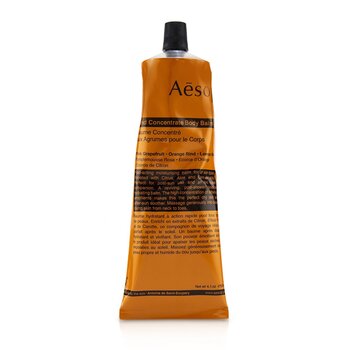
Aesop Rind Concentrate Body Lotion Balm, 4 Fl Oz
Analysis updated August 2026 · How Scout scores
At a glance
Summary
This body lotion contains several beneficial natural oils and butters, such as sweet almond oil, coconut oil, and shea butter, which provide moisturizing and nourishing properties. However, the presence of fragrance components like d-Limonene, Citral, and Linalool, which can cause skin irritation or allergic reactions, along with the preservative Phenoxyethanol, slightly lowers the score due to potential sensitizing effects. The product is moderately processed, which also influences the overall rating.
Key ingredients 29
Prunus Amygdalus Dulcis (Sweet Almond) OilVery Good
Sweet Almond Oil is a natural oil rich in fatty acids and vitamins, which nourish and soften the skin. It is known for its emollient properties and ability to improve skin tone and texture. It is suitable for most skin types and is non-comedogenic.
Risks
May cause allergic reactions in individuals with nut allergies.
Benefits
Moisturizes and nourishes the skin, improving its texture and tone.
Cocos Nucifera (Coconut) OilVery Good
Coconut Oil is a natural oil known for its moisturizing and antibacterial properties. It is rich in fatty acids that nourish and protect the skin. It is widely used in skincare for its emollient benefits.
Risks
May clog pores in acne-prone skin.
Benefits
Deeply moisturizes and nourishes the skin.
Macadamia Ternifolia Seed OilVery Good
Macadamia Oil is a natural oil rich in monounsaturated fats and antioxidants. It is known for its ability to hydrate and rejuvenate the skin. It is easily absorbed and suitable for most skin types.
Risks
May cause allergic reactions in individuals with nut allergies.
Benefits
Hydrates and rejuvenates the skin, improving elasticity.
Aloe Barbadensis Leaf JuiceVery Good
Aloe Vera is known for its soothing and hydrating properties. It is widely used in skincare for its ability to calm irritated skin and provide moisture. It is suitable for all skin types and is generally well-tolerated.
Risks
Rarely, it can cause irritation in very sensitive skin.
Benefits
Soothes and hydrates the skin, reducing irritation.
Butyrospermum Parkii (Shea Butter)Very Good
Shea Butter is a natural fat extracted from the nuts of the shea tree. It is known for its moisturizing and anti-inflammatory properties. It is widely used in skincare for its ability to nourish and protect the skin.
Risks
May cause allergic reactions in individuals with nut allergies.
Benefits
Deeply moisturizes and nourishes the skin, improving elasticity.
Theobroma Cacao (Cocoa) Seed ButterVery Good
Cocoa Butter is a natural fat extracted from cocoa beans. It is known for its moisturizing and antioxidant properties. It is widely used in skincare for its ability to nourish and protect the skin.
Risks
May clog pores in acne-prone skin.
Benefits
Deeply moisturizes and nourishes the skin, improving elasticity.
TocopherolVery Good
Tocopherol, or Vitamin E, is an antioxidant that helps protect the skin from free radical damage. It is widely used in skincare for its moisturizing and protective benefits. It is suitable for most skin types and is generally well-tolerated.
Risks
Rarely, it can cause irritation in very sensitive skin.
Benefits
Protects the skin from oxidative stress and improves moisture retention.
GlycerinGood
Glycerin is a humectant that attracts moisture to the skin, helping to keep it hydrated. It is widely used in skincare for its moisturizing properties. It is generally well-tolerated and beneficial for all skin types.
Risks
Rarely, it can cause irritation in very sensitive skin.
Benefits
Helps maintain skin hydration and improves skin barrier function.
Citrus Aurantium Dulcis (Orange) OilGood
Orange Oil is a natural essential oil with a refreshing scent and potential antioxidant properties. It is used for its fragrance and skin conditioning benefits. It can enhance the sensory experience of the product.
Risks
May cause photosensitivity or irritation in some individuals.
Benefits
Provides a pleasant scent and may offer antioxidant benefits.
Citrus Grandis (Grapefruit) Peel OilGood
Grapefruit Peel Oil is an essential oil with a fresh scent and potential antioxidant properties. It is used for its fragrance and skin conditioning benefits. It can enhance the sensory experience of the product.
Risks
May cause photosensitivity or irritation in some individuals.
Benefits
Provides a refreshing scent and may offer antioxidant benefits.
Citrus Medica Limonum (Lemon) Peel OilGood
Lemon Peel Oil is an essential oil with a fresh scent and potential antioxidant properties. It is used for its fragrance and skin conditioning benefits. It can enhance the sensory experience of the product.
Risks
May cause photosensitivity or irritation in some individuals.
Benefits
Provides a refreshing scent and may offer antioxidant benefits.
Glycine Soja (Soybean) OilGood
Soybean Oil is a natural oil rich in fatty acids and antioxidants. It is known for its moisturizing and skin-conditioning properties. It is suitable for most skin types and is generally well-tolerated.
Risks
May cause allergic reactions in individuals with soy allergies.
Benefits
Moisturizes and conditions the skin, improving texture.
Triticum Vulgare (Wheat) Germ OilGood
Wheat Germ Oil is a natural oil rich in vitamins and fatty acids. It is known for its moisturizing and antioxidant properties. It is suitable for most skin types and is generally well-tolerated.
Risks
May cause allergic reactions in individuals with wheat allergies.
Benefits
Moisturizes and nourishes the skin, providing antioxidant protection.
Daucus Carota Sativa (Carrot) Root ExtractGood
Carrot Root Extract is rich in vitamins and antioxidants, known for its skin-conditioning properties. It helps nourish and protect the skin from environmental stressors. It is suitable for most skin types and is generally well-tolerated.
Risks
May cause irritation in very sensitive skin.
Benefits
Nourishes and protects the skin, providing antioxidant benefits.
Beta-CaroteneGood
Beta-Carotene is a precursor to Vitamin A and an antioxidant that helps protect the skin from free radical damage. It is used in skincare for its protective and skin-conditioning benefits. It is suitable for most skin types and is generally well-tolerated.
Risks
Rarely, it can cause irritation in very sensitive skin.
Benefits
Protects the skin from oxidative stress and improves skin health.
Water (Aqua)Neutral
Water is a common solvent used in cosmetics to dissolve other ingredients. It helps in the application and absorption of the product. It does not provide any direct benefits or risks.
Risks
There are no significant risks associated with water in cosmetics.
Benefits
Water aids in the consistency and application of the product.
Stearic AcidNeutral
Stearic Acid is a fatty acid used as an emulsifier and thickener in cosmetics. It helps stabilize formulations and improve texture. It is generally considered safe and non-irritating.
Risks
Rarely, it can cause mild irritation in sensitive skin.
Benefits
Improves product texture and stability.
Cetearyl AlcoholNeutral
Cetearyl Alcohol is a fatty alcohol used as an emollient and emulsifier in cosmetics. It helps to soften the skin and stabilize formulations. It is generally considered safe and non-irritating.
Risks
Very low risk of irritation or allergic reaction.
Benefits
Improves product texture and provides emollient benefits.
Ceteareth-20Neutral
Ceteareth-20 is an emulsifying agent that helps blend oil and water components in formulations. It is commonly used in cosmetics for its stabilizing properties. It is generally considered safe for use in cosmetics.
Risks
May cause irritation in very sensitive skin.
Benefits
Stabilizes formulations and improves texture.
Glyceryl StearateNeutral
Glyceryl Stearate is an emulsifier that helps blend oil and water components in formulations. It is commonly used in cosmetics for its stabilizing properties. It is generally considered safe for use in cosmetics.
Risks
Very low risk of irritation or allergic reaction.
Benefits
Stabilizes formulations and improves texture.
Benzoic AcidNeutral
Benzoic Acid is a preservative used to prevent microbial growth in cosmetics. It is effective and widely used for its antimicrobial properties. It is generally considered safe for use in cosmetics.
Risks
May cause irritation in very sensitive skin.
Benefits
Prevents microbial growth, extending product shelf life.
Dehydroacetic AcidNeutral
Dehydroacetic Acid is a preservative used to prevent microbial growth in cosmetics. It is effective and widely used for its antimicrobial properties. It is generally considered safe for use in cosmetics.
Risks
May cause irritation in very sensitive skin.
Benefits
Prevents microbial growth, extending product shelf life.
EthylhexylglycerinNeutral
Ethylhexylglycerin is a preservative and skin-conditioning agent used in cosmetics. It enhances the efficacy of other preservatives and provides moisturizing benefits. It is generally considered safe for use in cosmetics.
Risks
Very low risk of irritation or allergic reaction.
Benefits
Enhances preservative efficacy and provides moisturizing benefits.
Sodium CitrateNeutral
Sodium Citrate is a buffering agent used to control the pH of cosmetic formulations. It helps maintain product stability and efficacy. It is generally considered safe for use in cosmetics.
Risks
Very low risk of irritation or allergic reaction.
Benefits
Maintains product stability and efficacy by controlling pH.
d-LimoneneBad
d-Limonene is a fragrance component that can cause skin irritation or allergic reactions in some individuals. It is derived from citrus oils and is used for its pleasant scent. However, it can oxidize and become a skin sensitizer.
Risks
Potential skin irritation and allergic reactions, especially in sensitive individuals.
Benefits
Provides a fresh citrus scent to the product.
PhenoxyethanolBad
Phenoxyethanol is a preservative used to prevent microbial growth in cosmetics. It is effective but can cause irritation or allergic reactions in some individuals. It is considered safe in low concentrations but has potential sensitizing effects.
Risks
Potential skin irritation and allergic reactions.
Benefits
Prevents microbial growth, extending product shelf life.
Disodium EDTABad
Processed additive flagged under Scout's ingredient doctrine.
Risks
Very low risk of irritation or allergic reaction.
Benefits
Improves product stability and prevents degradation.
CitralBad
Citral is a fragrance component that can cause skin irritation or allergic reactions in some individuals. It is used for its lemon-like scent in cosmetics. It is a known skin sensitizer and can cause allergic reactions.
Risks
Potential skin irritation and allergic reactions, especially in sensitive individuals.
Benefits
Provides a lemon-like scent to the product.
LinaloolBad
Linalool is a fragrance component that can cause skin irritation or allergic reactions in some individuals. It is used for its floral scent in cosmetics. It is a known skin sensitizer and can cause allergic reactions.
Risks
Potential skin irritation and allergic reactions, especially in sensitive individuals.
Benefits
Provides a floral scent to the product.
Get the full breakdown in the Scout appTake Scout shopping
Scan any product to see lab results, healthy alternatives, and your personalized analysis.
Download on theApp Store GET IT ONGoogle Play