
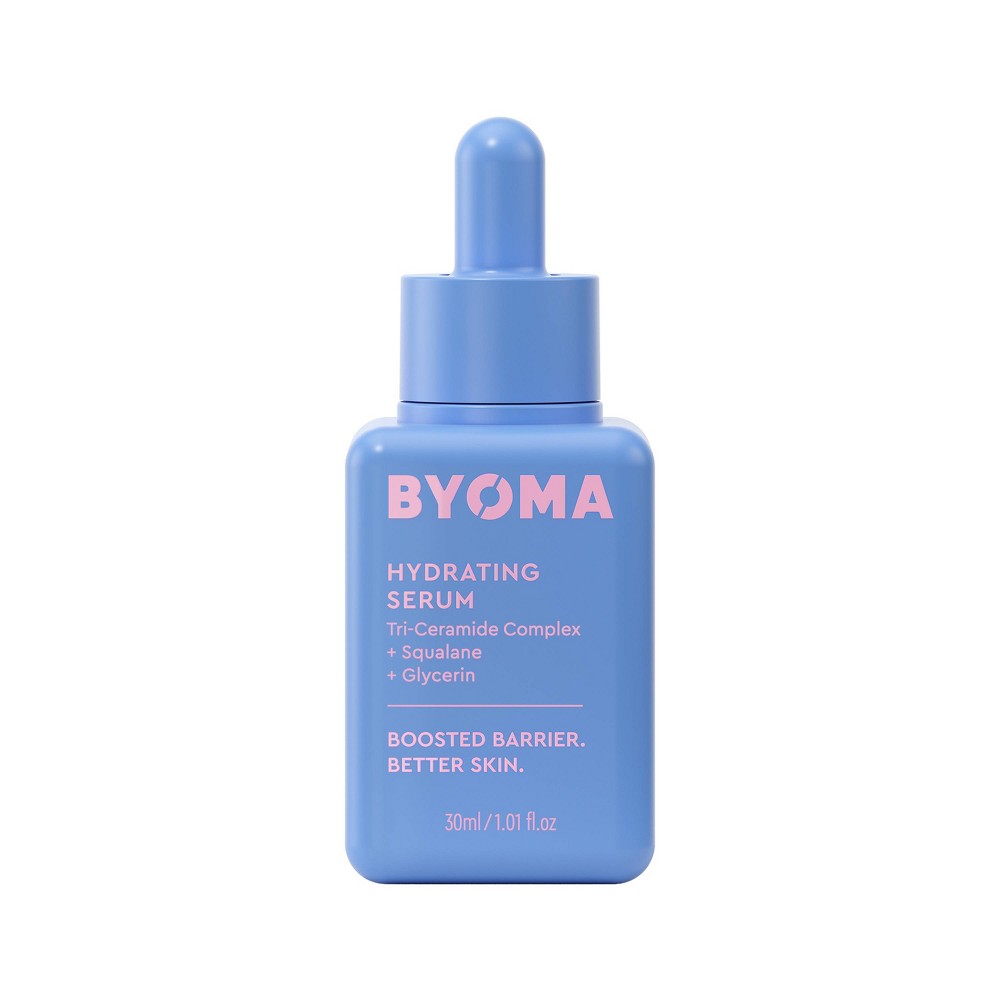

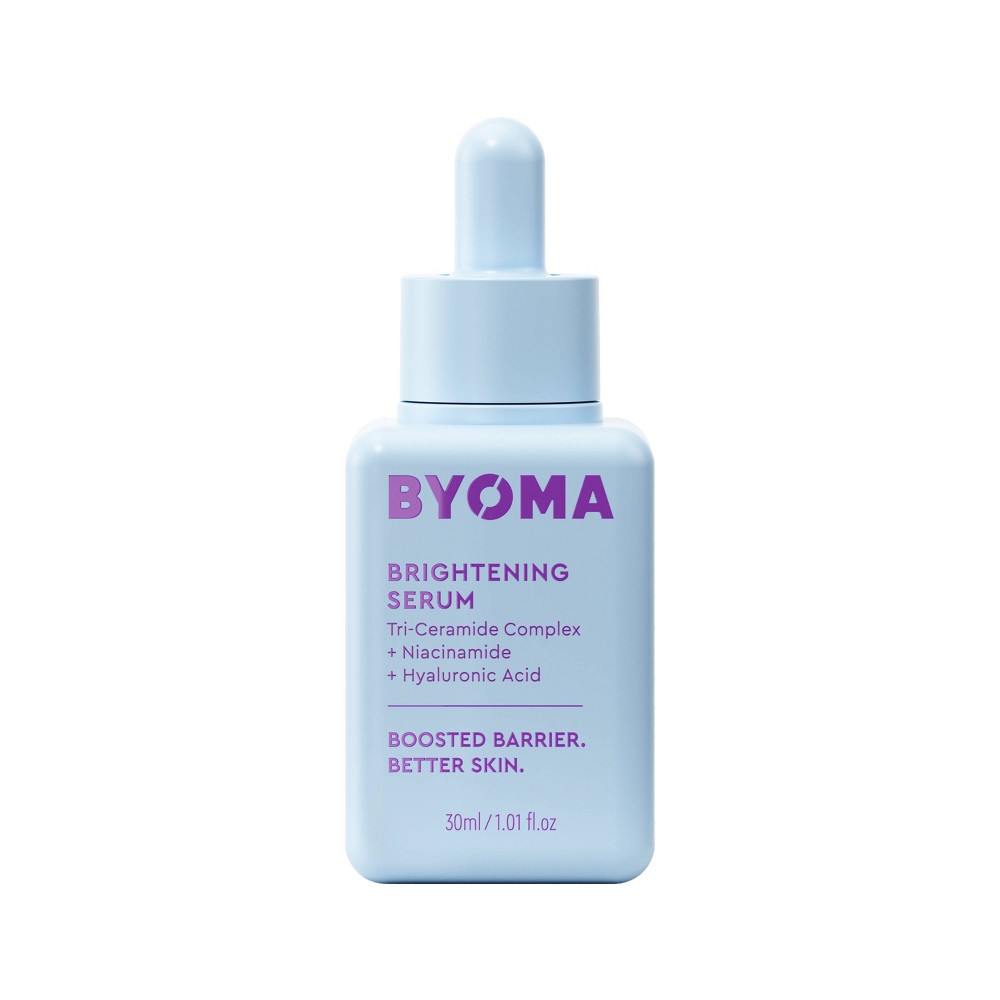

BYOMA Hydrating Serum - 1.01 fl oz
Analysis updated August 2026 · How Scout scores
At a glance
Summary
This serum contains beneficial ingredients like glycerin, squalane, and ceramide NP, which are known for their moisturizing and skin barrier-enhancing properties. The formulation is mostly composed of safe and effective components, with minimal synthetic additives. However, the presence of some processed ingredients and the overall processing level slightly limit its score, despite the clean and beneficial ingredient profile.
Key ingredients 28
SqualaneVery Good
Squalane is a highly effective emollient and natural antioxidant. It mimics the skin's natural oils, making it an excellent moisturizer. It is non-comedogenic and suitable for all skin types.
Risks
There are no significant risks associated with squalane.
Benefits
Squalane deeply moisturizes the skin, reduces the appearance of fine lines, and improves skin elasticity.
TocopherolVery Good
Tocopherol, or Vitamin E, is a powerful antioxidant that protects the skin from free radical damage. It helps improve skin texture and provides moisturizing benefits. It is well-tolerated by most skin types.
Risks
There are no significant risks associated with tocopherol.
Benefits
It provides antioxidant protection and improves skin texture.
GlycerinGood
Glycerin is a humectant that attracts moisture to the skin, making it a popular ingredient in hydrating products. It helps maintain the skin's moisture balance and improves skin barrier function. It is well-tolerated by most skin types.
Risks
There are minimal risks associated with glycerin, though it may cause irritation in very sensitive individuals.
Benefits
Glycerin effectively hydrates the skin and enhances its natural barrier, making it softer and smoother.
Ceramide NPGood
Ceramide NP is a lipid that helps restore the skin's barrier and retain moisture. It is essential for maintaining healthy skin and preventing moisture loss. It is well-tolerated by most skin types.
Risks
There are no significant risks associated with ceramides.
Benefits
Ceramide NP strengthens the skin barrier, enhances hydration, and improves skin texture.
Caprylic/Capric TriglycerideGood
Caprylic/Capric Triglyceride is an emollient derived from coconut oil and glycerin. It helps smooth and soften the skin without leaving a greasy residue. It is non-irritating and suitable for sensitive skin.
Risks
There are minimal risks associated with this ingredient.
Benefits
It provides lightweight hydration and improves the skin's texture.
CholesterolGood
Cholesterol is a lipid that helps maintain the skin's barrier function and hydration. It works synergistically with ceramides to enhance skin health. It is generally well-tolerated by most skin types.
Risks
There are no significant risks associated with cholesterol in cosmetics.
Benefits
It supports the skin's natural barrier and improves moisture retention.
PhytosphingosineGood
Phytosphingosine is a lipid that helps maintain the skin's barrier and has anti-inflammatory properties. It is beneficial for acne-prone and sensitive skin. It is generally safe for use in cosmetics.
Risks
There are no significant risks associated with phytosphingosine.
Benefits
It reduces inflammation and supports the skin's natural barrier.
Hydrogenated LecithinGood
Hydrogenated Lecithin is an emulsifier and skin-conditioning agent. It helps improve the texture of the product and enhances skin hydration. It is generally well-tolerated by most skin types.
Risks
There are minimal risks associated with this ingredient.
Benefits
It enhances skin hydration and improves product texture.
Dipotassium GlycyrrhizateGood
Dipotassium Glycyrrhizate is derived from licorice root and has anti-inflammatory properties. It helps soothe irritated skin and reduce redness. It is generally well-tolerated by most skin types.
Risks
There are minimal risks associated with this ingredient.
Benefits
It soothes irritated skin and reduces redness.
AquaNeutral
Aqua, or water, is a common solvent used in cosmetic formulations. It helps dissolve other ingredients and provides a base for the serum. It is generally considered safe and non-irritating.
Risks
There are no significant risks associated with water in cosmetic products.
Benefits
Water hydrates the skin and helps in the absorption of other active ingredients.
Butylene GlycolNeutral
Standard formulation ingredient — neither beneficial nor harmful at typical use.
Risks
In rare cases, it may cause mild irritation or allergic reactions.
Benefits
It enhances skin hydration and improves the spreadability of the product.
Sodium Stearoyl GlutamateNeutral
Sodium Stearoyl Glutamate is a mild surfactant and emulsifier derived from natural sources. It helps stabilize formulations and improve texture. It is generally considered safe and non-irritating.
Risks
There are minimal risks associated with this ingredient.
Benefits
It helps maintain the stability and consistency of the product.
Ammonium Acryloyldimethyltaurate/VP CopolymerNeutral
This copolymer is used as a thickening agent and stabilizer in cosmetic formulations. It provides a smooth texture and enhances the product's spreadability. It is considered safe for use in cosmetics.
Risks
There are no significant risks associated with this ingredient.
Benefits
It improves the texture and application of the product.
Dipropylene GlycolNeutral
Dipropylene Glycol is a solvent and viscosity-decreasing agent. It helps dissolve other ingredients and improves the texture of the product. It is generally safe for use in cosmetics.
Risks
In rare cases, it may cause mild irritation.
Benefits
It enhances the product's texture and helps in the even distribution of active ingredients.
Stearic AcidNeutral
Stearic Acid is a fatty acid used as an emulsifier and thickener in cosmetics. It helps stabilize formulations and improve texture. It is generally considered safe for use in cosmetics.
Risks
There are minimal risks associated with stearic acid.
Benefits
It helps maintain the stability and consistency of the product.
Oleic AcidNeutral
Oleic Acid is a fatty acid that acts as an emollient and helps improve skin texture. It is commonly used in skincare products for its moisturizing properties. It is generally safe for use in cosmetics.
Risks
In high concentrations, it may cause irritation in sensitive skin.
Benefits
It provides hydration and improves the skin's texture.
HydroxyacetophenoneNeutral
Hydroxyacetophenone is an antioxidant and preservative used in cosmetics. It helps protect the product from degradation and enhances its shelf life. It is generally considered safe for use in cosmetics.
Risks
There are minimal risks associated with this ingredient.
Benefits
It provides antioxidant protection and improves product stability.
Polyglyceryl-4 OleateNeutral
Polyglyceryl-4 Oleate is an emulsifier that helps blend oil and water-based ingredients. It improves the texture and stability of cosmetic formulations. It is generally considered safe for use in cosmetics.
Risks
There are minimal risks associated with this ingredient.
Benefits
It enhances the texture and stability of the product.
Hydroxyethyl Acrylate/Sodium Acryloyldimethyl Taurate CopolymerNeutral
This copolymer is used as a thickening agent and stabilizer in cosmetic formulations. It provides a smooth texture and enhances the product's spreadability. It is considered safe for use in cosmetics.
Risks
There are no significant risks associated with this ingredient.
Benefits
It improves the texture and application of the product.
Caprylyl GlycolNeutral
Standard formulation ingredient — neither beneficial nor harmful at typical use.
Risks
There are minimal risks associated with this ingredient.
Benefits
It provides hydration and enhances the product's preservation.
Glyceryl OleateNeutral
Glyceryl Oleate is an emulsifier and skin-conditioning agent. It helps blend oil and water-based ingredients and improves skin texture. It is generally considered safe for use in cosmetics.
Risks
There are minimal risks associated with this ingredient.
Benefits
It enhances the texture and stability of the product.
Lactic AcidNeutral
Standard formulation ingredient — neither beneficial nor harmful at typical use.
Risks
In high concentrations, it may cause irritation or sensitivity.
Benefits
It exfoliates the skin, improves texture, and promotes a more even skin tone.
EthylhexylglycerinNeutral
Ethylhexylglycerin is a preservative and skin-conditioning agent. It helps enhance the effectiveness of other preservatives and improves skin feel. It is generally considered safe for use in cosmetics.
Risks
There are minimal risks associated with this ingredient.
Benefits
It enhances preservation and improves skin feel.
Hydrogenated Rapeseed AlcoholNeutral
Hydrogenated Rapeseed Alcohol is an emollient and thickening agent. It helps improve the texture of the product and provides a smooth application. It is generally considered safe for use in cosmetics.
Risks
There are minimal risks associated with this ingredient.
Benefits
It enhances product texture and provides a smooth application.
Sorbitan IsostearateNeutral
Sorbitan Isostearate is an emulsifier that helps blend oil and water-based ingredients. It improves the texture and stability of cosmetic formulations. It is generally considered safe for use in cosmetics.
Risks
There are minimal risks associated with this ingredient.
Benefits
It enhances the texture and stability of the product.
Sodium PhytateNeutral
Sodium Phytate is a chelating agent that helps stabilize cosmetic formulations. It binds metal ions and prevents them from degrading the product. It is generally considered safe for use in cosmetics.
Risks
There are minimal risks associated with this ingredient.
Benefits
It stabilizes the product and prevents degradation.
Xanthan GumNeutral
Xanthan Gum is a thickening agent and stabilizer used in cosmetics. It helps improve the texture and consistency of the product. It is generally considered safe for use in cosmetics.
Risks
There are minimal risks associated with this ingredient.
Benefits
It enhances the texture and consistency of the product.
Caprylhydroxamic AcidNeutral
Caprylhydroxamic Acid is a preservative used in cosmetics to prevent microbial growth. It is effective in maintaining the product's shelf life. It is generally considered safe for use in cosmetics.
Risks
There are minimal risks associated with this ingredient.
Benefits
It helps preserve the product and prevent microbial growth.
Processing
Processed Foods
Get the full breakdown in the Scout appTake Scout shopping
Scan any product to see lab results, healthy alternatives, and your personalized analysis.
Download on theApp Store GET IT ONGoogle PlayAmazon pricing & content
Amazon price as of . Product prices and availability are accurate as of the date/time indicated and are subject to change. Any price and availability information displayed on Amazon.com at the time of purchase will apply to the purchase of this product.
CERTAIN CONTENT THAT APPEARS ON THIS SITE COMES FROM AMAZON. THIS CONTENT IS PROVIDED “AS IS” AND IS SUBJECT TO CHANGE OR REMOVAL AT ANY TIME.