
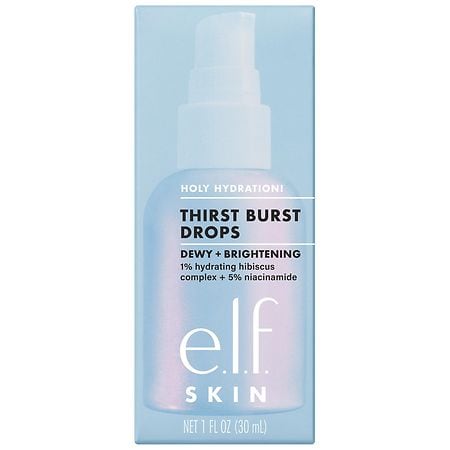

e.l.f. SKIN Holy Hydration! Thirst Burst Moisturizer Drops - 1 fl oz: Paraben-Free, Vegan, Normal Skin, Liquid
Analysis updated August 2026 · How Scout scores
At a glance
Summary
This moisturizer contains beneficial ingredients such as niacinamide, glycerin, and sunflower seed oil, which are known for their hydrating and skin-nourishing properties. The product is free from parabens and includes several natural extracts, contributing to its safety profile. However, the presence of synthetic polymers and a moderate level of processing slightly lowers its overall rating.
Key ingredients 21
Hydrolyzed Sodium HyaluronateVery Good
Hydrolyzed Sodium Hyaluronate is a form of hyaluronic acid that provides intense hydration to the skin. It helps in maintaining skin moisture and plumpness. It is highly regarded in skincare for its hydrating properties.
Risks
Very low risk of irritation.
Benefits
Deeply hydrates the skin and improves skin elasticity.
Helianthus Annuus (Sunflower) Seed OilVery Good
Sunflower Seed Oil is a natural oil rich in fatty acids and Vitamin E. It helps in nourishing and moisturizing the skin. It is highly regarded for its emollient properties in skincare.
Risks
Very low risk of irritation.
Benefits
Nourishes and moisturizes the skin, providing essential fatty acids.
NiacinamideGood
Niacinamide is a form of Vitamin B3 known for its anti-inflammatory and skin-brightening properties. It helps in improving skin texture and reducing the appearance of pores. It is highly regarded in skincare for its multiple benefits.
Risks
Rarely, it may cause mild irritation or redness.
Benefits
Improves skin barrier function, reduces inflammation, and brightens skin tone.
GlycerinGood
Glycerin is a well-known humectant that attracts moisture to the skin. It helps in maintaining skin hydration and improving skin barrier function. It is widely used and considered safe in cosmetics.
Risks
Very low risk of irritation.
Benefits
Keeps skin hydrated and improves skin barrier function.
TocopherolGood
Tocopherol, also known as Vitamin E, is a powerful antioxidant that helps protect the skin from free radical damage. It also has moisturizing properties. It is widely used and considered beneficial in skincare.
Risks
Rarely, it may cause mild irritation.
Benefits
Protects skin from oxidative damage and provides moisture.
Hibiscus Sabdariffa Fruit ExtractGood
Hibiscus Sabdariffa Fruit Extract is rich in antioxidants and has skin conditioning properties. It helps in protecting the skin from oxidative stress and improving skin texture. It is valued for its natural benefits in skincare.
Risks
Very low risk of irritation.
Benefits
Provides antioxidant protection and improves skin texture.
Water (Aqua)Neutral
Water is a common solvent used in cosmetics to dissolve other ingredients. It helps in the application and absorption of the product. It does not provide direct benefits or risks.
Risks
There are no significant risks associated with water in cosmetics.
Benefits
Water helps in the even distribution of other active ingredients.
Dipropylene GlycolNeutral
Dipropylene Glycol is used as a solvent and skin conditioning agent. It helps in improving the texture and spreadability of the product. It is generally considered safe for use in cosmetics.
Risks
May cause mild irritation in sensitive individuals.
Benefits
Improves product texture and helps in moisture retention.
Butylene GlycolNeutral
Butylene Glycol is a common humectant that helps retain moisture in the skin. It also acts as a solvent and improves the texture of the product. It is widely used and considered safe in cosmetics.
Risks
Potential for mild irritation in sensitive skin.
Benefits
Helps in maintaining skin hydration and improves product application.
Cetyl EthylhexanoateNeutral
Cetyl Ethylhexanoate is an emollient that provides a smooth and soft feel to the skin. It helps in improving the spreadability of the product. It is generally considered safe for use in cosmetics.
Risks
Minimal risk of irritation.
Benefits
Enhances skin softness and product application.
Glycereth-26Neutral
Glycereth-26 is a humectant and emollient that helps in retaining moisture in the skin. It also improves the texture and feel of the product. It is generally considered safe for use in cosmetics.
Risks
Low risk of irritation.
Benefits
Enhances skin hydration and product texture.
HydroxyacetophenoneNeutral
Hydroxyacetophenone is an antioxidant and skin conditioning agent. It helps in protecting the skin from oxidative stress. It is considered safe for use in cosmetics.
Risks
Minimal risk of irritation.
Benefits
Provides antioxidant protection and conditions the skin.
1, 2-HexanediolNeutral
1, 2-Hexanediol is a solvent and preservative booster used in cosmetics. It helps in improving the stability and shelf-life of the product. It is generally considered safe for use in cosmetics.
Risks
Low risk of irritation.
Benefits
Enhances product stability and preservation.
TromethamineNeutral
Tromethamine is used as a pH adjuster in cosmetics. It helps in maintaining the stability and effectiveness of the product. It is generally considered safe for use in cosmetics.
Risks
Minimal risk of irritation.
Benefits
Ensures product stability and effectiveness.
CarbomerNeutral
Carbomer is a thickening agent used to control the viscosity of cosmetic products. It helps in providing a smooth and consistent texture. It is considered safe for use in cosmetics.
Risks
Low risk of irritation.
Benefits
Improves product texture and consistency.
Synthetic FluorphlogopiteNeutral
Synthetic Fluorphlogopite is a synthetic mica used to add shimmer and shine to cosmetics. It is used as a safer alternative to natural mica. It is generally considered safe for use in cosmetics.
Risks
Minimal risk of irritation.
Benefits
Provides shimmer and enhances product appearance.
Ammonium Acryloyldimethyltaurate/VP CopolymerNeutral
This copolymer is used as a thickening and stabilizing agent in cosmetics. It helps in improving the texture and spreadability of the product. It is generally considered safe for use in cosmetics.
Risks
Minimal risk of irritation.
Benefits
Enhances product texture and stability.
ErythritolNeutral
Erythritol is a sugar alcohol used as a humectant in cosmetics. It helps in retaining moisture in the skin. It is considered safe for use in cosmetics.
Risks
Low risk of irritation.
Benefits
Helps in maintaining skin hydration.
Tin OxideNeutral
Tin Oxide is used as an opacifying agent in cosmetics to add opacity and shine. It is considered safe for use in cosmetics. It does not provide direct benefits or risks.
Risks
Minimal risk of irritation.
Benefits
Enhances product appearance by adding shine.
Acrylates/C10-30 Alkyl Acrylate CrosspolymerBad
Processed additive flagged under Scout's ingredient doctrine.
Risks
Minimal risk of irritation.
Benefits
Improves product texture and stability.
Disodium EDTABad
Processed additive flagged under Scout's ingredient doctrine.
Risks
Minimal risk of irritation.
Benefits
Enhances product stability and longevity.
Processing
Processed Foods
Get the full breakdown in the Scout appTake Scout shopping
Scan any product to see lab results, healthy alternatives, and your personalized analysis.
Download on theApp Store GET IT ONGoogle PlayAmazon pricing & content
Amazon price as of . Product prices and availability are accurate as of the date/time indicated and are subject to change. Any price and availability information displayed on Amazon.com at the time of purchase will apply to the purchase of this product.
CERTAIN CONTENT THAT APPEARS ON THIS SITE COMES FROM AMAZON. THIS CONTENT IS PROVIDED “AS IS” AND IS SUBJECT TO CHANGE OR REMOVAL AT ANY TIME.